
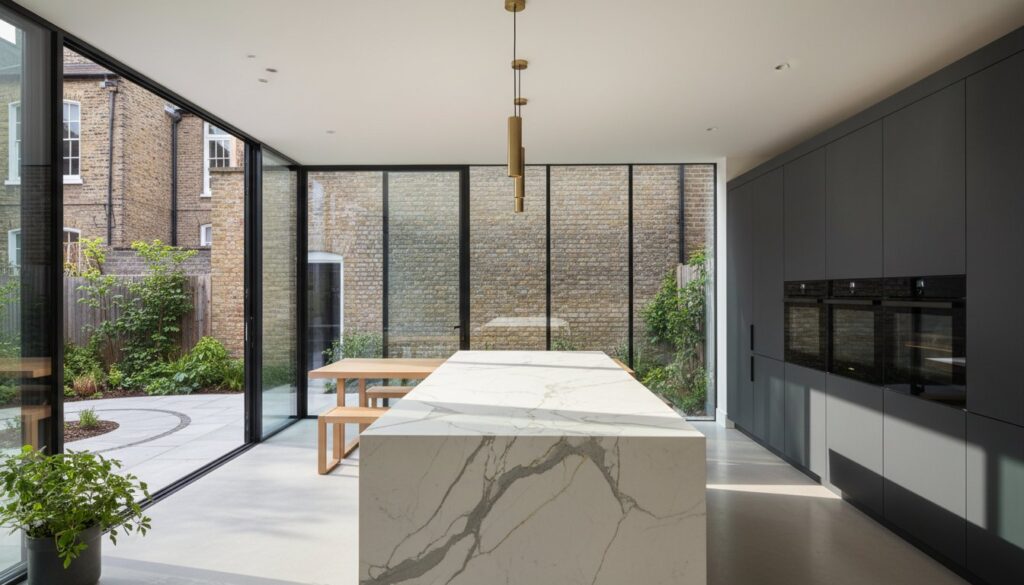
A London renovation isn’t merely a construction project; it’s the meticulous composition of a living masterpiece where every millimetre of heritage brickwork must harmonise with modern engineering. You’ve likely felt the weight of uncertainty when considering how much does a renovation cost in london, particularly when the fear of escalating budgets or the shadow of substandard craftsmanship looms over your vision. We agree that for the discerning property owner, a home is a sanctuary of uncompromising quality that demands the same precision as a handcrafted work of art.
This 2026 premium guide provides a clear, defensible budget framework that accounts for the unique pressures of the capital, from stringent Party Wall agreements to the logistical precision required for narrow Victorian streets. You’ll gain a deep understanding of the long term value offered by premium materials and the seamless experience of working with a design-to-completion partner who shares your obsession with detail. We’ll break down the architectural, logistical, and material investments necessary to transform your property into a timeless asset without the typical stress of London construction.
Key Takeaways
- Understand why London renovation costs remain 30% higher than the national average and how the 2026 market prioritizes high-spec structural integrity for “forever homes.”
- Learn exactly how much does a renovation cost in london by navigating our tiered pricing model, which defines the investment required for everything from cosmetic refreshes to bespoke, high-end transformations.
- Identify the “unseen” logistical expenses and regulatory fees, including the financial nuances of the Party Wall Act, that are essential for maintaining a precise project budget.
- Discover which strategic investments, such as premium kitchen extensions, offer the highest return on investment within the unique landscape of the capital’s property market.
- Explore the Horns methodology of “no-compromise” craftsmanship, where architectural precision and artistic vision converge to create timeless residential masterpieces.
The Landscape of London Property Renovation in 2026
Entering 2026, the capital’s property market reflects a profound pursuit of permanence over fleeting profit. Homeowners no longer seek quick cosmetic fixes to flip properties; they demand structural excellence, acoustic integrity, and a level of finish that mirrors their personal values. Understanding how much does a renovation cost in london requires acknowledging that capital costs remain 30% higher than the national average. This disparity stems from the intricate dance of urban logistics and the extreme scarcity of elite artisans capable of museum-quality work.
The UK Construction Industry Overview highlights the sector’s immense economic scale, yet London operates as its own distinct micro-economy. In 2026, material scarcity continues to influence initial quotes with surgical precision. Sustainable timber and structural steel prices fluctuate with the global market, making early procurement a vital strategy for any serious investor. You’ll find that a standard builder might offer a lower price, but a premium refurbishment partner provides the orchestration required for a truly high-end residence. It’s the difference between a mass-produced speaker and a hand-crafted, horn-loaded system designed for a lifetime of performance.
Why London Renovation Costs are Unique
London’s architectural heritage imposes rigid constraints that demand a specialized touch. Renovating a Grade II listed Victorian terrace in West London isn’t just construction; it’s a preservation of British history. Sourcing master craftsmen who understand lime mortar or ornate plasterwork drives costs upward. In areas like Kensington or Marylebone, the demand for “Design-Build” services has surged. This model ensures that the architectural vision remains uncompromised during the complex transition from paper to reality, offering a seamless execution that general trades simply cannot replicate.
Market Predictions and Budgeting for 2026
Budgeting for 2026 requires a defensive and realistic posture. Inflationary pressures on structural steel and the rising cost of carbon-neutral materials have made the 15% contingency fund a mandatory baseline. It’s no longer a safety net for the cautious; it’s a fundamental component of any project intending to reach a high-spec finish. Key cost drivers for this year include:
- Structural steel: 8-12% projected rise in procurement costs due to supply chain realignments.
- Sustainable timber: 15% premium over traditional stocks following updated 2026 environmental regulations.
- Artisan labour: 20% increase in high-demand West London hubs where master trades are booked months in advance.
When calculating how much does a renovation cost in london, you must factor in the “London Premium” as a direct result of specialized expertise and the logistical friction of the city. The London Premium is the inescapable financial weight of navigating congested logistics and securing the rare expertise required to transform a historic structure into a modern sanctuary.
Decoding the Cost per Square Metre: From Cosmetic to Structural
Understanding how much does a renovation cost in london requires looking past surface-level figures; it demands an appreciation for the technical and artistic layers of a build. The London market in 2026 operates on three distinct tiers. A basic refurbishment typically starts at £1,500 per m2, focusing on functional updates and standard materials. Moving into the mid-range, where costs fluctuate between £2,500 and £3,500 per m2, homeowners gain access to superior finishes and minor structural reconfigurations. For those seeking an uncompromising standard of living, high-end renovations often exceed £4,500 per m2. These projects don’t just update a space; they redefine it through bespoke joinery, integrated acoustic solutions, and rare materials that reflect a timeless elegance.
Relying solely on a “per square metre” estimate is a common pitfall for owners of London terraces. These historic structures often hide centuries of architectural idiosyncrasies that standard metrics fail to capture. Recent Official Construction Statistics highlight how inflationary pressures on specialised labour and raw materials have shifted the baseline for urban projects. A simple cosmetic update might involve painting and new flooring, but a true transformation often requires structural intervention. The choice between off-the-shelf solutions and handcrafted, bespoke elements is what ultimately swings the budget, turning a house into a curated piece of art.
Light Refurbishment vs. Full Structural Renovation
Cosmetic updates in 2026, such as high-grade painting, premium flooring, and designer lighting, usually cost between £800 and £1,200 per m2. However, structural works represent a different level of engineering commitment. Removing load-bearing walls and installing RSJs to create open-plan living environments requires precision and significant investment in professional oversight. You can explore the architectural depth of these projects in our guide on Mastering Home Refurbishment in London, which details how structural integrity meets aesthetic vision.
Cost Breakdown by Property Type
- 2-Bedroom Converted Flat: A full internal refurbishment often ranges from £90,000 to £150,000, depending on the complexity of the period features.
- 3-4 Bedroom Victorian Terrace: Comprehensive renovations in West London frequently see budgets of £300,000 to £550,000, especially when adding extensions or loft conversions.
- Detached Luxury Residences: For properties exceeding 300 m2, the cost per square metre is rarely the limiting factor. When integrating high-fidelity audio systems and custom masonry, costs frequently surpass £5,000 per m2.
Every decision, from the grain of the timber to the placement of a structural beam, influences the final investment. If you are ready to elevate your living environment, you might consider how bespoke architectural planning can harmonise your budget with your desire for perfection.
The ‘London Tax’: Navigating Logistical and Regulatory Expenses
The true measure of how much does a renovation cost in london often lies beneath the surface of visible craftsmanship. Beyond the bespoke cabinetry and the selection of rare stones, a significant portion of a premium budget is dedicated to the “unseen” architecture of the city. This ‘London Tax’ represents the complex web of regulatory and logistical requirements that define the capital’s building landscape. For a Victorian terrace in Chelsea or a townhouse in Marylebone, these expenses are not merely incidental; they are the foundation of a successful, compliant project.
The Party Wall Act remains one of the most critical financial considerations for London homeowners. In high density areas, shared boundaries require formal agreements with multiple neighbors. Professional fees for Party Wall surveyors typically range from £1,500 to £3,000 per neighbor, depending on the complexity of the structural alterations. If a project involves three or four adjoining owners, these professional fees can quickly escalate to £10,000 before a single brick is laid. This investment ensures the structural integrity of the neighborhood and provides the legal security necessary for high end developments.
Professional expertise is the cornerstone of any uncompromising renovation. A comprehensive team for a premium project includes:
- Architectural Fees: Usually 10% to 15% of the total build cost for a full service from concept to completion.
- Structural Engineers: Essential for basement excavations or removing load bearing walls, with fees starting at £2,500 for detailed calculations.
- Quantity Surveyors: Providing the financial precision required to keep a 2026 budget on track, often costing 1% to 3% of the project value.
Regulatory and Planning Costs in 2026
Securing planning permission in London Boroughs such as Hammersmith, Fulham, or Ealing requires both patience and precision. By 2026, standard planning application fees for residential extensions have risen to approximately £650, yet the true cost lies in heritage compliance. Properties within Conservation Areas demand specialist heritage statements and bespoke window designs to satisfy local authorities. These requirements can add a 20% premium to material costs. Building Regulations inspections, which guarantee safety and thermal efficiency, represent a further investment of £1,200 to £2,800 depending on the scale of the works.
Logistics: The Cost of Working in a Crowded City
The logistical choreography of a West London site is a masterclass in efficiency. Skip hire rates in 2026 reflect the scarcity of space, with an 8 yard skip in West London costing upwards of £450 per week, excluding the mandatory local authority permits. Parking suspensions for delivery vehicles and trade vans are an unavoidable daily expense. In central boroughs, a single parking bay suspension can cost between £60 and £95 per day. Scaffolding also presents a significant variable; a three story facade wrap for a typical six month project often exceeds £8,000, as the complexity of street licenses and pedestrian protection adds layers of technical and financial demand.

Strategic Investment: Extensions, Lofts, and Refurbishments
Investing in a London property requires more than just capital; it demands a vision for uncompromising quality. When homeowners ask how much does a renovation cost in london, they’re often seeking the threshold where expenditure transforms into enduring value. In the 2026 market, the most profound returns come from projects that harmonize structural expansion with meticulous internal refinement. A home isn’t just a series of rooms. It’s a sanctuary where every corner should resonate with the owner’s lifestyle.
A 2025 market analysis suggests that a high-specification kitchen extension can increase a property’s market value by 12% to 15%. This isn’t merely about adding floor space. It’s about creating a rhythmic flow between the original structure and the new. The true synergy occurs when House Extensions in London are paired with total internal refurbishments. This ensures the transition from the historic character of the building to the modern addition is invisible to the eye but felt in the atmosphere of the home.
Kitchen and Bathroom Excellence
The kitchen remains the home’s social and acoustic heart. A bespoke Kitchen Renovation in London for 2026 typically requires an investment starting at £50,000 for premium cabinetry and high-performance appliances. Luxury bathrooms are the “art” of the residence. Here, the precision of book-matched marble and hidden smart-home integration creates a private spa. We don’t just see plumbing; we see the engineering of comfort. Sourcing rare materials, like hand-carved stone basins or solid brass fixtures, ensures the space remains timeless rather than trendy.
Adding Significant Square Footage
Maximizing the footprint of a terrace house often leads to the side-return extension. This is a West London staple that breathes light into narrow floorplans. For those looking upward, the choice between a Dormer and a Mansard loft conversion is a balance of utility and architectural grace. While a Dormer offers more head height, the Mansard is often the aesthetic choice for heritage properties, despite costing roughly 25% more due to its complex pitch. In prime postcodes like Chelsea or Kensington, basement excavations remain a high-reward strategy. Though costs can exceed £5,000 per square metre, the creation of cinema rooms or private gyms adds a level of luxury that standard extensions cannot match.
Ready to elevate your living experience through architectural precision? Explore our bespoke renovation services and begin your journey toward a home that resonates with excellence.
Orchestrating a Masterpiece: The Horns Construction Methodology
True economy in the London property market isn’t found in the lowest bid. It’s found in the absence of failure. When homeowners ask how much does a renovation cost in london, they often overlook the hidden tax of mediocrity. A poorly executed project requires remedial work within three to five years, effectively doubling the initial investment. At Horns Ltd., we’ve spent 20 years refining a no-compromise approach to craftsmanship. We don’t view a home as a mere shell of bricks and mortar; we see it as a bespoke instrument that must perform perfectly for decades.
Managing the Construction Companies in London landscape requires more than just oversight. It demands a single point of contact who understands the delicate balance between structural integrity and aesthetic fineness. By unifying design and delivery, we strip away the layers of miscommunication that traditionally add 15% to the final bill. Our methodology ensures that the “artistic demand” of the client is never sacrificed for the convenience of the contractor.
The Value of Meticulous Project Management
We reduce the inherent stress of London builds through transparent, RIBA-aligned stages. Our management team orchestrates an entire ecosystem of specialist trades, from master joiners to certified electricians, ensuring every hand on site shares our maximalist philosophy. We meet the artistic demand of our clients by treating every finish as a work of art. This level of technical precision ensures that your investment retains its value long after the dust has settled. We don’t just build rooms; we create environments where acoustic fidelity and visual harmony coexist.
Starting Your London Renovation Journey
Precision begins before the first hammer falls. Our consultation process is designed to align your grandest visions with a realistic, data-driven budget. We don’t offer vague estimates; we provide comprehensive, fixed-price quotes that respect your time and capital. This methodology has protected our clients from the market volatility seen throughout 2024 and 2025, providing a stable foundation for their property’s future. When calculating how much does a renovation cost in london, the peace of mind provided by a fixed-price contract is the ultimate luxury.
Ready to elevate your living space to a level of uncompromising quality? Begin your London property transformation with Horns Construction.
Orchestrating Your London Property Transformation
Navigating the complexities of a high-end refurbishment in 2026 requires a delicate balance between engineering precision and aesthetic soul. You’ve explored the variables of structural investment and the logistical nuances of the London Tax that define the current market. Understanding how much does a renovation cost in london is the essential foundation of any project, but the true value lies in the meticulous execution of every architectural detail. Horns Construction has spent over 20 years refining this craft across West London, offering a comprehensive design-to-completion service that mirrors the dedication of a master artisan.
Our methodology prioritizes your peace of mind through fixed-price quotes for large-scale structural works, removing the uncertainty often found in complex urban developments. We don’t just build; we compose spaces that reflect an uncompromising commitment to quality and timeless elegance. Your home is more than a structure. It’s a sanctuary where every material and finish must perform in perfect harmony to create a lasting legacy. We’re ready to bring that vision to life with technical mastery and creative passion.
Request a Bespoke Renovation Quote from Horns Construction
We invite you to begin the journey of elevating your residence into a bespoke masterpiece that will endure for generations.
Frequently Asked Questions
Is it cheaper to renovate or extend a house in London?
Renovating existing space is typically 20% to 30% more cost-effective than building a new extension. Internal refurbishments in London generally range from £1,500 to £2,500 per square metre. Extensions require significant structural foundations and new roofing, which pushes the investment toward £3,000 or £4,000 per square metre. You’re preserving the soul of the original architecture while enhancing its functional elegance without the heavy costs of new structural shells.
How much should I budget for a 3-bedroom house renovation in London?
For a high-end 3-bedroom house renovation in London, you should budget between £150,000 and £250,000 for a premium finish. A comprehensive transformation of a typical 100-square-metre residence requires an allocation of at least £2,000 per square metre. This ensures every bespoke cabinet and acoustic treatment meets the highest standards of craftsmanship. Understanding how much does a renovation cost in london helps you curate a space that reflects an exclusive lifestyle through artisanal materials.
Do I need an architect for a full home refurbishment?
You aren’t legally required to hire an architect for internal refurbishments, but their involvement is essential for structural integrity and aesthetic harmony. An architect acts as the conductor of your project’s symphony, ensuring the dialogue between form and function remains unbroken. Their fees usually range from 8% to 15% of the total build cost. This investment guarantees that the technical precision of the layout matches the visual poetry of the finished spaces.
How long does a full property renovation typically take in London?
A full property renovation in London typically takes between 6 and 10 months from the initial strip-out to the final handover. True excellence can’t be rushed; it requires a measured pace. Structural phases often occupy the first 12 to 16 weeks of the timeline. The final 8 weeks are dedicated to the delicate installation of bespoke finishes and hand-crafted elements. This deliberate rhythm ensures the durability of the work matches its immediate visual impact.
What are the most common hidden costs in London renovations?
Structural issues like damp or outdated wiring and Party Wall Agreements represent the most frequent hidden costs in the capital. Hidden complexities often lie beneath the surface of London’s historic facades. Professional Party Wall surveyors might cost £1,000 to £2,000 per neighbour. Unforeseen structural repairs can add 10% to 15% to your initial projections. We recommend a contingency fund of 15% to protect the integrity of your vision against these inevitable architectural discoveries.
Does a renovation always require planning permission in West London?
Internal renovations rarely require planning permission unless the property is a listed building or located in a specific conservation area. Many West London residences fall under Permitted Development rights, which allow for extensive internal modifications without formal planning consent. If your home is one of the 600,000 listed buildings in the UK, you’ll need Listed Building Consent. This process ensures the historic narrative of the property is preserved while integrating modern technical luxuries.
How much value does a full refurbishment add to a London home?
A meticulously executed full refurbishment can increase a London property’s market value by 10% to 20%. Beyond the immediate sensory pleasure, a premium renovation is a sound financial legacy. In prime London postcodes, high-specification finishes can yield a return on investment exceeding 15%. When you consider how much does a renovation cost in london, view it as an investment in a timeless asset. It’s the difference between a simple dwelling and a curated masterpiece.
Can I live in the house while it is being renovated?
It’s technically possible but highly discouraged for high-end renovations due to dust, noise, and the disruption of essential services. Living within a construction site compromises the tranquility your home should provide. Major refurbishments involve periods without water or heating for 2 to 4 weeks. For projects of this calibre, moving out allows the craftsmen to work with uncompromising focus. It preserves your peace of mind while the technical transformation of your sanctuary takes place.