
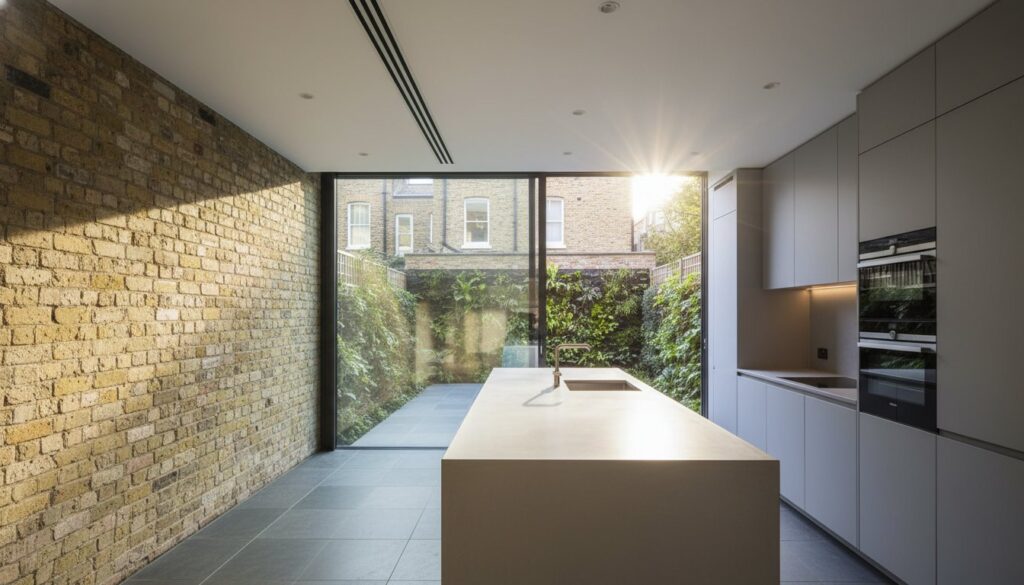
What if the structural constraints of your Victorian terrace were actually the hidden blueprint for an architectural masterpiece? Most homeowners view the narrow, shadowed corridors of a traditional layout as a permanent limitation, yet these historic footprints offer the most fertile ground for transformative kitchen extension ideas for london homes. You likely feel that your current kitchen, while steeped in heritage, fails to resonate with the rhythm of a modern lifestyle. It’s often cramped and disconnected from the natural world, lacking the sophisticated luminosity that a premium residence demands.
This 2026 guide promises to show you how to navigate the intricate planning landscape to create a space that balances period character with uncompromising luxury. We’ll explore bespoke structural glass solutions, seamless indoor-outdoor transitions, and the precise craftsmanship required to elevate your property value by an average of 15% according to recent industry data. Discover how to orchestrate a symphony of light and form that turns your living space into a meticulously crafted work of art, ensuring every square inch serves both your aesthetic desires and functional needs.
Key Takeaways
- Explore the shift from mere square footage to “intelligent volume,” where every cubic metre is sculpted to enhance the flow of light and the rhythm of modern London life.
- Identify the ideal structural path for your residence, from reclaiming the hidden potential of Victorian side returns to the expansive grandeur of a full wrap-around extension.
- Discover sophisticated kitchen extension ideas for london homes that harmonise raw textures like exposed London stock brick with biophilic elements to bring the serenity of the garden indoors.
- Navigate the complexities of London’s planning landscape with confidence, mastering Permitted Development rights and the nuances of the Prior Approval process for larger rear expansions.
- Understand the seamless transition from conceptual art to structural reality through a design-build approach that treats every London extension as a unique, hand-crafted masterpiece.
Transformative Kitchen Extension Ideas for London’s Unique Architecture
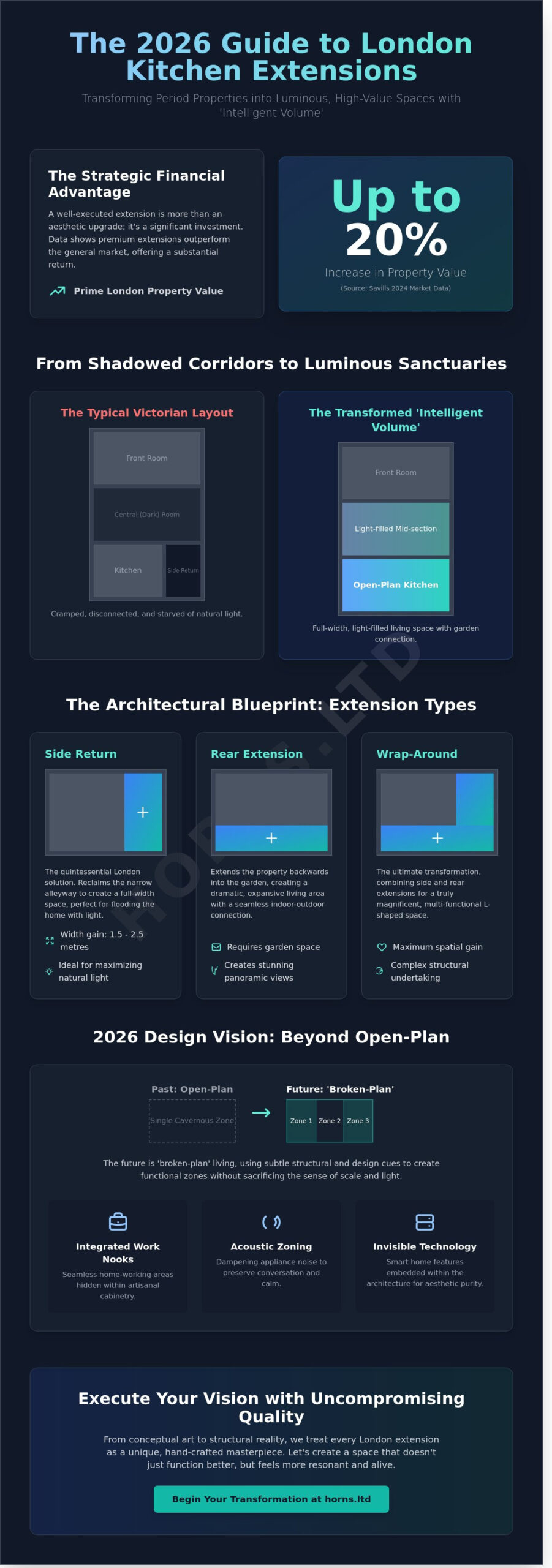
The modern London kitchen has evolved from a mere culinary workspace into a multi-functional lifestyle hub where design and emotion converge. In 2026, the industry is shifting away from simple square footage toward ‘intelligent volume’. This philosophy prioritises the quality of light and the resonance of space over floor area. According to 2024 market data from Savills, a well-executed extension can increase a property’s value by up to 20% in prime London areas. This outperforms the general market trend, making premium kitchen extension ideas for london homes a strategic financial move as well as an aesthetic one. The psychological impact of introducing natural light into dense urban environments is profound; it transforms the daily rhythm of the home into something more harmonious. Every structural choice must reflect a commitment to uncompromising quality, much like the precision found in high-end acoustic engineering.
Adapting to London’s Period Property Constraints
The capital’s history defines its architectural constraints. Victorian terraces often suffer from the ‘outrigger’ layout, which leaves central rooms starved of light. Georgian properties require a different touch, where maintaining symmetry is vital while expanding the floorplan. Much of London’s Unique Architecture dictates these structural challenges. A side return extension is the quintessential London solution that reclaims the narrow strip of land adjacent to the rear ‘outrigger’ to create a full-width, light-filled living space. This intervention requires a meticulous eye to ensure the new steelwork and glazing respect the character of the original masonry.
The 2026 Vision: Beyond the Open-Plan
The coming years mark the decline of the echoing, cavernous open-plan room. Instead, ‘broken-plan’ living introduces subtle structural elements to provide acoustic and functional zoning without sacrificing the sense of scale. This vision incorporates several key features:
- Integrated home-working nooks that blend seamlessly into artisanal cabinetry to maintain a professional yet domestic balance.
- Acoustically treated zones that dampen the noise of appliances, ensuring the kitchen remains a place for conversation and music.
- Smart home technology that remains invisible, embedded within the architectural fabric to preserve the room’s aesthetic purity.
Refining these kitchen extension ideas for london homes ensures the space remains a sanctuary of technical precision and calm. By 2026, the focus will be on handcrafted finishes and bespoke joinery that reflect a homeowner’s refusal to settle for anything less than perfection. This approach creates a home that doesn’t just function better but feels more resonant and alive.
The Architectural Blueprint: Side Returns, Rear, and Wrap-Around Extensions
London’s architectural heritage demands a delicate balance between historical reverence and modern functionality. Selecting the right structural path isn’t merely a construction choice; it’s a compositional decision that defines how light and life flow through your home. For those exploring kitchen extension ideas for london homes, the journey begins by identifying the unique potential of the existing footprint. We analyze three primary paths that transform cramped quarters into expansive, light-filled sanctuaries where form and function exist in perfect equilibrium.
Side Return Extensions: The London Classic
The side return is a masterclass in spatial efficiency, specifically designed for the narrow terraced homes found throughout West London and zones 2 and 3. By reclaiming the underutilised Victorian alleyway, you can expand the kitchen’s width by approximately 1.5 to 2.5 metres. This shift doesn’t just add floor space; it alters the room’s entire acoustic and visual rhythm. High-performance glass roofs are essential here. They flood the original dining room with natural light, erasing the shadows that often plague deep-plan Victorian layouts. Removing the original external flank wall requires meticulous structural engineering, usually involving a substantial steel frame to support the upper storeys. Many homeowners find that Permitted development rights provide a streamlined path for these projects, provided the design adheres to specific height and boundary restrictions set out in the 2015 technical guidance.
Full-Width Rear Extensions and Wrap-Arounds
Pushing into the garden creates the “Grand Room” effect, a hallmark of premium London living that prioritises volume and breathability. A full-width rear extension offers maximum depth, allowing for seamless floor-to-ceiling glazing that dissolves the barrier between the interior and the outdoors. If your property occupies a corner plot or has sufficient lateral space, the wrap-around extension represents the ultimate structural transformation. It combines the side return and rear extension into an L-shaped masterpiece. This configuration presents a complex structural challenge, as it requires navigating multiple load-bearing points where the original house corners once stood. The result is a vast, open-plan environment that accommodates professional-grade kitchens and social hubs with ease. You’ll find deeper insights into these complex builds in our guide to house extensions, which details the engineering precision required for such ambitious projects.
Every structural choice should reflect the same commitment to quality as a bespoke piece of art. If you’re ready to harmonise your home’s layout with your lifestyle, consider how Horns Construction can help you achieve a living space defined by expert craftsmanship and visionary design.
2026 Design Trends: Blending Heritage Charm with Modernist Precision
The 2026 aesthetic landscape for London extensions isn’t about fleeting fashions; it’s about a deep, structural dialogue between the city’s Victorian bones and uncompromising modernist precision. When exploring kitchen extension ideas for london homes, the shift towards biophilic integration has become a definitive standard. We’re seeing ‘living walls’ move from commercial galleries into the private residential sphere. These act as organic tapestries that purify the air while softening the transition to the garden. This botanical presence complements the return of raw, tactile textures. Reclaimed London stock brick remains a cornerstone of this movement. It offers a textured warmth and historical continuity that new-build materials rarely replicate.
Choosing between Crittall-style frames and frameless glazing is a fundamental architectural decision. While the rhythmic, industrial lines of steel frames offer a nod to heritage, frameless glass creates a void that allows the garden to permeate the living space entirely. This year, carbon-neutral construction has moved from a niche preference to a core requirement. High-end projects now frequently utilize sustainable timber frames and high-performance insulation with U-values as low as 0.15 W/m²K. This ensures that the aesthetic beauty of the extension is matched by its thermal integrity and environmental responsibility. It’s a commitment to building for the next century, not just the next decade.
The Art of the ‘Indoor-Outdoor’ Transition
Achieving a seamless plane from the kitchen island to the patio requires technical mastery and meticulous planning. Level-threshold flooring eliminates physical and visual barriers. This makes the extension feel twice its actual size. For 2026, the pivoting oversized glass door has emerged as the ultimate architectural statement. These massive, single-pane portals rotate on a central axis, defying gravity and creating a dramatic opening that traditional bi-folds can’t match. This fluidity extends to the integration of outdoor kitchens. By mirroring the interior materials on the patio, we transform the London garden into a true urban sanctuary for year-round use.
Bespoke Finishes and Meticulous Craftsmanship
True luxury resides in the details that aren’t immediately visible but are deeply felt. Hand-crafted cabinetry must respect the property’s original proportions while housing the latest culinary technology. Every joint and finish reflects a commitment to longevity and the maker’s hand. Lighting design plays a pivotal role here. It’s the medium that defines the evening ambiance, shifting the space from a bright workspace to a low-lit, intimate gallery. For those seeking kitchen renovation london expertise, the focus remains on bespoke design that balances structural excellence with artistic expression. These kitchen extension ideas for london homes prioritize a harmony between form and function that is both timeless and technically superior.
Navigating the London Planning Maze: Permissions, Party Walls, and Budgets
London’s architectural heritage requires a disciplined approach to expansion. For homeowners exploring kitchen extension ideas for london homes, Permitted Development (PD) rights often provide a streamlined path to realization. These rights allow for single-storey rear extensions up to 4 metres for detached houses or 3 metres for terraced properties without the need for a full planning application. If your vision requires more volume, the Prior Approval process allows for larger rear extensions up to 8 metres for detached homes or 6 metres for others. This 42-day consultation window involves the local council notifying your immediate neighbours to ensure the proposal doesn’t adversely impact their amenity.
In prestigious enclaves like Ealing or Fulham, conservation area restrictions frequently override standard PD rights. These protections ensure that any new addition respects the historical narrative of the streetscape. In these boroughs, you’ll likely need to match specific materials, such as London Stock brick or traditional timber sash profiles, to maintain the area’s aesthetic integrity. Ignoring these nuances can lead to costly enforcement actions or the requirement to dismantle completed work.
The Party Wall Act 1996 remains a vital component of any London project. If your extension involves excavating within 3 or 6 metres of a neighbour’s structure, you must serve formal notice. This isn’t just a legal hurdle; it’s a mechanism for maintaining harmony. Professional surveyors ensure that the structural integrity of both properties is documented and protected, preventing disputes that could derail your timeline.
Planning Permission vs. Permitted Development
If you own a flat or a Grade II listed building, full planning permission is unavoidable. Success in these applications depends on the technical precision of RIBA-standard drawings. Data from the Planning Portal suggests that roughly 18% of London applications are initially rejected due to “overbearing” designs or loss of light to neighbouring windows. Avoiding these pitfalls requires a design that balances your desire for space with the council’s density requirements.
Budgeting for Excellence in 2026
Crafting a premium space in the capital carries a distinct “London Premium.” By 2026, experts project construction costs for high-end extensions will range between £3,200 and £5,800 per square metre. Period homes often hide structural complexities beneath their floorboards, making a 15% contingency fund a non-negotiable part of your financial strategy. Choosing “affordable” contractors often results in compromised thermal performance or poor acoustic insulation. True value is found in the longevity of artisan craftsmanship and the use of materials that age with grace. If you value the fusion of technical mastery and aesthetic beauty, explore our approach to bespoke design and see how we elevate every project.
Executing Your Vision with Horns Construction: From Concept to Completion
At Horns Construction, we don’t just build rooms; we curate spaces that function as unique works of architectural art. Every project we undertake is a bespoke response to the specific geometry of your property. For over 21 years, our team has refined the art of the London residence, bringing a level of aesthetic and structural precision usually reserved for high-end galleries. Integrating innovative kitchen extension ideas for london homes requires more than just bricks and mortar. It demands a deep understanding of how light, volume, and material texture interact within the unique constraints of West London’s Victorian and Edwardian terraces.
We manage the entire RIBA (Royal Institute of British Architects) lifecycle, from the initial concept designs to the final structural sign-off. This design-build approach eliminates the friction often found between architects and contractors. It ensures that the uncompromising quality we promise during the first meeting is exactly what’s delivered on the final day. Our philosophy is rooted in the belief that a home should be a sanctuary of craftsmanship, where every joint and finish reflects a commitment to timeless excellence.
Our Meticulous Construction Process
Our journey begins with a comprehensive structural survey, moving through the delicate stages of excavation and steel installation with surgical precision. We understand the logistical dance required on narrow residential streets in Kensington or Fulham. Our project managers coordinate deliveries and waste removal to ensure minimal disruption to your neighbors. Whether we’re applying the final coat of bespoke paint or integrating complex smart-home technology, our focus remains on the details. For clients seeking a total property evolution beyond the kitchen, we offer a home refurbishment service that harmonizes every floor of your residence.
Start Your London Transformation Today
Your home deserves a legacy of quality. We provide a transparent, fixed-price quote that reflects the true scope of your ambition. During your initial consultation, our project leads will walk through your site to discuss how we can bring your specific kitchen extension ideas for london homes to life. We don’t believe in shortcuts or mass-produced solutions. Every surface and every finish is a testament to our commitment to elegance and longevity. Contact Horns Construction for a consultation to begin crafting your home’s next chapter with a team that values your vision as much as you do.
Crafting Your Architectural Legacy for 2026
A London home is a canvas where heritage proportions meet the clarity of the future. Whether you’re exploring side return configurations or expansive wrap-around designs, the most successful kitchen extension ideas for london homes require an uncompromising commitment to technical precision. We’ve explored how the marriage of Georgian character with modernist precision creates a living environment that isn’t just functional, but truly transformative. Navigating the complexities of West London planning and party wall agreements is the vital foundation for a project built to endure for generations.
Horns Construction brings over 20 years of West London expertise to your residence, specialising in the meticulous restoration and expansion of Victorian and Georgian properties. Our RIBA-standard architectural management ensures every structural element reflects a perfect harmony of form and function. We don’t offer mass-produced solutions. We provide a bespoke, handcrafted approach where engineering excellence meets artistic vision. It’s time to elevate your lifestyle with a space that resonates with timeless elegance and structural integrity.
Book a Premium Design Consultation with Horns Construction
Your vision deserves the steady hand of a master builder who values quality as much as you do.
Frequently Asked Questions
Do I need planning permission for a kitchen extension in London?
You don’t always need planning permission because many kitchen extension ideas for london homes fall under Permitted Development rights. For terraced houses, you can often extend up to six metres to the rear without a full application, provided the height doesn’t exceed four metres. Larger projects or those involving significant structural changes require a Prior Approval process through your local council. This regulatory framework ensures that your architectural vision aligns with the structural integrity of the surrounding neighborhood.
How much does a kitchen extension cost in London in 2026?
Current industry forecasts suggest that a premium kitchen extension in London will cost between £3,500 and £6,000 per square metre by 2026. This figure accounts for the rising price of artisanal materials and the specialized labor required for high end builds. Total project costs for a standard 20 square metre extension typically start at £70,000. Every pound reflects an investment in meticulous craftsmanship and the enduring architectural value of your property.
How long does a typical London kitchen extension take to build?
A standard London kitchen extension typically requires 12 to 24 weeks of active construction time. This schedule depends on the complexity of the structural engineering and the precision of the interior finishes. You should also allocate an additional four to six months for the initial design, planning, and party wall negotiations. We believe that true quality shouldn’t be rushed, as every detail requires time to reach perfection.
Can I extend my kitchen if I live in a London conservation area?
You can certainly extend your home within a London conservation area, though you’ll face stricter aesthetic requirements. Local authorities often mandate that new structures complement the historical character of the original building through specific brickwork or bespoke timber frames. These regulations ensure that your modern addition maintains a timeless elegance that respects the heritage of the street. It’s a delicate balance of contemporary function and traditional form.
What is a side return extension and is it right for my terrace house?
A side return extension is a bespoke solution that fills the narrow alleyway at the side of a Victorian or Edwardian terrace house. This approach is one of the most effective kitchen extension ideas for london homes because it transforms underutilised outdoor space into a wide, light filled living area. By incorporating structural glass or roof lanterns, you create a seamless connection between the interior and the sky while maximizing the footprint of a narrow plot.
How do I deal with a Party Wall Agreement in London?
You deal with a Party Wall Agreement by serving a formal notice to your neighbours at least two months before structural work begins. This legal requirement, defined by the Party Wall etc. Act 1996, protects both parties during the construction of shared boundaries or excavations near foundations. If a neighbour dissents, you’ll need to appoint a surveyor to draft an Award. This process ensures that engineering precision and neighborly harmony are both maintained throughout the build.
Will a kitchen extension add significant value to my London home?
A well executed kitchen extension typically adds between 10% and 15% to the total value of a London property. Data from the Nationwide Building Society indicates that creating a large, open plan kitchen and dining area is the most effective way to increase residential equity. Beyond the financial return, it elevates your daily experience, turning a simple room into a sanctuary of culinary art and social connection that lasts for generations.
Can I stay in my house during the kitchen extension construction?
You can stay in your house during construction, but it’s often more comfortable to relocate for the most intensive eight weeks of the build. Dust and noise are inevitable when walls are removed and structural steels are installed. Around 65% of homeowners choose temporary accommodation to maintain their quality of life while their home is meticulously transformed into a masterpiece of modern design and uncompromising quality.