

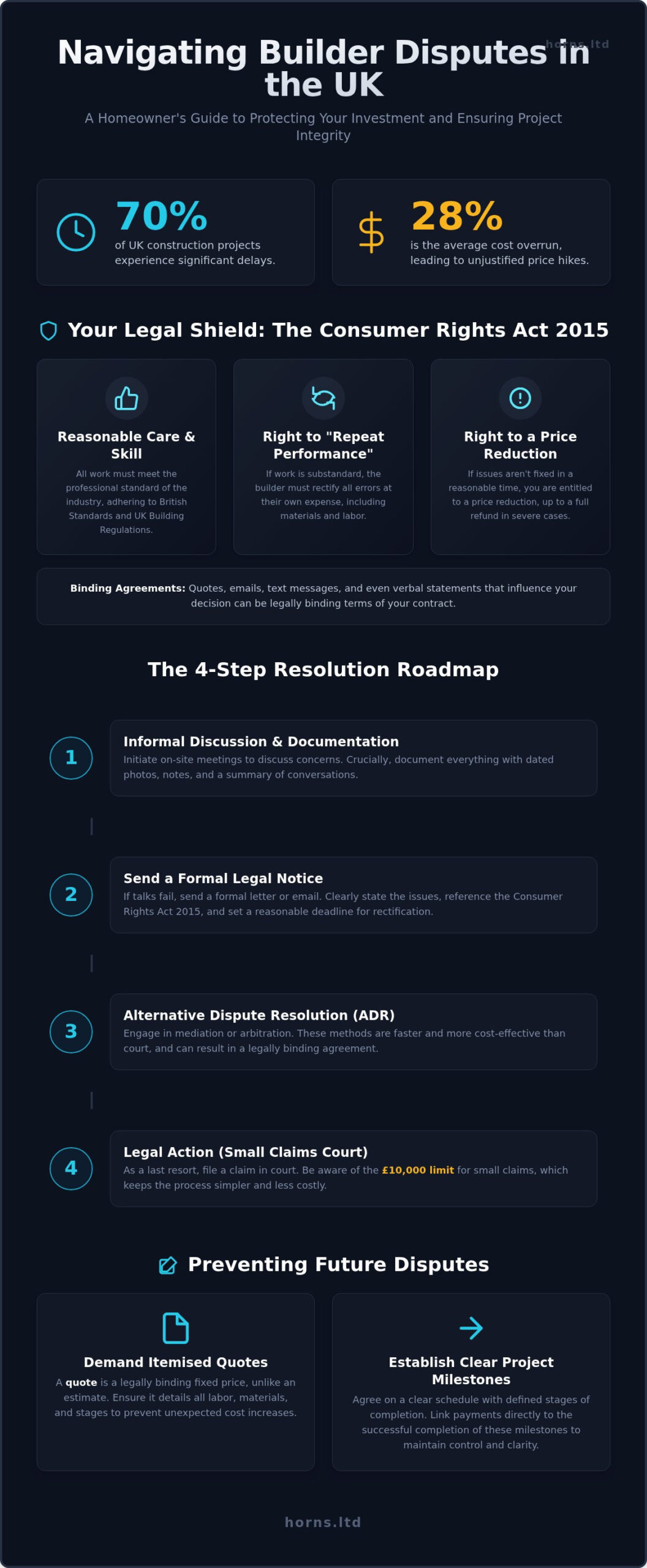
Imagine the silence of a home that should be alive with the rhythmic pulse of craftsmanship, now replaced by the hollow echo of an abandoned site and the heavy weight of unfinished promises. For many, the dream of a bespoke extension or a refined loft conversion dissolves into a landscape of dust and disappointment when professional standards falter. You might find yourself asking, what if i have a dispute with my builder uk, as you face the 70 percent probability that your project will suffer from delays or the 28 percent average cost overrun seen across the industry this year.
It’s deeply distressing when the sanctuary of your home is compromised by poor workmanship or opaque financial demands. This guide offers a sophisticated roadmap to handle these turbulent waters with absolute confidence. We will explore your legal protections under the Consumer Rights Act 2015, the nuances of the 10,000 pound small claims limits, and the dignified path of mediation. You’ll discover how to transition from the emotional strain of a stalled project to a position of strength, ensuring your vision is ultimately realized with the technical fidelity and architectural integrity it deserves.
Key Takeaways
- Understand that the Consumer Rights Act 2015 mandates all building work be executed with reasonable care and skill, ensuring your project meets professional standards.
- Discover the precise steps to take when asking what if i have a dispute with my builder uk, starting with documented on-site meetings and escalating to formal legal notices.
- Utilise Alternative Dispute Resolution methods like mediation to achieve a binding resolution faster and more cost-effectively than traditional courtroom litigation.
- Learn to distinguish between structural and aesthetic defects to build a robust evidentiary case for refunds or necessary remedial work.
- Prevent future conflicts by adopting the Horns Construction standard of itemised quotes and clear project milestones that protect the architectural integrity of your home.
Understanding Your Legal Rights Under the Consumer Rights Act 2015
The foundation of any high-end renovation is built upon more than just stone and timber; it rests on a framework of mutual trust and legal certainty. When that trust fractures, the Consumer Rights Act 2015 serves as your primary shield. This legislation is not merely a set of rules for mass-market goods, but a sophisticated instrument that governs the delicate relationship between a homeowner and a contractor. If you find yourself wondering, what if i have a dispute with my builder uk, your first step is to recognize that the law demands a level of technical fidelity that matches the premium nature of your project.
Under this Act, every bespoke joinery piece, every structural beam, and every tile laid must meet the standard of “reasonable care and skill.” This is the core pillar of your protection. If a builder fails to reach this benchmark, they are legally obligated to rectify the work through “repeat performance” at no additional cost to you. This means they cannot charge for the labor or materials required to fix their own errors. If the work remains substandard or cannot be finished within a reasonable timeframe, you possess the right to a price reduction, which can, in extreme cases, amount to a full refund of the contract value.
What “Reasonable Care and Skill” Actually Means in 2026
In the context of a luxury refurbishment, “reasonable” is not a vague suggestion of adequacy. It is a precise measurement against the collective expertise of the industry. In 2026, this standard is increasingly defined by strict adherence to the latest British Standards and the evolving nuances of UK Building Regulations. Reasonable care in structural work is the uncompromising adherence to current British Standards and Building Regulations, ensuring the physical integrity of the home matches the architectural intent. While your personal aesthetic expectations are vital, the law focuses on whether a competent professional, possessing the same specialized skill set, would consider the work technically sound and aesthetically finished to an industry-standard level.
The Legal Standing of Verbal Agreements and Quotes
Many homeowners feel vulnerable when a contract isn’t a hundred-page document, yet the law is remarkably protective of informal communication. Any information provided by the builder, whether written in a formal contract, sent via a WhatsApp message, or even stated orally during a site visit, can be considered a binding term of the agreement. This is particularly true if that information influenced your decision to hire them.
- Quotes vs. Estimates: A quote is a fixed offer that remains legally binding once accepted; an estimate is merely an educated guess.
- Digital Trails: Emails and text messages serve as contemporaneous evidence of agreed milestones and material specifications.
- Cooling-off Periods: For contracts signed within your home, you generally have a 14-day window to cancel, providing a vital safety net before work commences.
If no specific price or deadline was agreed upon at the outset, the Act dictates that the work must be completed for a “reasonable” cost and within a “reasonable” timeframe. This prevents contractors from holding a project hostage with unjustified price hikes or indefinite delays, ensuring your journey toward a perfected home remains a dignified and controlled experience.
Common Causes of Building Disputes: Workmanship, Cost, and Time
The transition from an architectural vision to a physical reality is rarely a linear path. While the initial stages of a project are often fueled by creative excitement, the middle phases can reveal a misalignment between expectations and execution. When the technical fidelity of the build begins to falter, homeowners naturally start to ask, what if i have a dispute with my builder uk. Statistics from March 2026 indicate that approximately 70 percent of UK construction projects face delivery delays, while the average cost overrun remains stubbornly high at 28 percent. These figures represent more than just financial data; they reflect the emotional toll of a home in flux.
Disputes typically crystallize around four specific areas of failure. Defective workmanship is the most visceral, ranging from structural inadequacies that threaten the integrity of the building to aesthetic flaws that offend the eye. Unjustified price hikes often follow, where a contractor attempts to pass on the costs of their own poor estimating or material mismanagement. Delays and “ghosting” create a unique form of psychological stress, leaving a site dormant and a family in limbo. Finally, contractual breaches occur when a builder deviates from specified materials or ignores the nuanced details of a bespoke design, compromising the artistic intent of the project.
Snagging vs. Major Breach of Contract
Distinguishing between minor imperfections and a fundamental failure of service is essential for a dignified resolution. In the context of house extensions in London, the “snagging” period is a dedicated phase for refining the exquisite details that define a premium build. A major breach, however, involves defects that compromise safety or prevent the issuance of a Building Control completion certificate. If your project has stalled due to significant technical failures, seeking guidance from Citizens Advice can help you categorize the severity of the issue before escalating your claim.
Disputes Over “Extra” Works and Variations
Financial friction often stems from “cost creep” during complex projects. A builder may suggest additions mid-build, but without a signed variation order, these “extras” become a breeding ground for conflict. Protecting your investment during a home refurbishment requires an uncompromising commitment to documentation. If your current project has lost its way due to poor management, consulting a specialist like Horns Construction can provide the technical assessment needed to restore order and ensure every pound spent is reflected in the quality of the finish.
The 4-Step Resolution Roadmap: From Conversation to Evidence
When the rhythm of construction breaks down, the path back to architectural harmony requires a disciplined, four-step approach. It’s not enough to simply feel wronged; you must translate that feeling into a structured legal and technical argument. If you’re currently wondering, what if i have a dispute with my builder uk, the resolution begins with a move from verbal frustration to documented fact. This transition ensures that your case is built on clinical precision rather than emotional distress.
Step 1 is the “Informal First” meeting. Invite the contractor to the site for a quiet, professional walkthrough, clearly identifying where the work lacks the promised technical fidelity. If this fails to inspire a remedy, Step 2 involves a formal written notification, often called a Letter Before Action. This document isn’t just a complaint; it’s a legal marker that sets a final deadline for rectification. It signals that while you value a collaborative finish, you’re prepared to protect your home’s integrity through formal channels.
Step 3 focuses on the creation of a comprehensive evidence dossier. This is a meticulous collection of every interaction and physical failure. Finally, Step 4 involves commissioning an independent surveyor to provide a valuation of the work completed versus the amount paid. This ensures your financial recovery is based on objective data rather than guesswork. The House of Commons Library report on builder disputes highlights how these structured steps align with the statutory rights provided to every UK homeowner, providing the necessary leverage to demand excellence.
How to Document Building Defects Like a Pro
Contemporaneous records are your most powerful asset. Use time-stamped photography to capture defects as they appear, and perform video walkthroughs that narrate the specific deviations from the design. Maintain a daily site diary that logs which workers were present and what progress was made. Don’t forget to collect independent quotes from reputable contractors to establish the true cost of remedying the substandard work; this creates a clear financial baseline for any future claim.
The Role of West London Building Control
In high-value areas like Hammersmith, Fulham, or Ealing, the local Building Control department is an essential ally. While they won’t settle financial disagreements, their inspection of structural work provides an authoritative, third-party report on whether the build meets legal safety standards. A negative report from a West London surveyor often provides the necessary pressure to force a builder into compliance, as it threatens their professional standing and future ability to sign off projects in these prestigious boroughs.
Alternative Dispute Resolution (ADR) and Legal Action
When the structured roadmap of evidence and dialogue fails to produce a remedy, the legal landscape offers several paths toward a resolution. If you are currently asking, what if i have a dispute with my builder uk, you must weigh the speed of resolution against the finality of the outcome. In 2026, the UK legal system has moved decisively toward Alternative Dispute Resolution, viewing the courtroom as a final sanctuary rather than a first port of call. This shift reflects a desire to preserve the dignity of the home and the financial viability of the project.
Mediation stands as the most collaborative path, where a neutral third party facilitates a settlement. Following the landmark *Churchill v Merthyr Tydfil CBC* ruling, courts now frequently mandate mediation before litigation can proceed. For disputes under 5,000 pounds, a two hour video mediation session typically costs 125 pounds per party, offering a swift alternative to a protracted trial. Adjudication remains the gold standard for ongoing projects; it provides a binding, interim decision within 28 days, ensuring that work can continue while technical disagreements are handled by industry experts.
If the dispute is purely financial and the value is 10,000 pounds or less, the Small Claims Track provides an accessible, though often technically demanding, route. As of July 2026, starting a claim for 5,000 pounds requires a 205 pound issue fee and a 346 pound hearing fee. For those who funded their refurbishment using a credit card for amounts between 100 and 30,000 pounds, Section 75 of the Consumer Credit Act offers a powerful safety net. This makes your credit provider jointly liable, allowing you to seek a refund directly from the bank if the contractor is insolvent or refuses to fix the work.
Is Suing Your Builder Worth the Cost?
The decision to litigate must be a clinical assessment of risk. In the twelve months leading to June 2026, 3,805 construction firms in England and Wales faced insolvency, a record high that highlights the danger of pursuing a contractor who lacks the assets to pay a judgment. Professional negligence claims involve high legal fees and the cost of expert witnesses. Sometimes, the most sophisticated choice is to minimize further loss, secure the site, and focus on project recovery with a contractor who respects the technical demands of the design.
Reporting to Trading Standards and Industry Bodies
Membership in the Federation of Master Builders (FMB) or TrustMark provides an additional layer of protection, as these bodies offer internal dispute resolution schemes that are often faster than the courts. Reporting a contractor to the Citizens Advice Consumer Service or the Business Disputes Register isn’t just about personal grievance; it’s about maintaining the integrity of the London construction market. If your home has been left in a state of technical disarray, contact Horns Construction to perform a professional audit and rescue your project from substandard workmanship.
Preventing Future Disputes: The Horns Construction Standard
The most profound resolution to any building conflict is the uncompromising commitment to ensure it never begins. While you may be exploring what if i have a dispute with my builder uk because of a current crisis, the path toward a tranquil home life involves adopting a standard of transparency that precludes friction. At Horns Construction, we believe a detailed, itemised quote is the foundational document of trust. It transforms a vague estimate into a technical blueprint of financial and material expectations, leaving no room for the ambiguity that often fuels resentment. By adhering to the structured RIBA stages, we provide a rhythmic progression where every phase is validated before the next commences, ensuring the architectural integrity remains uncompromised.
This methodology is particularly vital in complex environments like a kitchen renovation London, where the integration of bespoke joinery and advanced plumbing requires clear milestones. Before commissioning any work, homeowners should rigorously vet their contractor’s West London reputation. A specialist with over 20 years of experience in Hammersmith, Fulham, and Chiswick brings a nuanced understanding of local building regulations and a network of manual craftsmen who respect the high standards of these prestigious postcodes. Always verify comprehensive insurance and demand references that speak to a builder’s conduct during the inevitable structural challenges of a project.
The “Fixed-Price” Promise and Variation Management
Hidden extras and sudden price hikes are the antithesis of professional craftsmanship. In high-stakes projects like loft conversions, we provide a fixed-price promise that eliminates financial uncertainty from the outset. When unforeseen structural issues arise, we manage them with clinical fairness through signed variation orders. This process ensures any deviation from the original plan is documented and agreed upon, managed by a dedicated project manager who serves as your single point of technical fidelity. This approach maintains the dignity of the budget while allowing for the flexibility required by London’s historic architecture.
Transitioning to a New Builder: The Rescue Process
If your current project has reached a point of technical or emotional collapse, the transition to a new contractor must be handled with surgical precision. Our rescue process begins with a comprehensive audit of the existing site, where we assess half-finished work and identify every structural or aesthetic failure. We secure the building’s physical integrity and validate previous work against current standards before crafting a new, realistic timeline. This process is not merely about finishing a job; it’s about reclaiming the artistic vision for your home and ensuring the final result reflects the perfection you originally sought. We step in to restore order, bringing a sense of calm and technical superiority to sites that have been marred by poor workmanship.
Reclaiming Your Vision with Technical Certainty
The journey toward a perfected home should never be defined by the shadows of conflict or the weight of substandard work. As we’ve explored, your protection under the Consumer Rights Act 2015 is uncompromising, ensuring that every structural and aesthetic detail meets the standard of professional fidelity. When you find yourself asking what if i have a dispute with my builder uk, your focus must shift toward the clinical collection of evidence and the dignified path of mediation. By leveraging the statutory roadmap and independent surveyor reports, you can navigate even the most stalled project back toward completion with absolute confidence.
Ultimately, the best defense against disappointment is a partnership built on transparency and local authority approved standards. With 20+ years of West London expertise and RIBA-aligned project management, we ensure that your architectural ambitions are realized without the friction of hidden costs or technical failures. We’re fully insured and dedicated to the highest manual craftsmanship, providing a sanctuary of professional trust for your refurbishment. Experience a dispute-free renovation with West London’s trusted experts. Consult Horns Construction Today to restore the integrity of your home with the precision it deserves.
Frequently Asked Questions
Can I stop paying my builder if I am unhappy with the work?
You shouldn’t unilaterally stop all payments without professional advice, as this may place you in breach of contract. However, the Consumer Rights Act allows you to withhold a portion of the fee that reflects the value of the defective or unfinished work. It’s essential to document this decision clearly in writing. Explain that the funds are being retained until the technical standards of your London project are met to your satisfaction.
What if I do not have a written contract with my builder?
You still possess significant legal protections even without a physical document. In the UK, a verbal agreement is a binding contract, and your rights are supplemented by statutory law. If you’re wondering what if i have a dispute with my builder uk without a formal paper, look to your digital trail. Emails, text messages, and bank transfers serve as evidence of the agreed scope and price. The law assumes a professional standard of care applies regardless.
How long do I have to make a claim against a builder in the UK?
You generally have six years from the date of the breach of contract to initiate a legal claim in England and Wales. If your agreement was executed as a deed, this limitation period extends to twelve years. It’s vital to act as soon as a defect is identified, particularly in high-value West London renovations where structural integrity is at stake. Contemporaneous evidence becomes harder to validate as time passes, potentially weakening your position in formal proceedings.
Should I let my builder back into my house to fix the mistakes?
You are usually required to give the original builder a reasonable opportunity to rectify their mistakes before hiring a new contractor. This is known as the right to repeat performance under consumer law. If you refuse access without a valid reason, such as a complete breakdown of trust or safety concerns, a court might limit the compensation you can later claim. Document every visit and the specific technical failures that remain after their attempts to fix the work.
Can I claim for the emotional stress caused by a building dispute?
You can occasionally claim for distress and inconvenience, though these awards are typically modest in the UK legal system. Courts focus primarily on the financial cost of restoring the property to its intended state. To succeed, you must demonstrate that the dispute caused significant suffering beyond the usual frustrations of a building site. Keeping a detailed log of the impact on your daily life in your home can help support a claim for loss of amenity.
What happens if my builder goes into liquidation during a dispute?
You become an unsecured creditor if your builder enters liquidation, which unfortunately means recovering funds is often difficult. Check if the company had a domestic building insurance policy or if you’re protected by an industry body’s guarantee scheme. If you paid a portion of the costs via credit card, you might find relief through Section 75 of the Consumer Credit Act. This holds the card provider jointly liable for the breach of contract and project failure.
How much does it cost to take a builder to the Small Claims Court in 2026?
The cost depends entirely on the value of your claim. In 2026, the issue fee for a claim between 5,000 and 10,000 pounds is 455 pounds. If the case proceeds to a hearing, an additional hearing fee of 346 pounds applies for the small claims track. These costs are separate from any legal representation you choose to hire. It’s a structured process designed to resolve financial disagreements without the overwhelming complexity or expense of the higher courts.
Does home insurance cover building disputes or poor workmanship?
Standard home insurance policies rarely cover the cost of fixing poor workmanship or the results of a builder’s incompetence. However, many premium policies include legal expenses cover as an optional add-on, which can be invaluable when asking what if i have a dispute with my builder uk. This cover may pay for the solicitors and surveyors needed to pursue a claim. Always review your policy details before starting a major London refurbishment to understand your protection.