
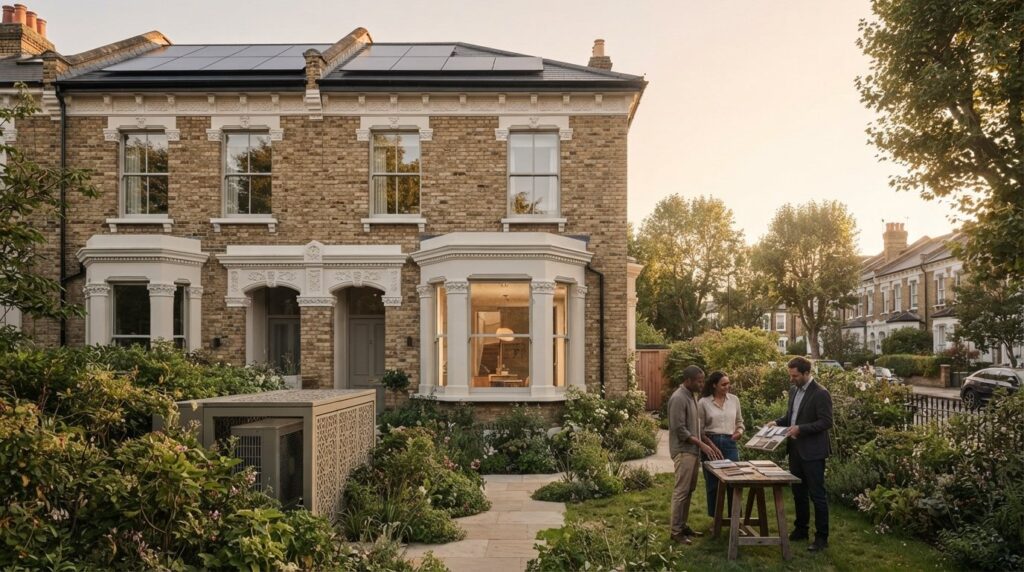
True luxury in 2026 isn’t defined by the height of a ceiling or the brand of a kitchen, but by the silent, invisible engineering that transforms a drafty period property into a high-performance sanctuary. Many homeowners in West London feel trapped between rising energy costs and the rigid constraints of conservation area rules. You might fear that an eco-friendly home renovation london project requires sacrificing your property’s heritage character for utilitarian, “green” aesthetics. This is a common misconception that overlooks the profound artistry found in modern sustainable building.
We recognize the delicate balance required to retrofit a Victorian or Georgian home to meet future standards while preserving its timeless soul. You shouldn’t have to choose between meticulous craftsmanship and an impeccable EPC rating. This guide reveals how to integrate advanced thermal solutions and renewable technology into your London property to increase its resale value and daily comfort. We’ll explore the sophisticated techniques used to marry heritage preservation with 21st-century efficiency, ensuring your home remains an enduring masterpiece for generations to come.
Key Takeaways
- Understand how a bespoke eco-friendly home renovation london integrates technical precision with heritage preservation to create a high-performance sanctuary.
- Learn the “Fabric First” principle to drastically reduce energy demand through breathable insulation and high-performance glazing tailored for period properties.
- Explore the transition to renewable energy and the practicalities of installing air-source heat pumps within compact London garden footprints.
- Discover how to curate healthy, non-toxic interiors using VOC-free finishes and reclaimed materials that enhance your property’s authentic character.
- Navigate the complexities of 2026 planning regulations while maximizing your capital appreciation and long-term energy savings.
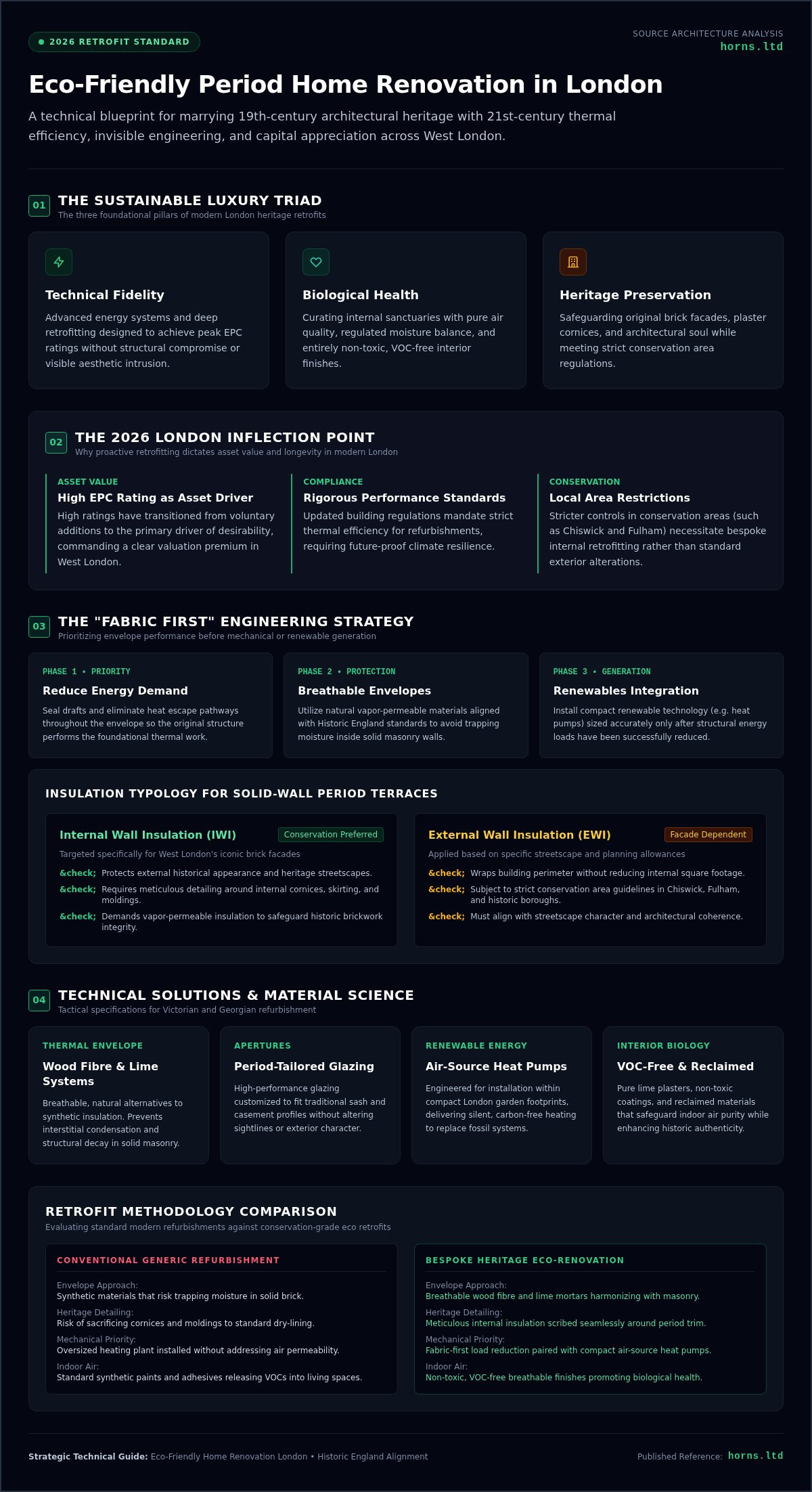
The Philosophy of Sustainable Luxury: Eco-Friendly Renovation in London
A home is far more than a mere physical structure; it’s a living heirloom that reflects the values and the vision of those who dwell within. In a city where history is etched into every weathered brick, an eco-friendly home renovation london project must transcend simple utility to become a holistic masterpiece. We view sustainability as a triad of essential elements: the technical fidelity of energy systems, the biological health of the inhabitants, and the meticulous preservation of architectural heritage. It’s the quiet, profound thrill of stepping from a damp, drafty Victorian corridor into a thermal sanctuary where the air is pure and the temperature remains perfectly balanced regardless of the season.
True luxury today is defined by the invisible engineering that ensures a property performs as beautifully as it looks. This approach requires a deep energy retrofit that respects the original bones of the building while elevating the daily living experience to new heights of comfort and efficiency. By focusing on high-performance engineering alongside artistic design, we transform aging London properties into resilient sanctuaries that offer both emotional peace and technical superiority.
Why 2026 is the Turning Point for London Retrofitting
Sustainability has shifted from an optional design choice to a cornerstone of capital appreciation. By 2026, the London property market has reached a definitive threshold where a high EPC rating is a primary driver of desirability. Modern building regulations now demand more rigorous performance standards for every refurbishment, making energy security and climate resilience essential components of a future-proof investment. An eco-friendly home renovation london ensures that your property remains a liquid and valuable asset in an increasingly carbon-conscious economy. A home that consumes minimal energy while providing a superior internal climate will always command a premium in the competitive West London landscape.
Preserving Heritage While Embracing Innovation
London’s architectural identity rests heavily on its Victorian and Georgian terraces, yet these properties present unique challenges for modern efficiency. Conservation area rules in neighbourhoods like Chiswick or Fulham often restrict external modifications, making bespoke, internal solutions mandatory. This requires a level of craftsmanship that generic building services cannot provide. You don’t have to sacrifice your property’s soul for the sake of its performance. We focus on integrating high-performance engineering within the existing fabric, using breathable materials that protect the structure. Whether it’s the precise application of lime plasters or the discreet installation of advanced thermal layers, the goal is a seamless fusion of 19th-century elegance and 21st-century performance.
The Fabric First Approach: Insulation and High-Performance Glazing
The silent foundation of any superior eco-friendly home renovation london project is the “Fabric First” principle. Before considering heat pumps or solar arrays, we must address the building’s thermal envelope. This philosophy prioritizes the reduction of energy demand through high-performance insulation and airtightness, ensuring the structure itself does the heavy lifting. In the context of London’s period architecture, this isn’t merely a technical upgrade; it’s an act of preservation. By sealing the gaps that have allowed heat to escape for a century, we create a climate-controlled sanctuary that remains serene and still, even amidst the city’s restless energy.
Traditional solid-wall properties require a nuanced understanding of building physics. Standard synthetic materials can trap moisture, leading to structural decay and poor air quality. We advocate for breathable, natural insulation materials like wood fibre or lime-based systems that harmonize with original masonry. Following Historic England’s guidance on retrofitting historic buildings is essential to ensure that these interventions don’t compromise the building’s longevity. Choosing between internal and external wall insulation depends on your specific streetscape:
- Internal Wall Insulation (IWI): Ideal for preserving the iconic brick facades of West London, though it requires meticulous detailing around cornices and skirting.
- External Wall Insulation (EWI): Offers the best thermal performance and protects the external fabric, typically suited for rear elevations or non-listed properties.
Airtightness layers are equally critical. They eliminate the subtle drafts that undermine comfort and provide an unexpected layer of acoustic luxury, shielding your interior from the hum of London traffic.
Advanced Glazing Solutions for Period Homes
Windows are the eyes of a property, and for Victorian terraces, the sash window is an irreplaceable aesthetic feature. We utilize bespoke timber-framed glazing that replicates original profiles while incorporating vacuum glass technology. This “invisible” upgrade provides the thermal performance of triple glazing within a pane thin enough to fit traditional rebates. It’s a sophisticated solution that satisfies conservation officers while providing a dramatic improvement in both street appeal and internal warmth.
Roof and Floor Insulation in Loft Conversions
When executing loft conversions, the challenge is maintaining thermal stability in a space exposed to the elements. We use high-performance PIR boards or natural wood fibre to maximize head height without sacrificing efficiency. Wood fibre is particularly effective in London’s increasingly warm summers, as its high thermal mass prevents the “oven effect” common in poorly insulated top-floor spaces. If you’re considering how to integrate these high-performance materials into your own property, our team can help you design a bespoke refurbishment strategy that balances technical fidelity with artistic grace.
Decarbonising the London Home: Heat Pumps and Renewable Energy
Once the architectural envelope has been secured through meticulous insulation, the focus of an eco-friendly home renovation london shifts to the heart of the property: its energy source. We are moving beyond the era of the gas boiler, embracing a future where homes are powered by silent, carbon-neutral technology. This transition isn’t just a response to regulation; it’s a commitment to technical fidelity and long-term energy security. For the London homeowner, this requires integrating Air Source Heat Pumps (ASHPs) and solar arrays into properties where space and heritage constraints demand a master’s touch.
The transition from fossil fuels is a journey toward a more resilient and refined domestic environment. It’s about more than just replacing a machine; it’s about re-engineering how a home breathes and stays warm. This process must be handled with a level of professionalism that respects both the technical requirements of the hardware and the aesthetic integrity of your living space.
Air Source Heat Pumps vs. Traditional Boilers
The technical superiority of an ASHP lies in its Coefficient of Performance (COP). While a premium gas boiler might reach 92% efficiency, a high-performance heat pump can achieve a COP of 3.0 to 4.0, effectively turning one unit of electricity into four units of heat. This efficiency is maximized when paired with low-temperature emitters, such as water-based underfloor heating, which provides a gentle, pervasive warmth across the floor’s surface. To support this transition, homeowners can currently access £7,500 through the Boiler Upgrade Scheme grants, making the move to low-carbon heating a financially astute decision. In compact areas like Hammersmith or Fulham, we prioritize the selection of ultra-quiet units and precise placement to ensure your garden remains a tranquil retreat.
Solar Integration in Urban Environments
Generating power on-site is the ultimate expression of energy independence. When we design house extensions, we treat the roof as a functional canvas. In sensitive conservation areas where traditional blue-tinted panels might disrupt the streetscape, we utilize solar slates. These innovative tiles mimic the appearance of traditional Welsh slate while harvesting clean energy. This power can be stored in discreet battery systems, allowing you to run your home on sunlight long after the sun has set. This synergy is further enhanced by integrating electric vehicle (EV) charging points, ensuring your eco-friendly home renovation london serves as a complete hub for a sustainable, premium lifestyle. Smart energy management systems then act as the brain of the home, balancing load and storage with effortless precision.
Sustainable Interior Design: Materials and Meticulous Finishes
The final, most intimate layer of an eco-friendly home renovation london is the interior finish. This is where the technical fidelity of the architectural envelope meets the sensory experience of the inhabitant. We believe that a truly sustainable home must also be a healthy one. This requires moving away from synthetic, off-gassing materials toward a “Healthy Home” philosophy. By selecting VOC-free paints and natural, mineral-based finishes, we ensure the air you breathe is as pure as the design is elegant. Your home should be an emollient space that nurtures the senses while respecting the planet.
Meticulous craftsmanship is the ultimate form of sustainability. A bespoke piece of joinery designed to last for generations is fundamentally more eco-friendly than a mass-produced alternative destined for a landfill. During full home refurbishments, we often source reclaimed materials to ground the property in its London history. Whether it’s salvaged Yorkstone for a hallway or antique timber for flooring, these elements provide a patina of age that new materials cannot replicate. For modern surfaces, we prioritize FSC-certified hardwoods, tactile cork, and natural stone, ensuring every footfall resonates with quality and conscience.
Eco-Friendly Kitchen and Bathroom Refurbishments
The modern kitchen is a marriage of high-efficiency engineering and organic beauty. We utilize cabinetry constructed from low-formaldehyde boards and sustainable timber, often finished with innovative worktops made from recycled glass or paper composites. In the bathroom, luxury doesn’t require waste. We integrate water-saving luxury brassware that maintains high-pressure performance while significantly reducing water consumption. High-efficiency appliances are selected not just for their performance, but for their ability to blend seamlessly into a meticulously planned aesthetic.
Natural Light and Biophilic Design
Biophilic design is a return to our fundamental need for connection with the natural world. We use strategically placed skylights and light wells to flood deep-plan London terraces with natural light, drastically reducing the need for artificial lighting during the day. This creates a serene atmosphere that improves mental well-being and highlights the natural textures used throughout the home. By integrating a seamless indoor-outdoor flow, we invite the vitality of the garden into the living space, improving air quality and creating a timeless sanctuary. If you’re ready to curate a home that balances artistic vision with environmental responsibility, contact our design team to begin your refurbishment journey.
Planning Your Eco-Renovation: ROI and the Horns Construction Process
The final stage of any high-performance project is the meticulous alignment of vision, regulation, and fiscal intelligence. Embarking on an eco-friendly home renovation london requires a partner who views your property not just as a site, but as a legacy. Planning in 2026 involves more than aesthetics; it’s about navigating the sophisticated interplay between Permitted Development rights and the specific constraints of conservation areas. Whether your property sits in the leafy avenues of Ealing or the historic streets of Chiswick, the path to a sustainable sanctuary is paved with technical precision and deep local expertise.
Navigating the complexities of London planning permission requires a nuanced approach, especially when integrating modern technology into period facades. We manage this process with the calm authority that comes from over 20 years of experience in West London’s residential sector. Our design-to-completion project management ensures that the artistic vision established at the outset is never compromised by the technical demands of the build. Choosing a construction company in London that understands the marriage of sustainability and heritage is the most critical decision you’ll make in protecting your investment.
Maximising Property Value with an EPC A-Rating
In the current market, a high EPC rating is no longer a “green feature” but a primary driver of capital appreciation. Buyers in the premium London segment are increasingly wary of drafty, inefficient homes, making an eco-friendly home renovation london an essential strategy for future-proofing. This “Green Premium” reflects the market’s desire for energy security and the long-term durability of premium materials. Natural wood fibre insulation and vacuum glazing don’t just perform better; they protect the structural integrity of your home far longer than standard synthetic alternatives, ensuring your property remains a liquid and desirable asset for decades.
The Renovation Timeline: What to Expect
A deep energy retrofit is a complex symphony of trades, but it shouldn’t be a source of stress for the homeowner. We provide a single point of contact to oversee every detail, ensuring a seamless flow from the initial thermal assessment to the final commissioning of your renewable systems. The timeline for a full refurbishment is a journey of transformation where we prioritize quality over haste. Once the physical work is complete, we provide comprehensive post-renovation support to ensure you’re getting the maximum performance from your new home systems. This dignified, measured approach ensures that the finished result is not just a building, but a meticulously crafted work of art.
Defining the Future of Your London Heritage
A home is a testament to your values, a sanctuary where technical fidelity meets artistic expression. By prioritizing a fabric-first approach and integrating sophisticated renewable technology, you transform a period property into a resilient, high-performance masterpiece. Your eco-friendly home renovation london project is more than an upgrade; it’s a commitment to a healthier lifestyle and the preservation of our city’s architectural soul. You’ve seen how breathable insulation, vacuum glazing, and air-source heat pumps create a silent, thermal sanctuary that commands a significant premium in the 2026 market.
Realizing this vision requires a partner who understands that true luxury is found in the details that others overlook. With over 20 years of expertise across West London, we offer a bespoke design-build service that refuses to compromise on quality or heritage value. We invite you to begin your journey to a sustainable luxury home with Horns Construction. Together, we can craft an enduring sanctuary that honors the past while embracing the highest standards of modern performance. Your property’s next chapter starts with a single, purposeful step toward perfection.
Frequently Asked Questions
How much does an eco-friendly home renovation cost in London in 2026?
The investment for a sustainable transformation depends heavily on the property’s initial condition and the depth of the retrofit. A comprehensive project often involves structural enhancements, breathable insulation, and the integration of renewable energy systems. While the initial capital requirement is higher than a standard refurbishment, the long-term energy savings and capital appreciation provide a significant return. We offer meticulous, project-based quotes that reflect the technical precision required for high-end London homes.
Do I need planning permission for eco-upgrades like solar panels or heat pumps?
Many energy improvements fall under Permitted Development, but London’s numerous conservation areas and listed buildings introduce specific complexities. Solar panels usually don’t require full permission if they meet height and placement criteria, while heat pumps must comply with noise regulations and boundary distances. It is vital to consult with experts who understand local borough rules to ensure your eco-friendly home renovation london remains fully compliant with all planning and heritage constraints.
Can I make a Grade II listed London property eco-friendly?
Improving the performance of a Grade II listed home is entirely possible through sensitive, breathable interventions. The strategy focuses on non-invasive measures such as secondary glazing, natural fibre loft insulation, and discreetly integrated low-carbon heating. Every technical upgrade must be negotiated with conservation officers to protect the building’s historic soul. We specialize in these delicate balances, ensuring your heritage property achieves 21st-century comfort without compromising its irreplaceable architectural character.
What is the most effective way to insulate a Victorian terrace house?
For London’s iconic solid-wall terraces, a “Fabric First” approach using breathable internal wall insulation is the most effective solution. Utilizing natural materials like wood fibre or lime-based systems allows the masonry to manage moisture while creating a robust thermal barrier. When combined with draught-proofing and high-performance glazing, this creates a serene internal climate. This level of technical fidelity prevents damp issues and ensures your period home remains warm, quiet, and energy-efficient.
How long does a full sustainable home refurbishment typically take?
A deep energy refurbishment usually spans six to twelve months, reflecting the complexity of integrating advanced technology into existing structures. This timeline accounts for the design phase, structural fabric upgrades, and the precise installation of renewable systems. We manage the entire process with a single point of contact, ensuring that each phase of the refurbishment is executed with the professional care and artistic attention to detail that a premium London residence deserves.
Will an eco-renovation significantly increase my London property value?
Properties with superior EPC ratings now command a definitive “Green Premium” in the competitive London market. As energy security becomes a priority for discerning buyers in 2026, a home that offers low running costs and exceptional thermal comfort is highly desirable. An eco-friendly home renovation london future-proofs your investment against rising costs and evolving regulations. It ensures your property remains a liquid and prestigious asset that stands out in West London’s most sought-after neighbourhoods.
What government grants are available for London home energy improvements in 2026?
Homeowners can currently utilize the Boiler Upgrade Scheme, which offers a £7,500 grant to support the transition to air source heat pumps. Additionally, VAT remains at 0% on many energy-saving materials and installations, providing a significant financial advantage. We stay at the forefront of policy changes to help you navigate these incentives, ensuring your project meets the technical standards required to qualify for all available government support and local authority initiatives.
Is an air source heat pump powerful enough for a large London home?
Modern heat pumps are exceptionally capable of heating large residences, provided the property has undergone a professional thermal upgrade. The system must be precisely engineered to match the building’s specific heat loss, often working best when paired with underfloor heating or oversized radiators. This configuration provides a consistent, pervasive warmth that is far more efficient than traditional gas boilers. It delivers a quiet, high-performance heating solution that meets the demands of a luxury lifestyle.