

A striking new kitchen may be the wrong place to start. If damp, ageing services or maintenance issues remain unresolved, a polished finish alone may not make a London rental more appealing or ready to let. Landlords need to weigh each improvement against its cost, tenant demand and the rent the property could realistically achieve. That’s the central question behind property refurbishment for rental income london: which work is most likely to make your property more attractive to its intended tenants?
This guide sets out a practical order for assessing a property, addressing essential repairs and rental readiness, then weighing durable upgrades against cosmetic changes. You’ll learn how to shape the scope around the home’s condition, location and likely tenants, while keeping income goals realistic and recognising that not every improvement will pay for itself. It also explains how to set priorities and coordinate decisions, so you can move from an initial assessment towards a clear refurbishment plan. The aim is a well-presented, practical home, supported by a careful view of costs, risks and next steps.
Key Takeaways
- Start with the property’s condition and intended tenants, then separate essential repairs from functional upgrades and optional presentation work.
- Plan property refurbishment for rental income london around tenant demand, lettability and realistic income goals, not appearance alone.
- Compare each improvement by its purpose, likely disruption and durability. Extra spending may not translate into higher rent or fewer voids.
- Set priorities, assign decision ownership and prepare the home for letting once work is complete.
- Coordinating work from design and planning through completion can bring practical improvements and finishing details together.
Why plan a London property refurbishment around rental income?
A rental-focused refurbishment improves a property’s condition, function and readiness for tenants, with the scope shaped by the home and its intended market. It isn’t simply a cosmetic refresh. A new finish may make a room feel more considered, but rental performance also depends on whether the property meets tenant expectations, how reliably it functions, the cost of maintaining it and how consistently it is occupied. Refurbishment can support lettability, but no upgrade guarantees higher rent or a particular return.
For an existing rental, start by identifying what needs attention: unresolved maintenance, worn fittings or a layout that makes everyday use awkward. Before a first letting, assess the property as a whole and decide what condition and finish are appropriate before tenants move in. In either case, the aim of property refurbishment for rental income london is to direct effort towards practical priorities, not assume that the most visible changes are the most valuable. For general context on renovation and its purposes, see What is Property Renovation?
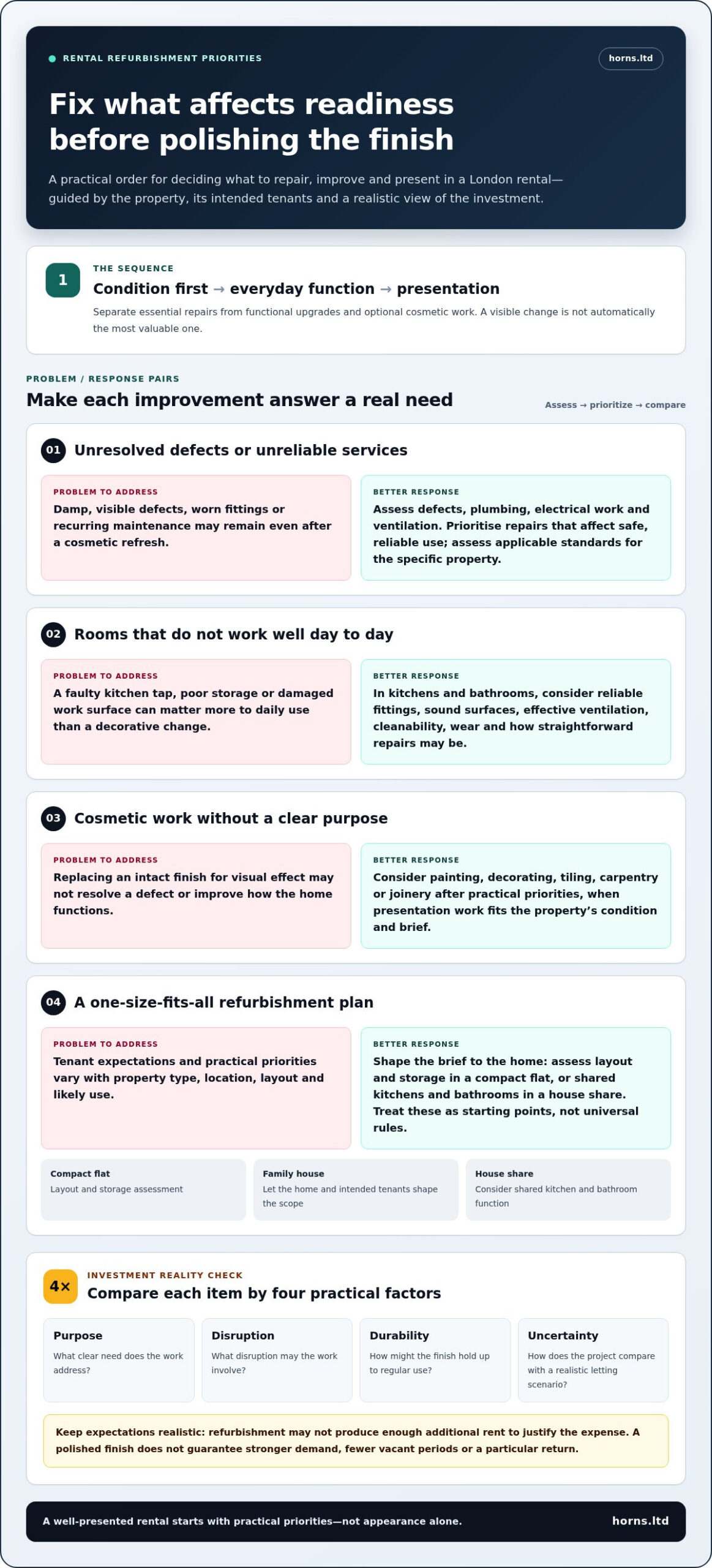
Tenant expectations also vary by location and property type. A compact flat near local transport may need a different layout and storage assessment from a family house in a residential neighbourhood. A house share may place greater emphasis on the condition and function of shared kitchens and bathrooms. These are starting points, not universal rules: let the property’s condition and intended tenants shape the brief.
Which London rental properties may need refurbishment?
Look for dated or unreliable services, worn finishes, awkward room layouts and recurring maintenance problems. Separate issues that may affect condition or safety from changes that are mainly aesthetic. A leak, faulty fixture or deteriorating surface calls for a different priority from replacing a finish simply because it looks dated. This distinction helps you sequence work before considering optional improvements.
What does rental readiness mean in practice?
Rental readiness means a property is in sound, functional condition, with clean rooms, reliable fixtures, durable finishes and applicable standards assessed for that specific home. It also means having a clear handover, so completed work and any remaining decisions are understood before letting preparations begin. Safety and compliance requirements depend on the property and circumstances, so assess them against current, relevant guidance rather than treating appearance as proof that a home is ready.
Which refurbishment work can make a London rental more lettable?
A useful scope groups work by purpose rather than treating every visible flaw as equally urgent. Start with the property’s condition, intended tenant and project objectives. This keeps property refurbishment for rental income london focused on practical needs: address defects first, improve how rooms function next, then consider presentation upgrades that fit the brief. Durable, maintainable finishes may be worth considering, but they cannot guarantee lower maintenance or higher rent.
Assess repairs, services and safety-related work first
Assess visible defects and signs of damp, along with the condition of plumbing, electrical work and ventilation. The right work depends on what the assessment finds, the property’s circumstances and applicable requirements. Separate repairs that affect safe, reliable use from cosmetic choices such as repainting a sound wall. For relevant hazard guidance, consult the UK Housing Health and Safety guidance; verify current England-wide and relevant London local requirements before relying on any specific compliance claim.
Prioritise kitchens, bathrooms and everyday finishes
In a kitchen, a faulty tap, poor storage or damaged work surface may matter more to daily use than a purely decorative change. In a bathroom, reliable fittings, sound surfaces and effective ventilation may take priority over replacing an intact finish for visual effect. For both rooms, consider how surfaces can be cleaned, how they may wear with regular use and whether repairs would be straightforward. These are practical planning factors, not promises about tenant response or rental performance.
For room-specific ideas, explore the London kitchen renovation guide and bathroom refurbishment guide. Painting, decorating, tiling, carpentry and joinery can also help bring rooms to a consistent finish when the property’s condition calls for it.
A flat, family house and house share may each call for different priorities. Let the home’s layout and likely use guide the scope, rather than relying on a universal checklist. For landlords planning several connected workstreams, coordinated residential refurbishment can bring practical repairs and finishing work into one considered project brief.
Will a London rental refurbishment justify the investment?
It may not. Refurbishment can involve substantial work without producing enough additional rent to justify the expense. A more polished finish also doesn’t guarantee stronger demand or fewer vacant periods. A more useful question is whether each item addresses a clear need and how the complete project compares with a realistic letting scenario. That’s the basis for assessing property refurbishment for rental income london without assuming every upgrade pays for itself.
Compare work by purpose, disruption, durability and uncertainty. Essential repairs address defects or unreliable services; functional upgrades improve how tenants use the home; optional improvements refine its appearance. A repair may be necessary even if it doesn’t increase rent. A kitchen change may improve usability but cause disruption during the work. A cosmetic upgrade may look attractive yet be difficult to justify if the existing finish is sound.
Gross yield compares annual rent with the property’s value, before expenses. Net income accounts for relevant costs, such as ongoing maintenance and periods without rent, to give a more practical view of what may remain. Neither figure alone proves that a refurbishment is worthwhile. Consider the full project scope, likely disruption and the assumptions behind any projected rent or occupancy.
Assess refurbishment value without assuming a rent increase
Set out two scenarios: the property as it stands and the home after a clearly defined scope of work. Use your own verified figures to compare them, including the full cost of the works, realistic rent assumptions, ongoing costs and possible vacancy. Rent and occupancy assumptions need independent, property-specific evidence. Treat them as estimates, not guarantees. If energy-related work is part of the plan, the RICS guide to energy-efficient retrofitting can inform your assessment, but don’t assume it establishes a particular saving for your property.
- Current scenario: record the property’s present condition, letting position, rent assumptions and ongoing costs.
- Post-work scenario: add the defined work, associated costs, likely disruption and evidence-based rent and occupancy assumptions.
Keeping the comparison explicit makes it easier to spot which assumptions carry the most uncertainty and whether optional work belongs in the project at all.
When a lighter refurbishment may be more appropriate
If services are sound and the property is already in good condition, targeted repairs or modest functional changes may be more proportionate than a full overhaul. For example, a landlord might repair a worn surface and improve storage while leaving an intact kitchen layout unchanged. The immediate need may be to prepare the home for letting; a broader redesign could be optional. A restrained scope still needs careful planning, but it avoids treating every possible improvement as essential.
For a project that calls for coordinated work across the home, full home refurbishment planning can bring connected decisions into a considered scope without implying a guaranteed financial return.
How to plan a rental property refurbishment in London
A clear plan turns a landlord’s priorities into an ordered scope of work, with decisions tied to the property, its intended tenants and a realistic completion standard. For property refurbishment for rental income london, write the brief before work begins and give each decision an owner. This helps keep essential repairs distinct from optional changes as the project develops.
Set the brief, priorities and project scope
Record the home’s condition, the tenants it is intended to suit, required repairs and the standard you want to achieve before letting. Mark which items are essential and which could be reconsidered if the scope changes. Keep assumptions and decisions in writing so everyone involved can work from the same brief. Planning, permissions and other requirements depend on the property and proposed work, so assess them in that context.
- Assess the property. Walk through each room and record defects, service issues, layout constraints and existing finishes. Distinguish work that affects condition or function from improvements that are primarily aesthetic.
- Define the intended outcome. Set out the likely tenant profile and how the home needs to function for them. A brief for a family house may prioritise different rooms or storage needs from one for a flat or house share.
- Set priorities and boundaries. List must-do repairs separately from optional upgrades, and state the desired completion standard. Identify who can approve changes, so decisions don’t stall or expand the scope without consideration.
- Sequence and coordinate the work. Plan connected tasks in a sensible order. For example, consider plumbing or electrical work that affects walls or surfaces before final decorating and finishes. Coordinating trades around these dependencies can help reduce avoidable clashes and rework.
- Review progress and prepare for letting. Check work against the agreed scope, record changes and resolve outstanding items. Before handover, inspect completed work and organise relevant safety documents and records so they correspond to the property and work undertaken.
Coordinate the work and prepare for handover
Progress reviews create a structured opportunity to discuss completed tasks, emerging issues and proposed changes. Keep the agreed scope visible as decisions are made: even a small alteration can affect related work or finishes. At the final check, review rooms and fixtures against the brief, note unfinished items and bring handover information together before letting preparations proceed.
For landlords planning a connected project across several rooms, explore full home refurbishment in London as a way to consider the work as one coordinated scope.
How Horns Construction supports London rental refurbishments
Once you’ve established what the property needs and which work belongs in the brief, the next challenge is bringing connected decisions together. Horns Construction is a West London residential renovation company supporting projects from initial design and planning through completion. For landlords considering property refurbishment for rental income london, a full-home scope can be considered alongside practical work in individual rooms, without treating rental performance as a guaranteed outcome.
A coordinated approach to full home refurbishment
A refurbishment may bring several workstreams into one residential project. Depending on the brief, this can include kitchen or bathroom fitting, plumbing, electrical work, painting and decorating, carpentry and joinery, and tiling. Considering these elements together can clarify how one decision affects another, such as planning services before final finishes. The scope is shaped by the property’s condition and the landlord’s priorities. Clear decisions matter at every stage. For further context, read this London home refurbishment guide.
A joined-up project can be useful when work spans multiple rooms or trades. Rather than making isolated choices, landlords can set out the intended use of the home, identify essential repairs and define the finish they want to achieve. Design and planning provide a foundation for those choices, while progress through completion keeps attention on the agreed scope and practical readiness. The objective is a considered refurbishment, not a promise of higher rent, stronger occupancy or a specific return.
Choose the next step for your London rental property
Before discussing a project, gather a concise picture of the property: its current condition, intended use, key repair needs, priority rooms and questions about the proposed work. Note what is essential and what remains optional. A clear brief gives the discussion a practical starting point and keeps decisions connected to the home rather than a generic renovation checklist.
Horns Construction can discuss a residential refurbishment brief and the work involved, from full-home planning to relevant kitchen, bathroom and finishing work. Set out your priorities, then discuss your London refurbishment project.
Shape a refurbishment plan around your rental property
A thoughtful rental refurbishment begins with the property, not a wish list of upgrades. Assess its condition, the tenants it’s intended to suit and the work needed for practical readiness. Then separate essential repairs from functional improvements and optional presentation changes, weighing each against realistic income goals and the possibility that spending won’t be reflected in rent or occupancy.
That’s the guiding principle behind property refurbishment for rental income london: prioritise sound condition, everyday function and durable workmanship before cosmetic extras. A clear brief can also help organise decisions across different rooms and trades while keeping the project’s purpose in view.
Horns Construction is a West London residential renovation company offering full home refurbishments, with connected work including kitchen and bathroom fitting, plumbing, electrical services, decorating, carpentry and tiling. Project support runs from initial design and planning through completion, giving landlords a considered starting point for bringing related work together.
When you’re ready to shape your next steps, outline the property’s condition, priorities and intended use, then discuss your London refurbishment project. A clear plan can help you move forward with care and confidence.
Frequently Asked Questions
Does refurbishing a rental property in London increase rental income?
It may improve a property’s condition, functionality or appeal, but refurbishment can’t guarantee a rent increase. The result depends on the home, its London location, the work completed and tenant demand when it’s let. Compare the proposed scope with realistic, property-specific rent assumptions and relevant ongoing costs. Treat projected income as an estimate, not a promise, and consider whether the work is worthwhile even if rent remains unchanged.
Which refurbishment adds the most value to a rental property?
There’s no single upgrade that adds the most value to every rental. Start by addressing defects and functional problems, then weigh kitchen, bathroom, layout or finish improvements against the property’s condition and intended tenant. For example, improving storage may be more useful than replacing a sound kitchen purely for appearance. Compare each option by purpose, durability, disruption and the assumptions behind the project, rather than relying on a universal renovation checklist.
Is a full refurbishment worth it before letting a London property?
A full refurbishment may suit a London property where several rooms or building systems need coordinated work, but it isn’t automatically the right choice. Compare the current condition with the standard needed for letting, then separate essential work from optional upgrades. Consider the scope, disruption, future maintenance and realistic rental assumptions. If most of the home is already functional and in good condition, targeted work may be more proportionate.
How do I calculate the return on a rental property refurbishment?
Start with your own verified project budget and realistic rent assumptions for the specific property. For property refurbishment for rental income london, compare expected income with ongoing expenses, possible periods without a tenant and other ownership costs. Gross yield compares annual rent with property value before expenses; net income takes relevant costs into account. Use figures supported by property-specific evidence, and treat the calculation as a planning aid, not a prediction or guaranteed return.
Do I need planning permission to refurbish a rental property in London?
It depends on the property and proposed work. Routine internal maintenance may be treated differently from structural alterations, exterior changes or work to a listed building or a property in a conservation area. Don’t assume every refurbishment needs planning permission, or that all work is exempt. Check current rules relevant to the property and its London borough before work starts, especially if the scope includes structural or external changes.
What should a London rental property refurbishment include?
The scope should reflect the home’s condition and intended use. Depending on what an assessment identifies, work might include repairs, kitchen or bathroom fitting, plumbing, electrical work, decorating, carpentry or flooring. Prioritise safe, functional and maintainable outcomes before optional cosmetic changes. Safety, documentation and letting requirements can depend on the property and circumstances, so check the current rules that apply rather than relying on a generic refurbishment checklist.
How long does it take to refurbish a rental property in London?
There’s no standard duration for a London rental refurbishment. Timing depends on the property’s size and condition, the work included, access and how trades need to be sequenced. A targeted refresh will have a different programme from a full-home project. Define the scope and sequence before setting expectations, and allow for decisions or additional work that may affect progress. A clear brief can help keep the project organised, but it can’t guarantee a completion date.