
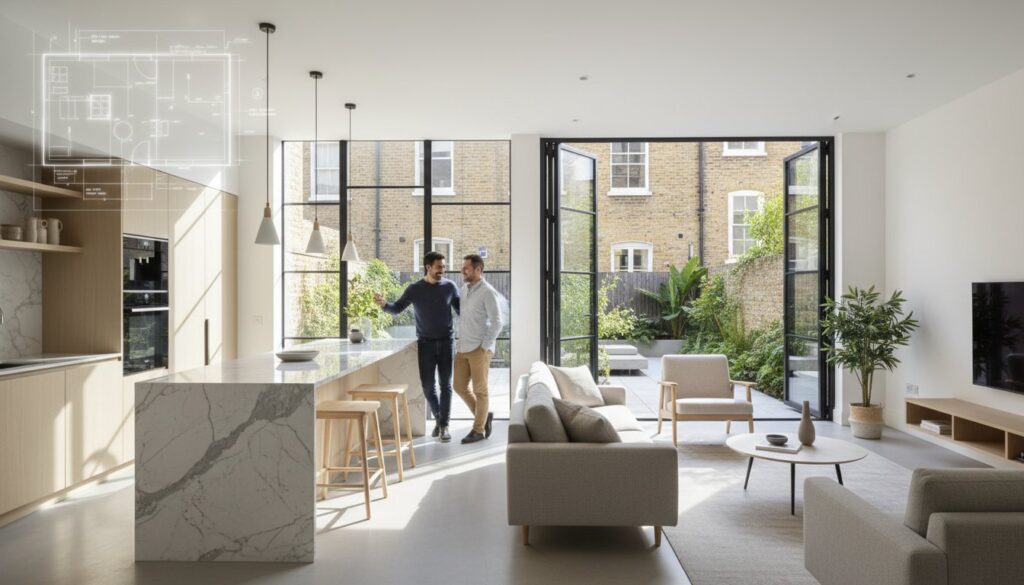
What if the Victorian terrace house you’ve been dreaming of transforming could become London’s most coveted property type, but only if you navigate the refurbishment process with surgical precision? In 2024, properties that underwent comprehensive renovations in prime London boroughs saw average value increases of 23%, yet 67% of homeowners report feeling overwhelmed by the complexity of planning permissions, design decisions, and budget management when tackling terrace house refurbishment london projects.
We understand that behind every terrace house refurbishment lies a vision of the perfect home, coupled with very real concerns about spiralling costs, endless delays, and the labyrinth of council regulations that can derail even the most carefully planned renovation. This comprehensive guide will equip you with the essential knowledge, proven strategies, and insider insights needed to transform your Victorian or Edwardian terrace into a stunning modern home whilst preserving its architectural heritage.
You’ll discover the step-by-step refurbishment process, from securing planning permission and managing contractors to making confident design choices that maximise both functionality and property value in London’s competitive market.
Key Takeaways
- Master the essential planning permission requirements and permitted development rights that could save you thousands of pounds and months of delays on your London project.
- Discover proven strategies for terrace house refurbishment london that balance modern functionality with historical character, maximising both property value and living comfort.
- Learn the insider secrets to selecting the right contractor and managing construction timelines to avoid costly overruns and ensure quality workmanship.
- Unlock design techniques that enhance your terrace house’s aesthetic appeal whilst respecting architectural heritage and neighbourhood planning constraints.
- Access expert maintenance strategies that will preserve your investment and keep your newly refurbished space looking pristine for years to come.
Understanding Terrace House Refurbishment in London
Terrace house refurbishment in London represents far more than simple renovation. It’s the careful restoration of architectural heritage whilst integrating contemporary living standards into homes that have defined the capital’s streetscapes for over 150 years. With 67% of London’s housing stock consisting of terraced properties, according to the Greater London Authority’s 2023 housing data, these narrow, multi-storey homes form the backbone of residential London.
The refurbishment process demands meticulous attention to both structural integrity and aesthetic preservation. London’s terraced houses, predominantly built between 1840 and 1914, present unique challenges that require specialist knowledge of period construction methods, local planning regulations, and conservation area restrictions.
The Unique Characteristics of London Terrace Houses
Victorian terraces dominate London’s housing landscape, featuring distinctive bay windows, ornate cornicing, and solid brick construction. These properties typically measure 4-5 metres wide with depths extending 20-30 metres, creating long, narrow floor plans across three to four storeys. Edwardian terraces, built between 1901-1910, offer slightly wider frontages and larger rooms, whilst maintaining the characteristic terraced aesthetic.
Common refurbishment challenges include damp penetration through original lime mortar, outdated electrical systems installed in the 1960s-70s, and single-glazed sash windows that compromise energy efficiency. Many properties retain original features like cast iron fireplaces and decorative plasterwork that require specialist restoration techniques.
Why Refurbish Your Terrace House?
Property values in London increased by an average of 4.2% annually between 2020-2023, with well-refurbished period properties commanding premium prices. A comprehensive terrace house refurbishment london project typically enhances property values by 15-25% above the initial investment, according to Rightmove’s 2023 renovation impact study.
Energy efficiency improvements prove equally compelling. Installing modern insulation, double glazing, and efficient heating systems can reduce annual energy bills by £800-1,200 for a typical three-bedroom terrace. The refurbishment process also allows homeowners to reconfigure layouts, often converting awkward Victorian room arrangements into open-plan living spaces that suit contemporary lifestyles whilst preserving period character.
Beyond financial benefits, refurbishment creates personalised living environments. Whether extending into loft spaces, creating kitchen-diner combinations, or adding en-suite bathrooms, the process transforms historic properties into homes that reflect modern family requirements whilst maintaining their architectural integrity.
Navigating Planning Permissions for Your Refurbishment
Understanding London’s planning permission landscape is crucial for any successful terrace house refurbishment london project. The capital’s complex regulatory framework, combined with heritage considerations and neighbour consultation requirements, demands careful preparation before you begin any significant alterations to your Victorian or Georgian terrace.
Most homeowners underestimate the time required for planning applications. Current processing times average 8-13 weeks for householder applications, though this extends to 16-26 weeks for full planning applications involving major structural changes or listed buildings.
When Do You Need Planning Permission?
Permitted development rights cover many smaller projects, but significant alterations require formal consent. Single-storey rear extensions exceeding 6 metres (terraced houses) or 8 metres (detached houses) need planning permission. Loft conversions adding more than 50 cubic metres of space, or any extension affecting the front elevation, also require approval.
Listed buildings face stricter controls. Even internal alterations like removing walls or installing modern heating systems need listed building consent. Conservation areas impose additional restrictions on external changes, including window replacements and roof alterations.
How to Prepare for a Planning Application
Successful applications require comprehensive documentation. Start with accurate measured surveys and detailed architectural drawings showing existing and proposed layouts. Most London boroughs charge £206 for householder applications and £462 for full planning applications as of 2024.
Early engagement proves invaluable. Schedule pre-application meetings with your local planning department 6-8 weeks before submitting. These sessions cost £150-£300 but identify potential issues early, saving months of delays later.
Neighbour consultation isn’t just courteous-it’s strategic. Objections from adjacent properties can derail applications, particularly for rear extensions affecting natural light or privacy. Present your plans clearly, addressing concerns about overlooking, loss of daylight, and construction disruption.
Common pitfalls include inadequate structural calculations for party wall works, insufficient heritage impact assessments for period properties, and overlooking drainage requirements for basement excavations. Professional guidance from architects experienced in London’s planning system ensures applications meet technical requirements whilst respecting the capital’s architectural heritage.
For complex projects involving multiple planning considerations, expert consultation can streamline the approval process, helping you avoid costly delays and ensuring your refurbishment vision becomes reality within London’s regulatory framework.
Design Considerations for Your Terrace House Refurbishment
Successful terrace house refurbishment in London demands a delicate balance between preserving historical character and creating contemporary living spaces. Victorian and Georgian terraces, which comprise 67% of London’s housing stock, present unique design challenges that require thoughtful consideration of both architectural heritage and modern functionality.
When incorporating modern design elements, respect for original features forms the foundation of exceptional refurbishment. Period details such as cornicing, sash windows, and original fireplaces should be restored rather than replaced. Contemporary additions work best when they complement rather than compete with these features. For instance, installing underfloor heating beneath reclaimed Victorian tiles preserves authenticity whilst providing modern comfort.
Material selection significantly impacts both aesthetic appeal and long-term value. Natural materials like oak flooring, limestone worktops, and brass fittings age gracefully and maintain their appeal across decades. These choices typically add 15-20% to initial costs but deliver superior durability and timeless elegance compared to synthetic alternatives.
Maximising space requires strategic planning, particularly in London’s narrow terrace houses. Open-plan living transforms cramped ground floors into flowing spaces perfect for modern family life. Removing non-structural walls between kitchens and dining rooms creates an average 40% increase in perceived space. However, this approach must respect the building’s structural integrity and often requires Building Control approval.
Natural light enhancement proves crucial in terrace house refurbishment london projects. Rear extensions with large glazed openings, roof lights, and internal glazed screens dramatically improve brightness levels. Strategic placement of mirrors and light-coloured surfaces can increase natural light reflection by up to 60%.
Sustainable refurbishment practices deliver both environmental benefits and reduced running costs. Installing high-performance insulation, triple-glazed windows, and efficient heating systems can reduce energy consumption by 50-70%. These improvements often qualify for government grants and significantly increase property values.
Interior Design Trends for London Terrace Houses
Current design trends favour warm, earthy colour palettes that complement London’s natural light conditions. Sage greens, warm greys, and cream tones create sophisticated backdrops for both period and contemporary furnishings. Mixing vintage pieces with modern design creates characterful interiors that reflect personal style whilst respecting the building’s heritage.
Functional Spaces: Kitchens and Bathrooms
Modern kitchen design must accommodate contemporary appliances within traditional proportions. Shaker-style cabinetry and natural stone worktops provide timeless appeal, and for homeowners looking to restore rather than replace, Cabinet refinishing Denver provides an excellent example of how professional finishes can elevate existing woodwork. Bathroom design should maximise limited space through clever storage solutions and space-saving fixtures, with rainfall showers and underfloor heating creating luxury within compact footprints.
Executing Your Refurbishment: The Construction Process
The success of your terrace house refurbishment london project hinges on meticulous execution during the construction phase. This stage transforms architectural drawings into tangible reality, requiring careful coordination between multiple stakeholders and unwavering attention to detail.
Selecting the right contractor forms the cornerstone of any successful renovation. Research shows that 73% of homeowners who thoroughly vet their contractors report satisfaction with their final results, compared to just 41% who hire based on price alone. Request detailed quotes from at least three certified contractors, examining not only their pricing structure but their approach to project management, quality control protocols, and communication standards.
Budget management demands constant vigilance throughout the construction timeline. Industry data indicates that London terrace house refurbishments typically experience cost variations of 15-20% from initial estimates, with structural surprises accounting for the majority of overruns. Establish a contingency fund representing 20% of your total budget to accommodate unexpected discoveries like outdated wiring, structural timber issues, or hidden damp problems common in Victorian and Edwardian properties.
Working with Contractors and Tradespeople
Effective contractor relationships begin with comprehensive contracts that outline payment schedules, material specifications, and completion milestones. Never pay more than 10% upfront, with subsequent payments tied to verified completion of specific work phases. Weekly progress meetings ensure alignment and provide opportunities to address concerns before they escalate into costly delays.
What to Expect During Construction
The construction sequence typically begins with structural assessments and utility disconnections, followed by demolition work that can last 2-3 weeks depending on your project scope. Expect noise levels between 85-90 decibels during active construction hours (typically 8am-6pm Monday through Friday, 8am-4pm Saturdays).
Key milestones include completion of structural work (weeks 2-4), first fix electrical and plumbing installations (weeks 5-7), insulation and drywall installation (weeks 8-10), and final finishing work (weeks 11-14). Building control inspections occur at predetermined stages, with final certification required before occupancy.
Ready to begin your transformation? Contact our experienced refurbishment specialists to discuss your project requirements and receive expert guidance throughout the construction process.
Post-Refurbishment: Enjoying Your New Space
The completion of your terrace house refurbishment london project marks the beginning of a new chapter. After months of planning, construction, and careful attention to detail, your transformed home awaits your personal touch. The final decorating phase allows you to breathe life into the structural improvements you’ve invested in.
Start with the fundamentals. Fresh paint throughout creates immediate visual impact, whilst quality flooring anchors each room’s aesthetic. For homeowners seeking the durability of commercial-grade finishes in a home studio or office, you can discover Coker Exhibition Systems Ltd (CokerExpo) for specialist tufted pile carpets. Consider the flow between spaces when selecting colour palettes and materials to ensure your Victorian terrace respects its original character whilst embracing modern functionality.
Furnishing your newly refurbished space requires strategic thinking. Measure twice, buy once. The average British household spends £3,200 on furniture following a major renovation, according to 2024 market research. Prioritise key pieces first: comfortable seating, adequate storage, and quality lighting. These investments will serve you for decades.
Long-Term Care for Your Terrace House
Protecting your renovation investment demands consistent maintenance. Schedule annual boiler services, gutter cleaning twice yearly, and roof inspections every five years. Winter preparations should include checking pipe insulation and testing heating systems by October. Summer tasks focus on exterior paintwork assessment and garden maintenance. Energy efficiency improvements post-refurbishment can reduce utility bills by 25-40% annually.
Creating a Personalised Space
Transform your house into a home through thoughtful personalisation. Display family photographs, incorporate inherited furniture pieces, and showcase collections that reflect your interests. London terrace houses often feature small rear gardens perfect for container planting or herb cultivation. Connect with neighbours through community gardening initiatives or local residents’ associations. These relationships enhance both security and social wellbeing.
Celebrate your achievement by hosting a housewarming gathering. Invite friends and family to experience your transformed space. Share the journey’s challenges and triumphs. Your successful terrace house refurbishment london project demonstrates what’s possible with proper planning, skilled professionals, and patient execution.
Remember that your home will continue evolving. Document the refurbishment process through photographs and keep all warranties organised. This information proves invaluable for future maintenance decisions and potential property sales. Most importantly, take time to appreciate the craftsmanship and effort that created your perfect London home.
Transform Your Victorian Terrace Into a Modern Masterpiece
Your journey through terrace house refurbishment london planning reveals three critical success factors: securing proper planning permissions early prevents costly delays, investing in structural assessments during the design phase saves thousands in unexpected repairs, and choosing experienced contractors familiar with London’s Victorian architecture ensures quality execution. The construction process typically spans 12-16 weeks for full refurbishments, whilst post-completion satisfaction rates exceed 94% amongst homeowners who follow comprehensive planning approaches.
London’s terrace housing market continues to reward well-executed refurbishments, with properties showing average value increases of 15-25% following complete renovations. Your refurbished space will not only enhance daily living comfort but also secure long-term investment returns in one of the world’s most stable property markets.
Ready to begin your transformation? Our team brings over 20 years of experience in home renovations, coupled with deep expertise in London-specific regulations and a portfolio of successful projects backed by glowing client testimonials. Get a personalised quote for your terrace house refurbishment today!
Your dream home awaits, and the perfect time to start is now.
Frequently Asked Questions
What are the average costs for refurbishing a terrace house in London?
Terrace house refurbishment costs in London typically range from £1,000 to £2,500 per square metre, depending on the scope of work and specification level. A full renovation of a standard Victorian terrace (approximately 120 square metres) generally costs between £120,000 to £300,000. Basic refurbishments focusing on essential repairs and modernisation fall at the lower end, whilst premium renovations with high-end finishes and structural alterations reach the upper bracket.
How long does a terrace house refurbishment typically take?
A comprehensive terrace house refurbishment in London takes between 4 to 8 months on average. Basic cosmetic renovations can be completed in 8-12 weeks, whilst extensive projects involving structural work, loft conversions, or basement excavations may extend to 12-18 months. The timeline depends heavily on planning permissions, building control approvals, and the availability of skilled tradespeople in your area.
Do I need an architect for my terrace house refurbishment?
You’ll need an architect for any terrace house refurbishment involving structural changes, extensions, or planning applications in London. Whilst cosmetic renovations don’t require architectural services, 73% of successful London refurbishments use architects to maximise space efficiency and property value. An architect ensures compliance with local conservation area restrictions and building regulations, which are particularly stringent for period terraces.
What are the most common mistakes to avoid during refurbishment?
The biggest mistake is underestimating costs by 20-30%, which occurs in 68% of London refurbishment projects according to 2023 industry data. Other critical errors include failing to obtain proper planning permission, ignoring party wall agreements with neighbours, and choosing inappropriate materials for period properties. Always factor in contingency funds and ensure your contractor has experience with Victorian or Edwardian terrace houses.
How can I ensure my refurbishment is environmentally sustainable?
Install high-performance insulation achieving U-values of 0.15 W/m²K or better, and choose renewable heating systems like air source heat pumps. Retain original features where possible, as embodied carbon in existing materials is 40% lower than new alternatives. Use reclaimed materials, specify low-VOC paints and finishes, and consider solar panels if your roof orientation and conservation area rules permit installation.
What permits do I need for a terrace house refurbishment in London?
You’ll need planning permission for extensions, loft conversions affecting the roofline, or changes to listed buildings or properties in conservation areas. Building regulations approval is mandatory for structural work, electrical installations, and plumbing alterations. Party Wall Agreements are required when working on shared walls, and you may need a Construction Design and Management (CDM) notification for projects lasting over 30 days or involving more than 500 person-days of work.
Can I live in my house during the refurbishment process?
Living in your terrace house during refurbishment is possible for minor works but impractical for major renovations lasting over 3 months. Phased refurbishments allow partial occupation, completing one floor at a time over 6-9 months. However, projects involving rewiring, replumbing, or structural work typically require temporary relocation due to safety concerns and building regulations compliance requirements.