
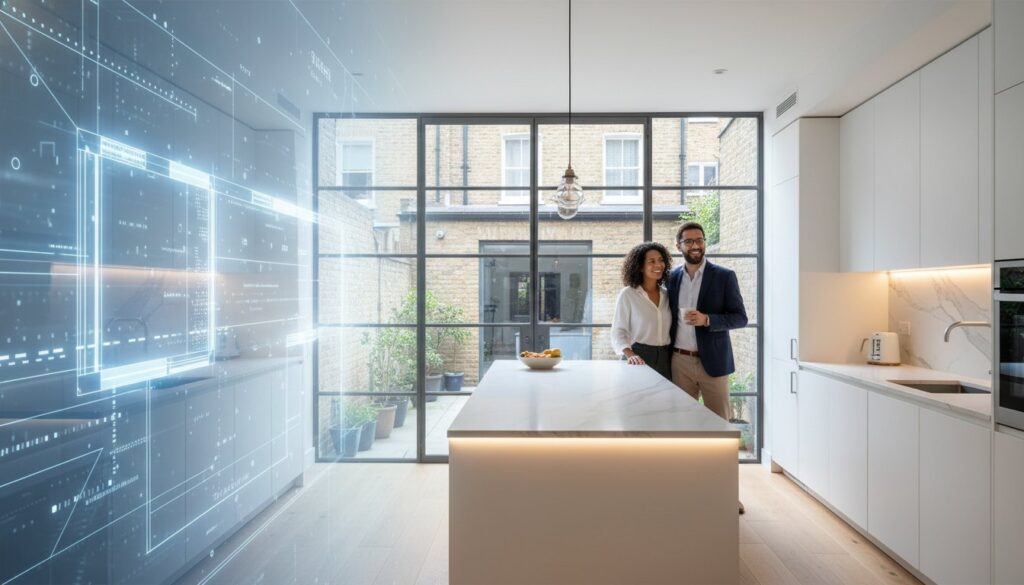
What if the £7,500 you saved on a basic floor plan actually cost you £45,000 in structural rectifications and six months of planning delays? Most homeowners recognise that a London renovation is an exercise in uncompromising precision, yet the distinction between architecture and architect remains surprisingly clouded. You deserve a sanctuary where aesthetic harmony meets structural integrity; a space that ensures your investment yields a 15% increase in market value rather than a list of expensive compromises.
You’ll discover the vital distinction between a conceptual designer and a RIBA-chartered professional to ensure your renovation is both breathtaking and legally sound. This guide provides a clear framework for your project, from navigating the 2023 building safety regulations to securing essential planning approval in heritage boroughs. We’ll explore the specific roles that define a successful build, giving you the technical rigour and artistic confidence to begin your journey toward a bespoke and timeless residence.
Key Takeaways
- Understand the fundamental distinction between the artistic discipline of architecture and architect as a legally protected title to ensure your project balances aesthetic brilliance with professional accountability.
- Discover how navigating London’s unique urban density through professional design can significantly elevate your property’s ‘ceiling price’ in prestigious areas like Chiswick and Fulham.
- Learn why verifying ARB registration and Professional Indemnity Insurance is a non-negotiable step in safeguarding your investment against the risks of unqualified designers.
- Master the RIBA Plan of Work to oversee your renovation with the same meticulous precision used by master craftsmen to bring complex structural visions to life.
- Explore the sophisticated synergy of the ‘Design-Build’ model, where architectural vision and construction expertise unite to deliver a seamless, high-end home refurbishment.
Architecture and Architect: Defining the Vision and the Professional
Embarking on a premium property transformation in West London requires a clarity of purpose that transcends simple construction. To achieve a result that resonates with the same precision as a masterfully tuned instrument, one must first distinguish between the craft and the practitioner. Architecture is the disciplined pursuit of harmonising form, function, and structural integrity; it’s the physical manifestation of a vision. In contrast, the architect is the expert individual who conducts this complex symphony of spatial design. For homeowners in areas like Kensington or Chelsea, understanding the nuance of architecture and architect is the first step toward a successful, high-end renovation.
Architecture represents the ‘what’ of your project. It’s the final composition of light, shadow, and material that defines your living experience. The architect is the ‘who’, the qualified professional who navigates the delicate balance between your aesthetic desires and the rigid constraints of structural physics. This distinction isn’t merely academic; it’s a fundamental requirement for those seeking to create a home that offers both emotional resonance and enduring value. A project without this professional oversight often lacks the cohesive narrative required for truly premium residential spaces.
What Constitutes ‘Good’ Residential Architecture?
In the context of West London’s unique urban fabric, good architecture must solve the specific puzzles presented by historic properties. Many Victorian and Edwardian terrace houses, often measuring less than 5 metres in width, suffer from dark, cellular floor plans. Exceptional design uses strategic voids and glass interventions to increase natural light penetration by up to 40% in these narrow footprints. Architecture is the intersection of art and engineering in a residential context. It ensures that a bespoke kitchen extension isn’t just a glass box, but a calibrated environment that responds to the path of the sun and the rhythm of your daily life.
The Legal Protection of the Title ‘Architect’
The term ‘architect’ carries significant legal weight in the United Kingdom. Under the Architects Act 1997, it’s a criminal offence for anyone to use this title in business or practice unless they’re registered with the Architects Registration Board (ARB). This legislation exists specifically to protect consumers from unqualified individuals who may lack the necessary technical expertise to manage complex structural changes or navigate the 1990 Planning (Listed Buildings and Conservation Areas) Act. It provides a guarantee that the person leading your project has met rigorous standards of competence and ethical conduct.
The path to becoming a registered professional is arduous, typically requiring 7 years of intensive training divided into three distinct phases:
- Part 1: A three-year undergraduate degree focusing on design theory and technical foundations.
- Part 2: A two-year master’s degree or diploma for advanced architectural study.
- Part 3: A minimum of 24 months of practical experience followed by a final examination on professional practice and management.
Many of these professionals also choose to join the Royal Institute of British Architects (RIBA), an organisation that has championed excellence in the field since 1834. When you hire a registered professional, you aren’t just paying for a set of drawings; you’re investing in a decade of specialised education. Misusing the title ‘architect’ can result in a fine of up to £2,500 per instance, highlighting how seriously the UK legal system views the distinction between a qualified designer and a general building consultant. For a homeowner, this architecture and architect synergy ensures that your investment is protected by professional indemnity insurance and a strict code of conduct.
Why London Residential Architecture is a Strategic Investment
In the high-stakes property market of West London, architecture is far more than a study of aesthetics; it’s a calculated response to the relentless constraints of high-density urban living. When you invest in professional design, you aren’t just paying for a set of technical drawings. You’re securing a blueprint for significant capital appreciation. In postcodes like W4 (Chiswick) or SW6 (Fulham), the difference between a standard renovation and a masterfully orchestrated project can lift the “ceiling price” of a Victorian terrace by as much as 20% to 25%.
A true master of architecture and architect led design understands that a home must perform with the same precision as a fine musical instrument. This involves future-proofing through intelligent space planning and integrating sustainable technologies that drastically reduce long-term running costs. By following the RIBA Plan of Work, homeowners ensure that every stage of the project, from the initial concept to the final handover, meets a rigorous standard of technical and artistic excellence. This disciplined approach transforms a simple building project into a legacy asset that stands the test of time.
Navigating the London Planning Maze
Securing consent in boroughs like Ealing or Hammersmith & Fulham requires more than just hope; it demands a deep understanding of local policy. Many West London streets fall under Article 4 directions. These regulations strip away standard Permitted Development rights to protect the historic character of the neighbourhood. An experienced professional manages these delicate relationships with local councils, ensuring that even ambitious extensions respect the heritage of the area. They know exactly where the line sits between a bold modern statement and a sensitive restoration, preventing costly delays that can stall a project for months.
Maximising Market Value in West London
The financial return on a well-conceived loft conversion far outstrips that of a standard “builder’s box.” While a basic conversion might add 10% to your home’s value, an architecturally driven design that maximises natural light and ceiling height can double that ROI. The synergy between visionary architecture and architect oversight ensures that every square centimetre of a Chelsea or Kensington property is utilised to its full potential.
At Horns Construction, we’ve seen how integrating architectural precision into full home refurbishments creates a sense of uncompromising quality that buyers recognise instantly. Elements like bespoke joinery and curated architectural lighting don’t just fill a space; they define it. If you’re looking to elevate your living environment to this level of craftsmanship, you might explore our bespoke refurbishment services to see how form and function can exist in perfect harmony. Every detail, from the acoustics of a room to the texture of the materials, contributes to a home that is both a sanctuary and a high-performing investment.

Architect vs. Architectural Designer: Navigating the UK Market
Creating a home that functions as a sanctuary requires more than a mere set of floor plans; it demands a deep understanding of the soul of a building. In the UK, a common point of confusion arises between those who design and those who are legally entitled to call themselves architects. Under Section 20 of the Architects Act 1997, the title “architect” is a protected term. Only individuals who have completed seven years of rigorous training and are listed on the official register may use it. Many “architectural designers” provide services that appear similar on the surface, yet they operate without the same level of statutory oversight. For a homeowner, this distinction isn’t just a matter of semantics. It’s a fundamental question of technical depth and legal protection.
The presence of Professional Indemnity Insurance (PII) serves as a vital safety net for any high-end project. Registered architects are mandated to hold this insurance, which protects the client against structural failures or significant design errors. A designer might lack this coverage, or hold a policy with far lower limits. When you’re investing £300,000 in a complex London basement or a multi-storey extension, the risk of a technical oversight is too great to ignore. Paying for a qualified professional ensures that the synergy between architecture and architect remains focused on both aesthetic beauty and structural permanence. It’s an investment in peace of mind that far outweighs the initial savings of a cheaper, less-qualified alternative.
Comparing Qualifications and Accountability
The structural difference in training is vast. An architect’s journey involves five years of university study and two years of practical experience, culminating in a Part 3 examination. This process is monitored by the Architects Registration Board (ARB), the body that ensures every practitioner meets the highest professional standards. While a technician or designer might be skilled in CAD software, they haven’t undergone the same intensive education in history, theory, and complex engineering. The “Architectural Designer” label is frequently a workaround for those who haven’t achieved full UK registration, meaning they don’t answer to the ARB’s strict code of conduct or the Royal Institute of British Architects (RIBA) standards.
Which Professional is Right for Your Project?
The scale of your ambition should dictate your choice. A simple internal renovation, such as moving a non-load-bearing wall or updating a kitchen layout, might only require a surveyor or a competent designer. These smaller tasks don’t always demand the high-level conceptual thinking of a full architectural service. However, complex loft conversions, structural extensions, or bespoke new builds in London’s demanding landscape necessitate a qualified architect’s eye. At Horns Construction, we collaborate closely with these professionals to ensure every sculptural detail is feasible. We bridge the gap between the architect’s grand vision and the technical reality of the build; ensuring that the final result reflects the uncompromising quality our clients expect. Our role is to translate those sophisticated drawings into a tangible, high-end reality that stands the test of time.
Understanding the Architect’s Role Across the RIBA Stages
The RIBA Plan of Work 2020 provides the definitive framework for the UK construction industry, ensuring that every high-end residential project follows a disciplined, logical progression. It’s not merely a checklist; it’s a roadmap that transforms a conceptual spark into a tangible, enduring structure. For a London homeowner, navigating the relationship between architecture and architect requires a deep appreciation for these stages, as they define the level of detail, the accuracy of costs, and the ultimate quality of the finish.
- Stages 0-2: Strategic Briefing and Concept Design. This is the visionary phase where your lifestyle aspirations are distilled into a spatial narrative. The architect identifies the site’s potential and constraints, producing initial sketches that capture the essence of the project.
- Stage 3: Spatial Coordination. Here, the design is refined for planning applications. It involves coordinating the structural and building services to ensure the project is viable before seeking local authority approval.
- Stage 4: Technical Design. The most critical phase for precision. Every junction, material specification, and acoustic requirement is documented. This package allows for accurate tendering and forms the basis of the construction contract.
- Stages 5-7: Manufacturing, Construction, and Handover. The architect transitions into a supervisory or administrative role, ensuring the physical build honours the original design intent and technical standards.
Concept to Technical Design
During the early stages, an architect acts as a translator, converting your daily rituals and aesthetic preferences into a bespoke spatial layout. They don’t just place walls; they choreograph light, sound, and movement. As the project moves into RIBA Stage 4, the focus shifts from the poetic to the technical. This stage is where the “bill of quantities” and detailed 1:20 section drawings are produced, providing builders with an unambiguous manual for construction. Without this granular detail, contractors are forced to make assumptions, which invariably leads to aesthetic compromises or hidden costs. Meticulous RIBA Stage 4 technical specifications serve as the ultimate safeguard against financial volatility, typically preventing the 15% to 20% budget creep often seen in projects with vague initial documentation.
The Architect During the Construction Phase
Once the ground is broken, the architect’s role often evolves into that of a Contract Administrator. This isn’t just about site visits; it’s about the uncompromising enforcement of quality. They review “as-built” progress against the “as-designed” specifications, ensuring that the premium materials you’ve invested in are installed with the required precision. When unexpected site conditions arise, as they often do in complex London renovations, the architect provides immediate technical solutions that preserve the design’s integrity. For projects involving significant structural modifications, collaborating with a structural engineer near me ensures that the architectural vision remains structurally sound while optimising material costs through precise calculations.
At Horns Construction, we’ve refined a collaborative model where our project management team works in lockstep with architectural oversight. This synergy ensures that the technical brilliance of the architecture and architect is never lost in translation during the heavy lifting of the build. We treat the architect’s detail drawings as a sacred text, using our internal expertise to execute complex junctions and bespoke finishes that many standard builders might overlook. This rigorous approach ensures that the final handover isn’t just the completion of a building, but the delivery of a handcrafted masterpiece.
Ready to see how precision design meets uncompromising construction? Explore our portfolio of bespoke London projects and discover the Horns Ltd. difference.
Integrating Architecture and Construction: The Horns Ltd. Approach
The realization of a high-end London home requires more than just technical skill; it demands a symphony between the conceptual and the physical. At Horns Construction, we believe the design-build synergy represents the most sophisticated route for property owners. By unifying the creative process with the practicalities of the site, we remove the traditional friction that exists between different phases of a project. Data from the Federation of Master Builders indicates that integrated teams can reduce project delivery times by 15% compared to fragmented workflows. This efficiency allows us to focus on what truly matters: the uncompromising quality of the final structure.
We view ourselves as the master craftsmen who breathe life into two-dimensional plans. A drawing is a promise, but the construction is the fulfillment of that promise. Whether we are working with internal designers or external partners, the relationship between architecture and architect remains the foundation of our work. We treat every structural beam and hand-finished surface with the reverence a gallery treats a masterpiece. This commitment to artistic integrity means we never settle for “standard” solutions. We source premium materials, such as sustainable European oak and bespoke architectural steel, to ensure the finished home possesses a tactile, timeless quality that mass-produced developments cannot replicate.
Managing the logistical complexities of West London requires a surgical level of precision. Navigating the narrow streets of Chiswick or the strict heritage requirements of Fulham is a task we’ve mastered over two decades. A unified team anticipates these challenges during the early design stages, preventing the £10,000 to £20,000 budget spikes that often occur when logistical hurdles are ignored until the first spade hits the ground. Our approach ensures that the elegance of the design is never sacrificed for the sake of construction convenience. When complex structural modifications are required, we work closely with qualified professionals to find a structural engineer near me who can optimise steel specifications and ensure every beam performs with absolute precision.
West London’s Refurbishment Specialists
Our 20-year history is built on deep-rooted collaborations with London’s most visionary designers. We’ve carved out a niche in Ealing, Chiswick, and Fulham, areas where the architectural heritage demands a delicate touch. This local focus gives us a distinct advantage in understanding the specific soil conditions and planning nuances of the W4 and W5 postcodes. We are committed to a “handmade” philosophy, where every joint, finish, and fixture is executed with the precision of a fine instrument, ensuring your home stands as a testament to high-end residential excellence.
Start Your Architectural Journey with Horns Construction
Finding the perfect equilibrium between an ambitious architecture and architect vision and a pragmatic £300,000 or £700,000 budget is a delicate task. Our process begins with an in-depth site visit and feasibility study, allowing us to ground your aesthetic desires in structural reality. We provide the clarity needed to make informed decisions before the first brick is laid. This initial consultation ensures your investment is protected and your vision is achievable. Contact our West London team to discuss your architectural vision and discover how we can transform your property into a bespoke living space that defines your lifestyle.
Elevate Your London Residence Through Meticulous Design
A London renovation requires more than a floor plan; it demands respect for the city’s historical fabric and uncompromising quality. You’ve explored how the synergy between architecture and architect defines a high-end residential investment. Choosing the right partner means navigating complex conservation regulations and the 8 RIBA stages with the technical precision of a master craftsman. Your home is an expression of identity, requiring a balance of form and function that stands the test of time.
Horns Ltd. brings over 20 years of London building expertise to every project, specialising in the delicate nuances of West London conservation areas. Our approach integrates comprehensive project management from the initial design to completion. This ensures your vision remains pure and the execution remains flawless. We don’t believe in shortcuts. We believe in creating timeless spaces that reflect a refined lifestyle through hand-finished details and engineering excellence.
Ready to transform your property into a bespoke masterpiece? Book a Consultation for Your West London Renovation. Your journey toward a perfectly crafted home begins with a single, inspired conversation.
Frequently Asked Questions
What is the legal difference between an architect and an architectural designer in the UK?
In the UK, the title “architect” is legally protected by the Architects Act 1997; only those registered with the Architects Registration Board (ARB) can use it. Architectural designers don’t have this statutory regulation and often haven’t completed the seven years of mandatory training required for full qualification. Choosing a registered professional ensures your project benefits from a high level of architecture and architect expertise, backed by compulsory professional indemnity insurance.
Do I need an architect for a small kitchen extension in London?
You aren’t legally required to hire an architect for a small extension, but their involvement typically increases a property’s resale value by 10% to 15%. London planning departments often prefer the precision of professional drawings for Permitted Development or full planning applications. A skilled designer ensures the new space harmonises with your home’s existing character rather than feeling like a disjointed addition. It’s about achieving a bespoke finish that respects the original structure.
How much do architects typically charge for residential projects in West London?
Architects in West London typically charge between 8% and 12% of the total construction budget for a full service. For a high-end £200,000 extension, you should budget approximately £16,000 to £24,000 for design fees. Some firms offer fixed fees for smaller residential works, starting around £3,500 for initial concept and planning stages. These figures reflect the premium expertise required to navigate complex local planning constraints and heritage requirements.
Can an architect also act as my project manager during the build?
Yes, an architect can act as your contract administrator or project manager to oversee the build’s technical fidelity. This service ensures the contractor adheres to the 1:50 scale construction drawings and specified material standards. By managing the JCT or RIBA building contract, they protect your investment from unauthorised cost variations. It’s a way to ensure the final result matches the original artistic vision without compromising on quality.
What are the RIBA Stages and why should a homeowner care about them?
The RIBA Plan of Work 2020 organises the design and construction process into eight distinct stages, from Stage 0 (Strategic Definition) to Stage 7 (Use). Homeowners should care about these because they provide a transparent roadmap for project milestones and payment schedules. Following this structured path reduces the risk of expensive mid-build changes. Such changes can increase project costs by 20% if they aren’t managed within a professional framework.
How do I check if my professional is actually a registered architect?
You can verify a professional’s credentials by searching the Architects Registration Board (ARB) online register. Since the 1997 Act, it’s a criminal offence for anyone to practice using the title “architect” if they aren’t on this list. Checking the register ensures your architecture and architect partner has met the rigorous educational standards required to protect your home. This verification is the first step in building a relationship based on trust and professional excellence.
What happens if I build an extension without an architect’s involvement?
Building without professional architectural guidance often leads to structural non-compliance and a potential 25% reduction in future saleability. Without a certificate of regularisation from Building Control, you’ll struggle to sell the property; insurance companies may also refuse claims related to the extension. Mistakes in solar orientation or thermal bridging can lead to a 40% increase in annual energy costs. It’s a risk that often outweighs the initial savings on design fees.
How does Horns Construction work with my chosen architect?
Horns Construction operates as the master craftsman who translates your architect’s blueprints into a physical reality. We maintain a constant dialogue with your chosen designer to ensure every acoustic detail and structural finish meets our uncompromising standards. Our team respects the architectural intent, treating every project like a bespoke piece of art where technical precision meets timeless elegance. We don’t just build; we execute a vision with the soul of a craftsman.