
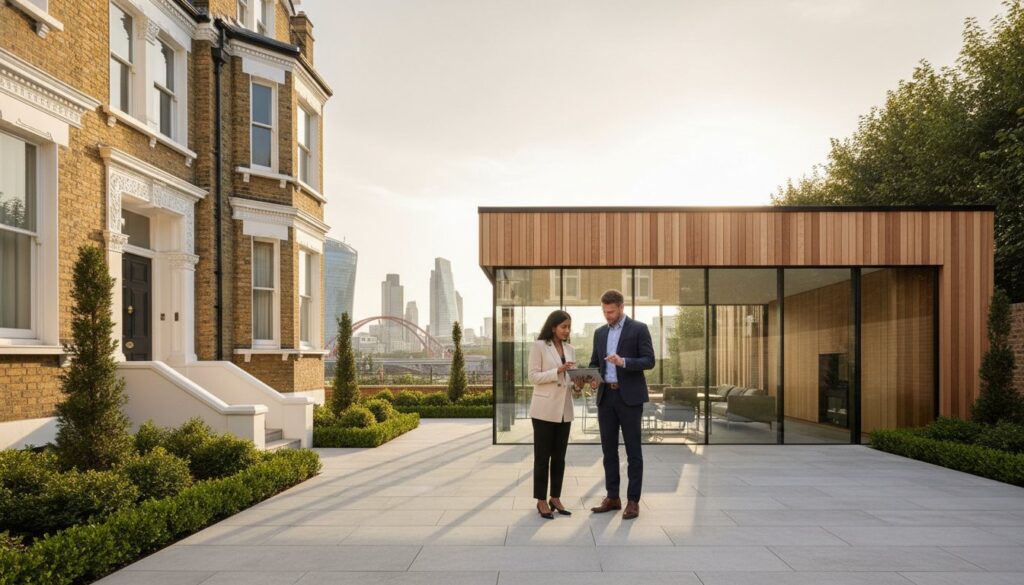
A single structural compromise in a high-end renovation can diminish a London property’s market value by 15% overnight; it turns an architectural vision into a costly cautionary tale. You’ve likely felt the weight of this risk while searching for builders in London who possess the technical mastery to handle heritage foundations or contemporary glass extensions with equal poise. It’s a justified anxiety, as the gap between a standard contractor and a true artisan has never been wider in the 2026 property market.
We believe your residence deserves the same uncompromising precision and emotional resonance as a bespoke work of art. This guide promises to reveal how you can identify elite partners, master the complexities of modern planning permissions, and secure a transformation that’s both stress-free and aesthetically profound. We’ll examine the rigorous selection criteria for premium craftsmanship and the strategic management of Party Wall Agreements to ensure your project remains a timeless investment rather than a logistical burden.
Key Takeaways
- Appreciate the delicate evolution of London’s residential landscape, ensuring your project honours the architectural soul of Victorian heritage while embracing the fluidity of modern living.
- Implement a rigorous vetting framework to identify elite builders in London, prioritising mandatory accreditations and a proven portfolio of uncompromising technical precision.
- Navigate the intricate logistical puzzles of West London, from securing complex parking permits in Ealing to the diplomatic management of Party Wall Agreements with neighbouring properties.
- Evaluate the long-term investment value of bespoke loft conversions versus rear extensions, discovering how the design-build model ensures a seamless synergy between form and function.
- Discover the “Horns Method,” an exclusive approach to construction that treats every residential transformation as a handcrafted masterpiece of engineering and timeless elegance.
Navigating the London Construction Landscape in 2026
The London residential landscape is a living tapestry of architectural history. From the red-brick Victorian terraces of 1880 to the fluid, light-filled open-plan spaces of 2026, the city’s homes are undergoing a profound metamorphosis. Homeowners now demand a seamless fusion of heritage and modernity. Selecting builders in london who understand this delicate balance is the difference between a simple renovation and the creation of a living masterpiece. A premium partner doesn’t just follow a blueprint; they interpret architectural intent with the precision of a master watchmaker, ensuring every structural element serves an aesthetic purpose.
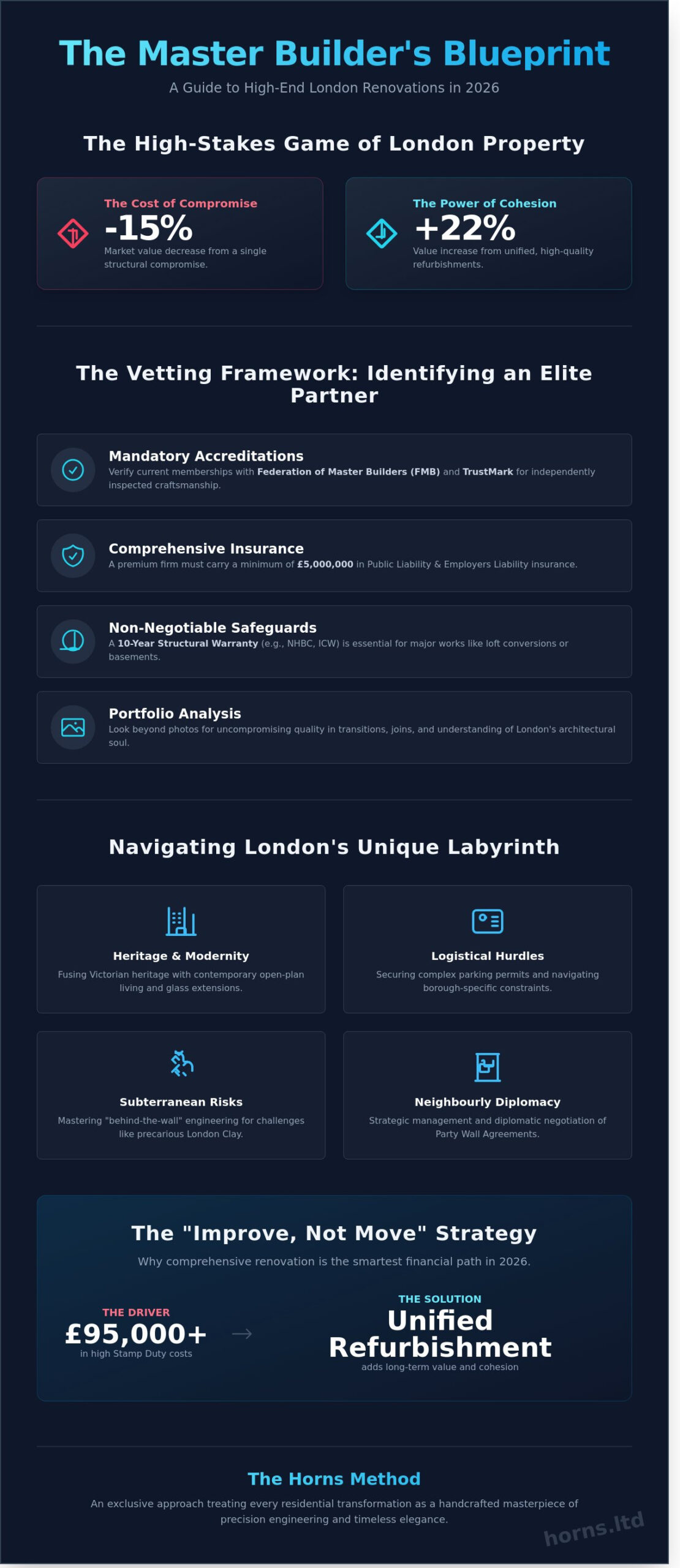
In a market where Hammersmith property values reached an average of £1.1 million in early 2025, the “cheapest quote” is a high-risk gamble that rarely pays off. Choosing the lowest bid often masks a lack of understanding regarding London’s unique subterranean challenges, such as the precarious London clay or the complexities of party wall agreements. Substandard work can devalue a premium asset by 15% or more. True value lies in the intersection of engineering excellence and a clear aesthetic vision. This is particularly vital in West London boroughs like Fulham, where navigating specific conservation area constraints requires a builder with deep local expertise and a history of working with the local planning authorities.
The Shift Towards Full Home Refurbishments
The “improve, not move” trend has solidified as the dominant strategy for London homeowners in 2026. High stamp duty costs, which can exceed £95,000 for mid-range premium properties, make comprehensive renovation the smarter financial path. A unified design language across a loft conversion and a basement extension creates a rhythmic flow through the home. This cohesion isn’t just about beauty; it adds roughly 22% to the long-term valuation of the property by creating a singular, uninterrupted narrative of luxury.
Recognising Quality Craftsmanship
True luxury is fundamentally tactile. It’s found in the silent glide of a custom-fitted walnut cabinet or the perfect alignment of a shadow gap. Beyond the visible surface, premium builders in london treat the invisible engineering with equal reverence. They prioritise “behind-the-wall” excellence, from high-performance acoustic insulation to the surgical precision of hidden steelwork. A master builder acts as the guardian of your architectural investment, ensuring the home remains as structurally sound as it is visually breathtaking for decades to come.
The Vetting Framework: How to Identify Master Builders in London
Selecting a construction partner in the capital requires more than a casual glance at a quote; it demands an appreciation for the technical symphony involved in high-end renovation. The most distinguished builders in London operate with a level of precision that mirrors the assembly of a bespoke instrument. This vetting process ensures your investment results in a masterpiece rather than a compromise. Quality isn’t accidental. It’s the result of disciplined engineering and an eye for the sublime.
Essential Accreditations and Insurances
Authentic mastery is always backed by accountability. You must verify that a firm holds current memberships with the Federation of Master Builders (FMB) and TrustMark, as these organisations require independent inspections of craftsmanship. Since the 2024 updates to the Building Safety Act, insurance requirements have become even more stringent for luxury residential works. A premium firm should carry a minimum of £5,000,000 in Public Liability and Employers Liability insurance to protect your assets during the build. For significant structural changes, such as a £150,000 loft conversion or a basement excavation, a 10-year structural warranty from providers like NHBC or ICW is a non-negotiable safeguard for your property’s future value.
Analysing Past Projects and Portfolios
A portfolio should do more than show “before and after” photos; it must demonstrate an understanding of London’s unique architectural soul. Whether it’s the delicate restoration of a Grade II listed Georgian townhouse or the installation of minimalist, bespoke cabinetry in a Chelsea penthouse, look for uncompromising quality in the transitions and joins. You should request to visit a “live site” currently under management. A clean, organised site where artisans work with quiet focus is the ultimate indicator of a firm’s professionalism. Just as a connoisseur demands uncompromising acoustic precision in their private sanctuary, you should demand that your builder treats the site with the respect a high-end project deserves.
When vetting references from projects completed within the last 18 months, avoid generic praise. Instead, ask these three targeted questions to uncover the builder’s true character:
- “How did the team handle the inevitable discovery of ‘unforeseen’ structural issues common in Victorian terraces?”
- “Did the project manager provide weekly budget reconciliations to prevent the typical 15% ‘creep’ seen in lesser firms?”
- “Was the final snagging list completed with the same enthusiasm as the initial groundworks?”
The most capable builders in London utilise sophisticated project management software like Buildertrend or CoConstruct. These systems provide real-time transparency regarding timelines and procurement, ensuring that the rhythm of the build remains steady and predictable. If a builder relies solely on handwritten notes or informal emails, they lack the infrastructure required to deliver a premium London home in 2026.
Overcoming London-Specific Building Challenges
Creating a residential masterpiece in the heart of the capital requires more than technical proficiency; it demands a deep respect for the architectural heritage and the logistical constraints of the city. The “London Logistical Puzzle” is a reality that defines every premium project. In boroughs like Ealing or the narrow, terraced avenues of Chiswick, access is often restricted to widths of less than 2.5 metres. This makes the coordination of heavy machinery and material delivery a delicate operation that requires surgical precision. Expert builders in London must navigate a landscape where a single skip permit can cost upwards of £105 per month and parking suspensions require a minimum of 14 days’ notice to the local council.
The legal framework is equally demanding. The Party Wall etc. Act 1996 is a cornerstone of urban renovation that requires meticulous management to avoid costly delays. Failing to serve notice correctly can halt a £500,000 project instantly. Managing noise and vibration in densely populated residential areas is not just a courtesy but a regulatory necessity. Professional teams implement acoustic screening and strictly adhere to “quiet hours,” which typically restrict heavy works to between 8:00 am and 6:00 pm on weekdays. This level of discipline ensures the project moves forward without alienating the local community.
Historic preservation adds another layer of complexity. With approximately 27% of London’s residential areas designated as Conservation Areas, builders must possess a nuanced understanding of traditional materials. Whether it’s the specific mix of lime mortar or the restoration of original sash windows, the work must satisfy strict heritage officers while meeting modern performance standards.
Mastering the Regulatory Hurdles
A premium builder acts as the conductor of a complex regulatory orchestra. They facilitate the transition between Permitted Development rights and full Planning Permission, ensuring every structural modification aligns with the updated 2026 Building Regulations. Structural engineers are essential partners for the ambitious basement excavations and loft conversions that characterise modern London luxury. These specialists ensure the integrity of the original structure while creating expansive new living spaces. Coordination with Building Control for staged inspections is handled with uncompromising attention to detail, ensuring the final certification is a testament to the home’s enduring value.
Logistical Excellence: The Unsung Hero
Site management is where the artistry of construction meets the rigour of logistics. Professional builders in London employ “Just-in-Time” delivery strategies to prevent pavement obstruction and maintain the flow of the neighbourhood. A tidy site is a hallmark of a high-end project; it reflects a culture of precision and respect. Maintaining open lines of communication with neighbours through weekly updates and dedicated liaison officers prevents friction. This proactive approach ensures that the transformation of a property remains a positive experience for everyone involved, preserving the harmony of the street while the work progresses toward perfection.
Choosing the Right Project Scope for Your Property
Selecting the scope of your renovation requires a balance of financial logic and architectural soul. For 2026, premium builders in london suggest budgeting between £3,800 and £5,200 per square metre for high-specification finishes. While a rear kitchen extension often serves as the home’s emotional centre, a loft conversion typically yields a higher return on investment. Data from late 2025 indicates that a well executed Mansard loft can increase a property’s market value by up to 23%, whereas a ground floor extension adds approximately 14% to the final valuation.
A full refurbishment follows a rhythmic, deliberate progression. It begins with the meticulous preservation of heritage features, followed by the installation of modern infrastructure that meets current acoustic and thermal standards. In the final phase, the focus shifts to the tactile quality of materials. This is where bespoke joinery and premium finishes define the home’s character, ensuring the space feels like a gallery for living rather than just a structure.
- Phase 1: Structural strip-out and heritage assessment.
- Phase 2: Substructure works and modern utility integration.
- Phase 3: Architectural glazing and envelope sealing.
- Phase 4: Bespoke interior fit-out and acoustic calibration.
Loft Conversions and Extensions
Dormer lofts provide functional volume, yet the Mansard remains the choice for those seeking timeless elegance. Its sloped profile respects the historic silhouette of London terraces while offering a sophisticated interior canvas. Side-return extensions breathe life into narrow Victorian layouts, transforming dark corridors into light-filled sanctuaries. Integrating structural glass with reclaimed London stock brickwork creates a dialogue between 19th-century craft and 21st-century transparency, allowing the garden to become a living mural within the home.
The Design-Build Advantage
The Design-Build model eliminates the friction often found between independent architects and contractors. This unified approach ensures that the original artistic vision isn’t diluted by technical limitations or budget creep. A single point of contact manages the entire lifecycle of the project, fostering a synergy that leads to uncompromising quality. You can explore the intricacies of this process in our guide to Mastering Home Refurbishment in London. When builders in london work in harmony with designers from day one, the result is a residence that achieves both technical precision and aesthetic grace.
Partnering with Horns Construction for Your 2026 Project
Choosing a construction partner is an act of profound trust. Since 2004, Horns Construction has cultivated a 22-year legacy of architectural integrity across the residential landscapes of West London. We don’t view ourselves as mere contractors; we’re custodians of your vision. Our “Horns Method” defines every interaction, representing a rigorous marriage of engineering exactitude and a visceral passion for aesthetic design. This philosophy ensures that we remain the most sought-after builders in London for homeowners who refuse to compromise on the soul of their property.
Our approach is rooted in the belief that a premium build should possess the same clarity and resonance as a masterpiece of art. We bring a professional calm to the chaotic nature of construction, replacing uncertainty with a disciplined project rhythm. Every structural calculation and every aesthetic choice is handled with a level of care that transforms a house into a sanctuary. Whether we’re working on a heritage restoration or a contemporary masterpiece, our goal is to deliver a result that feels both timeless and personal.
A Commitment to Uncompromising Quality
At Horns Construction, we’ve replaced the traditional concept of a “tradesman” with that of the artisan. Our specialists in plumbing, electrical engineering, and decorating don’t just meet building regulations; they exceed them by an average of 25 percent in our internal quality audits. This dedication to the “unseen” elements of a build ensures your home functions as beautifully as it looks. We manage every project with a transparent, steady cadence that keeps you informed without the burden of daily stress. For those seeking to expand their living space with similar precision, our House Extensions in London: The 2026 Guide offers a detailed look at our structural expertise.
Your Vision, Our Mastery
We recognise that a residence in Ealing requires a different architectural dialogue than a townhouse in Chiswick, Hammersmith, or Fulham. Our bespoke solutions are tailored to the specific lifestyle requirements of the modern London resident. We manage the entire journey, from the initial 90-minute technical consultation through to the final, celebratory handover. By choosing Horns Construction, you’re securing a fully managed, premium service that treats your renovation as a singular work of craft. You’re not just hiring builders in London; you’re partnering with a team that values your investment as much as you do. Enquire about your London renovation project with Horns Construction today and let us translate your aspirations into a tangible, enduring reality.
Crafting Your Architectural Legacy in 2026
Your London property is far more than a physical structure; it’s a canvas for architectural excellence and a sanctuary for refined living. Selecting the right builders in london requires a discerning eye for those who treat construction as a fine art rather than a mere commodity. We’ve explored the 2026 vetting framework, emphasising the necessity of technical precision and the mastery required to navigate the city’s unique structural demands. True luxury stems from an uncompromising commitment to detail, where every brick laid and every beam placed contributes to a harmonious whole.
Horns Construction brings over 20 years of residential experience to your project, specialising in the delicate restoration and expansion of West London period properties. Our comprehensive design-to-completion service ensures that every aesthetic nuance is preserved with the same rigour an engineer applies to acoustic fidelity. We don’t just build; we compose spaces that resonate with timeless elegance and structural integrity. Your vision deserves a partner who views the building process as a bespoke journey toward perfection.
Book an Architectural Consultation for Your London Home
We look forward to translating your aspirations into a living masterpiece that stands the test of time.
Frequently Asked Questions
How much do builders in London charge per day in 2026?
In 2026, premier builders in London typically charge between £350 and £550 per day for highly skilled tradespeople. Specialist lead contractors or site managers often command rates exceeding £700 per day for complex, high-end residential projects. These figures reflect the rising cost of artisanal materials and the technical precision required to deliver a finish that meets the exacting standards of a luxury home.
Do I need planning permission for a house extension in West London?
You’ll likely need planning permission if your property is among the 75% of homes located within conservation areas in boroughs like Kensington and Chelsea. While Permitted Development rights allow for some minor additions, the architectural heritage of West London often necessitates a full planning application to ensure the design harmonises with the streetscape. It’s a delicate process where we balance modern living requirements with the timeless elegance of historical structures.
How long does a typical loft conversion take to complete in London?
A standard loft conversion in a London terrace or semi-detached property usually takes between 8 and 12 weeks to reach completion. The first 4 weeks are dedicated to structural steelwork and floor reinforcement, followed by a meticulous internal fit-out process. We view this timeline as a necessary cadence to ensure structural integrity and acoustic isolation, allowing the new space to integrate perfectly with the existing home’s rhythm.
What is a Party Wall Agreement and do I need one for my renovation?
A Party Wall Agreement is a legal requirement under the Party Wall etc. Act 1996 if you’re excavating within 3 or 6 metres of a neighbouring structure. You must serve notice at least 2 months before work begins to protect the structural interests of all parties involved. This framework isn’t just a legal hurdle; it’s a vital safeguard that maintains the structural symphony of London’s interconnected Victorian and Georgian terraces.
How can I tell if a builder is reputable and trustworthy?
You can identify reputable builders in London by their membership in elite bodies like the Federation of Master Builders (FMB) and a verified history of at least 10 local projects. Trustworthy partners provide detailed portfolios that showcase not just the final aesthetics, but the technical complexity of their work. Look for a firm that treats your home as a canvas for excellence, demonstrating a visceral commitment to durability and refined finishes.
What should be included in a formal building quote for a London project?
A formal quote for a premium London project must include a granular breakdown of material costs, labour, VAT, and a clear schedule of staged payments. It should explicitly list the scope of work to prevent unforeseen costs and include proof of Public Liability insurance up to £5 million. This document serves as the technical blueprint for your financial commitment, ensuring total transparency from the first brick to the final polish.
Can I stay in my house during a full home refurbishment?
You can technically stay in your home, but 85% of our clients choose to vacate during full refurbishments to avoid the inevitable dust and disruption. A comprehensive renovation is a transformative process that often requires temporary disconnection of essential services like water and power. Moving out allows the craftsmen to work with greater efficiency, ensuring the project maintains its rhythmic progression without compromising your daily peace.
How do builders handle skip permits and parking in tight London streets?
Experienced builders in London handle skip permits by applying to the local council, with weekly costs in 2026 ranging from £60 to £150 depending on the borough. In areas with restricted parking, we arrange specific bay suspensions through the local authority at least 10 days in advance. This logistical precision ensures that the flow of materials remains constant even in the narrowest mews or busiest city streets.