
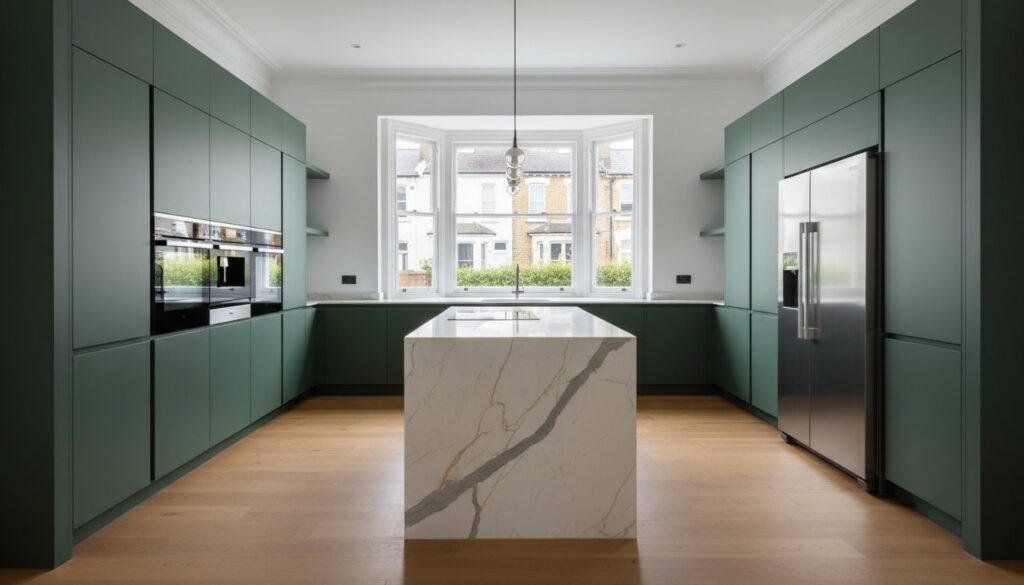
A Victorian terrace in Notting Hill loses approximately £45,000 in perceived market value the moment a renovation prioritizes off-the-shelf convenience over its unique architectural soul. You likely feel that in West London, space is never just a floor plan; it’s a precious commodity where every millimetre must justify its existence through both form and function. Navigating the 2026 planning landscape requires more than just a standard contractor. It demands a meticulous kitchen by kitchen philosophy where uncompromising craftsmanship meets the rigid, often complex demands of Royal Borough regulations.
This guide reveals how to transform your residence with a bespoke kitchen renovation that balances artisanal joinery with the relentless pace of urban practicality. You’ll discover the exact methods used to achieve a magazine-ready finish that integrates with your home’s heritage while adding a 12% to 15% premium to your total property valuation. We’ll explore everything from the 5 essential planning hurdles in Kensington to the selection of master tradespeople who treat cabinetry like fine art. By the end, you’ll have a clear roadmap to a space that resonates with timeless elegance and technical precision.
Key Takeaways
- Distinguish between modular refreshes and a comprehensive kitchen by kitchen renovation designed specifically for the structural nuances of West London’s Victorian and Edwardian period homes.
- Explore the intersection of engineering and art through material selections that offer uncompromising durability and sophisticated acoustic management for open-plan living spaces.
- Analyze the long-term value of bespoke, professionally fitted solutions compared to the hidden structural and electrical costs often found in lower-end modular alternatives.
- Gain clarity on the 2026 Permitted Development rights and planning nuances specific to Ealing and Hammersmith boroughs to streamline your renovation journey.
- Master the transition from artistic vision to technical reality through a structured consultation process that ensures fixed-price precision and artisanal quality.
What Does “Kitchen by Kitchen” Renovation Mean for London Homeowners?
A kitchen by kitchen renovation isn’t merely a series of cabinet swaps; it’s a philosophy of uncompromising spatial engineering. For West London residents, this modular yet holistic approach means treating the kitchen as a standalone masterpiece that dictates the rhythm of the entire home. While standard contractors might suggest a “rip and replace” strategy, a bespoke methodology respects the architectural soul of the building. This is particularly vital in the grand Victorian and Edwardian terraces of Hammersmith and Ealing, where every millimetre of floor plan must be earned. We don’t just install cupboards. We curate environments that resonate with the owner’s lifestyle.
The transition from a basic utility mindset to a full-home refurbishment perspective is driven by the demand for quiet luxury. This involves a deep understanding of the kitchen work triangle, ensuring that the flow between the range, the sink, and the refrigeration unit is as fluid as a well-composed symphony. In 2024, 68% of West London homeowners surveyed by local property analysts cited the kitchen as the primary factor in their renovation budget allocation. This data confirms the kitchen’s role as the property’s anchor, serving as both a high-performance culinary laboratory and a sophisticated social stage.
Adopting a kitchen by kitchen strategy allows for surgical precision in the following areas:
- Structural Harmony: Aligning new cabinetry with the unique, often irregular alcoves found in 19th-century West London architecture.
- Material Integrity: Selecting tactile, durable surfaces like Carrara marble or hand-finished walnut that age gracefully over decades.
- Technological Integration: Concealing professional-grade appliances within bespoke housing to maintain a clean, minimalist aesthetic.
The Evolution of the London Kitchen
The kitchens of Hammersmith and Fulham have undergone a radical metamorphosis. Once hidden utility rooms tucked away at the rear of the property, they’ve emerged as open-plan social hubs. Off-the-shelf units fail here because they lack the flexibility to handle the non-standard dimensions of a 120-year-old Chiswick townhouse. A bespoke strategy ensures that cabinetry integrates seamlessly with wider home extensions, creating a unified aesthetic that bridges the gap between heritage architecture and 21st-century living. This evolution reflects a shift from simple unit replacement to a “full home refurbishment” mindset where the kitchen defines the property’s character.
Investment Value in the 2026 London Market
High-end refurbishments in Ealing and Chiswick are no longer just about personal comfort; they’re strategic financial moves. Data suggests that a bespoke kitchen can reduce the time a West London terrace spends on the market by an average of 14 days. This speed of sale is matched by significant capital appreciation, as buyers increasingly look for “turnkey” luxury in the capital’s most competitive postcodes. By the second quarter of 2026, a bespoke kitchen renovation in West London is projected to deliver a 12% higher return on investment compared to standard modular installs. This premium reflects the market’s growing appetite for artisanal quality and technical durability over mass-produced alternatives.
The Anatomy of a High-End Kitchen: Engineering Meets Art
True luxury isn’t found in a glossy catalog; it’s forged through the marriage of structural integrity and aesthetic soul. When we approach a project, we don’t see a mere collection of cabinets. We see a precision instrument designed for the choreography of daily life. This philosophy drives our kitchen by kitchen methodology, where every millimetre is scrutinized to ensure that the final installation functions with the silent grace of a well-tuned gallery. Achieving this requires moving beyond surface-level beauty into the realm of uncompromising engineering.
Material selection serves as the foundation of this process. We reject the industry standard of 18mm MFC for something far more substantial. A Horns Construction-fitted kitchen utilizes solid wood cores and high-density marine grade birch plywood to ensure a lifespan that exceeds 25 years. This technical rigor extends to the acoustic profile of the room. In the sprawling open-plan terraces of Fulham or Chelsea, sound often becomes a chaotic element. We integrate acoustic dampening within the cabinetry and specify silent-close mechanisms that operate below 30 decibels. By treating the kitchen as an acoustic chamber, we manage the clatter of porcelain and the hum of appliances, preserving the tranquility of your living space.
Lighting in a West London home must account for the soaring 3.5-metre Victorian ceilings and the often temperamental British light levels. We design in layers. Task lighting provides 500 lumens of focused clarity on prep surfaces, while ambient layers use warm 2700K LEDs to soften the architectural lines. Ensuring every structural modification and electrical layout adheres to UK building regulations is the baseline for our engineering team, providing peace of mind alongside visual brilliance.
Cabinetry and Joinery Excellence
The gulf between mass-produced carcasses and bespoke carpentry is vast. While high-street units rely on cam-and-pin assembly, our builds utilize traditional mortise and tenon joints for superior lateral strength. Hand-painted finishes remain the gold standard for London refurbishments because they allow for effortless repair and color evolution over time. We believe that masterful Carpentry and Joinery is the backbone of a premium kitchen, providing a tactile response that factory-sprayed surfaces cannot match. It’s about the weight of the door and the seamless glide of the runner.
While a full bespoke build offers the ultimate customisation, the quality of the finish is paramount even in less extensive updates. For homeowners interested in the specialist craft of updating existing cabinetry, it can be helpful to see how experts in the field operate. For example, you can learn more about Cabinet Refinishing Boulder to see the detailed process and results that are possible, providing inspiration for projects regardless of location.
Worktops and Hard Surfaces
Selecting a worktop requires balancing geological beauty with chemical resistance. For heavy-use family environments, we often recommend Dekton or high-grade Quartz, which withstand temperatures up to 300°C without thermal shock. However, for those seeking a kitchen by kitchen bespoke identity, honed Marble offers a patina that tells a story. Technical precision is paramount here. We specialize in 45-degree mitred waterfall edges that create a monolithic appearance, reflecting London’s natural light to make even narrow galley spaces feel expansive and airy.
As we look toward 2026, technology is becoming invisible. We integrate smart hubs directly into the stone surfaces and hide high-fidelity audio systems within the plinths, ensuring the Horns Construction aesthetic remains timeless. If you’re ready to elevate your home with this level of detail, consider how our bespoke design consultation can transform your vision into a structural masterpiece.

Bespoke vs. Modular: Navigating the 2026 Kitchen Market
West London’s property landscape in 2026 demands a level of architectural integrity that off-the-shelf solutions simply cannot replicate. While a modular kitchen from a mass-market retailer might carry an enticing initial price tag of £6,000 to £10,000, these figures are often deceptive. They represent the “shell” of a dream, excluding the surgical precision required to integrate modern functionality into 19th-century structures. We view the renovation process as a meticulous restoration of flow, where we refine the spatial harmony kitchen by kitchen, ensuring every cabinet respects the unique geometry of the building.
The hidden expenses of a DIY or “dry-fit” approach often emerge during the first week of installation. In many Kensington or Chelsea terraces, walls deviate from the vertical by as much as 35mm. A standard 600mm deep modular unit leaves no room for error, often resulting in unsightly gaps or compromised structural support. Beyond the cabinetry, the technical infrastructure requires expert oversight. Navigating UK building regulations for kitchens is essential when your project involves relocating gas mains or upgrading electrical circuits to support high-performance 2026 induction technology. Failure to secure these certifications can devalue a property by up to 15% during future surveys.
London homes frequently feature narrow footprints where every millimetre is a precious commodity. A bespoke solution allows for custom-depth units, perhaps 540mm instead of 600mm, which can reclaim vital floor space without sacrificing storage. This level of tailoring justifies the premium investment, transforming a utility room into a curated piece of functional art.
The Problem with Online-Only Kitchen Retailers
Online retailers lead with “trade prices” that vanish once you account for the lack of a professional site survey. Ordering units based on a homeowner’s measurements is a high-risk strategy in West London, where chimney breasts and uneven subfloors are the norm. At Horns Construction, we frequently rectify the “modular mismatch” found in period properties. We’ve seen projects where £12,000 worth of online cabinetry required £4,000 in remedial joinery just to fit the alcoves. Our approach eliminates this friction through rigorous pre-manufacturing assessments.
The Design-Build Advantage
The true luxury of a premium renovation lies in the absence of stress. By choosing a design-build partner, you secure a single point of accountability from the initial sketch to the final polish. This streamlined methodology mitigates the risks associated with the eight RIBA stages of work, ensuring that the artistic vision isn’t lost between the designer’s desk and the fitter’s saw. Whether you are looking for a standalone culinary space or Full Home Refurbishments, our project management team synchronizes the master craftsmen, electricians, and plumbers. This holistic oversight ensures that your kitchen by kitchen evolution contributes to a cohesive, timeless aesthetic across the entire residence. We don’t just install cupboards; we engineer an enduring lifestyle upgrade that honors the soul of your home.
Logistics and Planning: Renovating in West London
Transforming a West London residence requires more than a vision; it demands a meticulous mastery of local bureaucracy and structural physics. Navigating the planning departments of Ealing and Hammersmith & Fulham involves understanding a complex web of conservation area constraints and strict aesthetic guidelines. Since January 2026, Permitted Development rights have undergone a significant evolution, now tied directly to the Future Homes Standard. These updates require any kitchen extension to meet a 75% reduction in carbon emissions compared to previous 2021 standards. If your property sits within a designated conservation area, which accounts for over 40% of the London Borough of Hammersmith & Fulham, you’ll likely face Article 4 directions that restrict these rights entirely.
The technical reality of a London fit is often hidden behind the plaster. In multi-storey Victorian and Edwardian houses, relocating gas, water, and waste lines is a surgical operation. Moving a sink more than 3 meters from the original soil stack in a narrow Fulham terrace often requires bespoke macerator systems or complex floor joist reinforcements to maintain the necessary falls for drainage. We don’t just move pipes; we re-engineer the home’s internal anatomy to support a modern lifestyle without compromising the building’s historical soul. This carefully curated kitchen by kitchen approach ensures that every technical decision serves the ultimate acoustic and visual harmony of the space.
Managing the human element is equally vital. Structural fits in dense urban environments trigger the Party Wall etc. Act 1996. If you’re excavating for a side-return or inserting steel beams within 3 meters of a neighbor’s structure, legal notices are mandatory. Surveyor fees in West London currently average between £1,200 and £2,500 per neighbor. Proactive communication and professional schedules of condition prevent disputes, ensuring the project’s rhythm remains undisturbed by legal friction.
Structural Requirements for Kitchen Extensions
Opening up a traditional floor plan to create an expansive, light-filled environment requires uncompromising engineering. A structural engineer is an absolute necessity for every wall removal project to guarantee the building’s permanent stability. When we remove load-bearing masonry to achieve a seamless kitchen by kitchen flow, we replace it with Rolled Steel Joists (RSJs) calculated to the millimeter. These beams must account for the weight of the three stories above, often requiring “box frames” to distribute the load into the foundations without causing subsidence in the London clay.
Local Building Regulations and Sustainability
Meeting the 2026 energy efficiency standards is no longer optional for West London renovations. New extensions must achieve a U-value of 0.15 W/m²K for walls, necessitating high-performance vacuum insulation panels in tight spaces. Logistics in areas like Fulham present unique challenges; skip permits cost approximately £85 per week and require precise timing due to narrow street access. Furthermore, fire safety regulations under Part B now mandate specific heat detection systems and fire-rated doors if the kitchen opens onto the primary escape route. We treat these regulations as the framework for excellence, ensuring your home is as safe as it is beautiful.
Experience the pinnacle of architectural precision and bespoke craftsmanship by exploring our premium kitchen installation services, where we transform technical complexity into an art form.
The Horns Approach: Your Kitchen Transformation Journey
Creating a bespoke culinary space requires more than just technical skill; it demands a fusion of architectural discipline and artistic vision. At Horns Ltd., we view the home as a sanctuary where every element must resonate with the owner’s lifestyle. We elevate the standard of London living kitchen by kitchen, treating every cabinet, joint, and surface as a standalone piece of art that contributes to a greater domestic symphony.
Our methodology is broken down into five distinct phases of excellence:
- Phase 1: The Artistic Consultation: We begin with a technical site survey that goes beyond simple measurements. Our experts analyze the natural light patterns in your West London home and evaluate the structural soul of the room to ensure the new layout breathes.
- Phase 2: Material Curation and Quoting: We select materials with the scrutiny of a master craftsman. Whether it’s sustainable solid oak or rare stone, every choice is documented in a fixed-price quote. This transparency ensures your investment, often ranging from £45,000 to over £120,000 for premium refurbs, is protected from the start.
- Phase 3: Structural Engineering and Trades: Precision is non-negotiable. Our internal teams coordinate complex plumbing and electrical re-routing. We manage every technical detail to ensure your infrastructure meets modern UK building regulations while supporting high-performance appliances.
- Phase 4: The Master Fit: This is where the Horns signature becomes visible. Our installers work with tolerances as tight as 0.5mm. We hand-finish cabinetry on-site to ensure the flow of the grain and the alignment of the hardware are flawless.
- Phase 5: The Final Walkthrough: We don’t consider a project finished until it passes our uncompromising quality audit. We provide a comprehensive handover and a 10-year structural guarantee that reflects our confidence in the durability of our work.
Our reputation has been built kitchen by kitchen over two decades of uncompromising service. We understand that a West London refurbishment is an emotional and financial commitment, so we treat your home with the reverence it deserves.
Why West London Chooses Horns Construction
Our 20-year legacy in the capital is defined by a refusal to accept “good enough.” The Horns Signature represents a unique intersection where engineering precision meets passionate design. We’ve spent two decades refining our craft in the Victorian and Edwardian terraces of Kensington, Chelsea, and Notting Hill. When you choose our Kitchen Fitting services, you’re investing in a team that understands the nuances of London architecture and the expectations of a high-end lifestyle.
Start Your London Kitchen Project Today
Preparing for your initial consultation is the first step toward your dream space. We recommend gathering floorplans of your current layout and a wishlist of “uncompromising” features, such as integrated wine climate cabinets or bespoke larder units. Bring your inspiration, whether it’s a specific texture or a color palette that moves you. Our West London team will use these details to draft a proposal that aligns with your vision of perfection. Don’t settle for a modular solution when you can have a kitchen designed for your specific cadence of life.
Book your West London kitchen consultation with Horns Ltd.
Craft Your Legacy in the Heart of West London
A home in West London represents more than just a residence; it’s a testament to timeless elegance and architectural heritage. Achieving a kitchen by kitchen transformation in 2026 demands a departure from the mundane. It requires an uncompromising marriage of engineering precision and artistic soul. With 20 years of experience navigating the intricate requirements of London’s period properties, we understand that every cornice and cabinet must serve a purpose. Our team provides full project management, shielding you from the logistical complexities of urban renovations while ensuring handcrafted quality. We don’t just install furniture; we compose environments that resonate with the rhythm of your lifestyle. Whether you’re balancing the structural needs of a Victorian terrace or seeking the sleek dynamics of a modern extension, our bespoke approach ensures every millimetre is accounted for. Your investment deserves the steady hand of a specialist who views renovation as a fine art rather than a mere construction task.
Enquire about your bespoke West London kitchen renovation today
Let’s begin the journey of defining your home’s most vital space with the sophistication it truly deserves.
Frequently Asked Questions
How much does a high-end kitchen renovation cost in London in 2026?
A bespoke, high-end kitchen renovation in London for 2026 typically starts at £55,000 and can exceed £140,000 for architectural grade installations. This investment reflects the use of rare materials like book-matched marble and professional-grade appliances that offer uncompromising performance. We believe every pound spent should manifest as a blend of technical precision and timeless aesthetic value.
Do I need planning permission for a kitchen extension in Ealing?
You won’t usually need planning permission for internal refurbishments, but a physical extension in Ealing often requires a formal application if it exceeds Permitted Development rights. Specifically, rear extensions extending beyond 3 or 4 metres usually trigger the need for council approval. Our team navigates these regulatory waters with the same meticulous care we apply to our craftsmanship, ensuring your project meets all 2024 building standards.
How long does a full kitchen refurbishment typically take in West London?
A comprehensive kitchen refurbishment in West London requires between 6 and 10 weeks of dedicated artisanal work. We approach each project kitchen by kitchen, allowing enough time for the precise calibration of smart systems and the curing of custom stone surfaces. This duration ensures that the final result isn’t just a room, but a meticulously engineered masterpiece that lasts for generations.
Can Horns Construction handle the structural work as well as the kitchen fitting?
Horns Construction provides a unified service that integrates complex structural engineering with refined kitchen fitting. We manage the installation of heavy-duty RSJs and the removal of load-bearing walls to create the expansive, light-filled environments our clients desire. We treat the hidden infrastructure of your home with the same reverence as the visible cabinetry, ensuring a foundation of absolute integrity.
What is the best kitchen layout for a narrow Victorian terrace in Hammersmith?
The side-return extension is the superior layout for Hammersmith’s Victorian terraces, typically adding 12 to 15 square metres of vital living space. This configuration facilitates a generous galley or a slender central island that respects the home’s original architectural rhythm. By integrating slim-profile glazing, we transform these narrow footprints into airy, atmospheric hubs that celebrate the marriage of form and function.
Is it worth upgrading my electrical panel (consumer unit) for a new kitchen?
Upgrading to a modern, 18th Edition compliant consumer unit is a non-negotiable requirement for kitchens featuring high-performance induction hobs or multi-zone steam ovens. These advanced culinary tools demand stable, dedicated circuits to function at their peak technical capacity. We view the electrical system as the vital pulse of your kitchen, requiring the highest levels of safety and engineering excellence.
How do I protect my original flooring during a kitchen renovation?
We safeguard your heritage flooring using 4mm impact-resistant polypropylene sheets laid over breathable, non-abrasive fleece membranes. Our technicians seal every joint with low-tack tape to prevent dust ingress while ensuring the wood or tile underneath isn’t compromised by moisture. This rigorous protection strategy allows us to work kitchen by kitchen without risking the integrity of your home’s existing historical features.
What are the trending kitchen colors for London homes in 2026?
Deep Obsidian Green and rich Burnt Umber are the dominant palettes for London’s most prestigious kitchens in 2026. These saturated, earthy tones replace the sterile greys of the past decade, providing a sense of permanence and emotional depth. When paired with hand-patinated bronze or brushed brass hardware, these colours create a sanctuary that feels both contemporary and deeply rooted in tradition.