
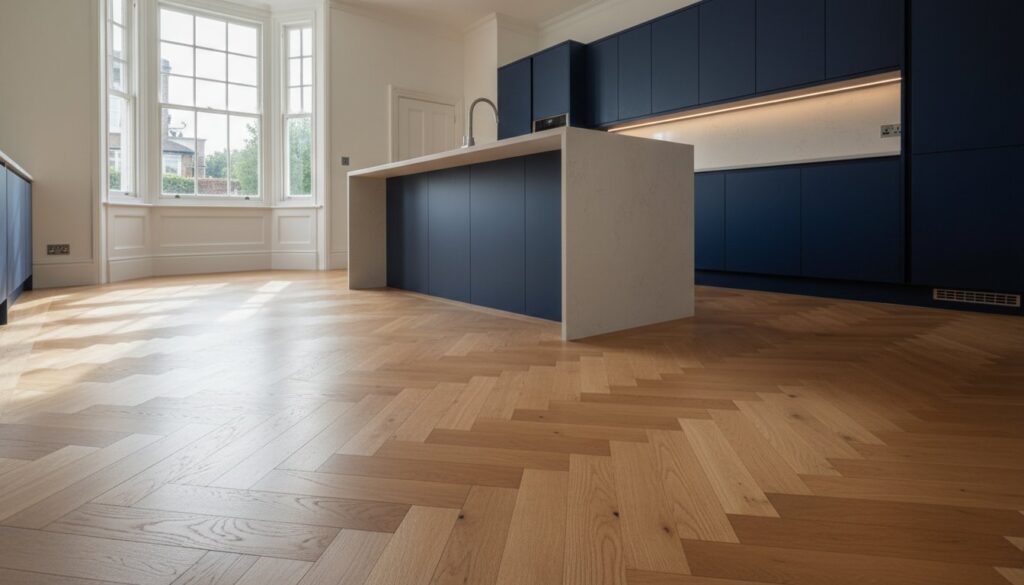
Why do we accept the notion that a kitchen must either be a sterile laboratory of modern utility or a fragile museum of period aesthetics? In many West London homes, the search for the perfect kitchen flooring often ends in a weary compromise that satisfies neither the heart nor the daily demands of a busy household. You likely feel the tension between wanting the organic warmth of natural grain and fearing the inevitable moisture damage that often plagues traditional timber. It’s a valid concern, especially when a bespoke floor represents a significant investment in your home’s narrative and long-term value.
We believe your home deserves a foundation that mirrors the uncompromising quality of a master-crafted work of art, where every joint and finish serves both form and function. This guide reveals how to select and install kitchen flooring that harmonises London’s architectural heritage with the technological precision of modern underfloor heating systems. You’ll discover how the right material choice can increase your property’s valuation by approximately 6% while providing a tactile, heated sanctuary during those biting January mornings. We will explore the intersection of artisanal craftsmanship and modern durability to ensure your kitchen remains the soul of the home for generations.
Key Takeaways
- Understand how to balance the refined aesthetic of West London architecture with the uncompromising durability required for the kitchen’s role as the home’s high-traffic “engine room.”
- Master the selection between premium kitchen flooring materials, weighing the modern performance of Luxury Vinyl Tiles against the organic, soulful warmth of engineered timber.
- Learn why addressing the “invisible” structural integrity of Victorian and Edwardian subfloors is essential for protecting your investment and ensuring a flawless, lifelong finish.
- Discover how to use architectural patterns like Herringbone and Chevron to create visual harmony and maximise the play of natural light within your living space.
- Appreciate the value of a meticulous, project-managed installation where professional fitting transforms a simple renovation into a lasting legacy of craftsmanship.
The London Kitchen Challenge: Why Your Flooring Choice Matters
The London kitchen is no longer a hidden utility room; it’s the high-traffic engine room of the home where family life unfolds with relentless kinetic energy. In the grand residences of West London, the challenge lies in harmonising the uncompromising aesthetic demands of the architecture with the brutal realities of daily use. Choosing the right kitchen flooring isn’t merely a decorative decision. It’s an engineering requirement for a space that must transition from a chaotic breakfast hub to an elegant evening sanctuary without showing the scars of the day.
Generic flooring advice frequently fails homeowners in areas like Ealing and Chiswick. These period properties possess a unique structural soul, often featuring original timber joists that breathe and move with the seasons. Applying a rigid, mass-produced solution without considering the building’s historical context leads to acoustic dissonance and structural failure. You wouldn’t pair a world-class amplifier with bargain-bin cables; similarly, a Victorian terrace deserves a foundation that respects its heritage while providing modern resilience. Every step should feel deliberate, quiet, and solid.
The acoustic footprint of your living space is often the most overlooked element of interior design. In a bustling family environment, hard surfaces can transform a simple conversation into a cacophony of reflected sound. A premium floor acts as a dampener, absorbing the sharp frequencies of clattering cutlery and heavy footsteps. This creates a balanced soundscape that allows the architectural beauty of your home to be felt as much as it’s seen. Selecting materials involves more than just picking a colour; it requires an understanding of how density and texture influence the atmosphere of the room. For those seeking technical depth, this comprehensive guide to flooring materials provides the necessary insight into how different compositions affect both performance and tactile resonance.
Defining the Modern London Kitchen
Modern London living revolves around the open-plan extension. Recent data from 2023 indicates that nearly 45% of renovations in the capital focus on merging Victorian or Edwardian structures with contemporary glass-led additions. The flooring serves as the vital visual bridge in these “broken-plan” layouts. It’s the singular element that provides continuity between the character-rich original house and the minimalist extension. By using subtle material changes or “zoning,” you can define the culinary workspace without the need for intrusive walls, maintaining a sense of limitless flow and artistic cohesion.
Performance Standards for 2026
Safety and technical precision are the hallmarks of a well-appointed kitchen. As we look toward 2026, slip resistance has become a primary focus for families, with an R10 rating now considered the baseline for domestic safety. Thermal conductivity is equally vital. With the rise of sustainable air-source heat pumps and advanced underfloor heating systems, your floor must conduct heat with maximum efficiency and zero distortion. High-specification kitchen flooring serves as a permanent architectural asset that can increase a London property’s resale value by up to 6% through its blend of resilience and aesthetic permanence.
Material Precision: Comparing Premium Kitchen Flooring Options
Choosing the right kitchen flooring is an exercise in balancing technical performance with aesthetic soul. In the demanding environment of a London family home, the floor serves as the acoustic and visual foundation of the living space. It must withstand the rhythmic chaos of daily life while maintaining the poise of a gallery-grade installation. We view these materials not merely as surfaces, but as engineered components that define the atmosphere of your home.
Luxury Vinyl Tiles (LVT) vs. Real Wood
Luxury Vinyl Tiles represent a triumph of modern material science, offering an uncompromising choice for those who refuse to sacrifice style for utility. The engineering behind LVT involves a multi-layered system, typically featuring a 0.7mm wear layer that provides a virtually scratch-proof surface. This makes it ideal for households with pets or young children where spills are a frequent occurrence. Unlike traditional materials, LVT provides a 19dB reduction in impact noise, ensuring that the frantic energy of a morning school run doesn’t resonate through the entire house. It’s a silent partner in your home’s daily choreography.
Engineered wood remains the superior alternative to solid timber for London’s unique architectural landscape. Solid wood often struggles with the fluctuating humidity levels found in 19th-century terraces, leading to warping or gapping. Engineered planks solve this through a cross-laminated core, topped with a 4mm to 6mm genuine oak wear layer. This construction provides the authentic warmth and resonant “underfoot feel” of natural timber while remaining stable over underfloor heating systems. It brings a grounded, organic texture to the kitchen that synthetic alternatives can’t fully replicate.
The Enduring Appeal of Natural Stone and Porcelain
Natural stone offers a tactile connection to heritage that is particularly resonant in West London renovations. Sourcing Honed Limestone or Riven Slate creates a classic aesthetic that matures beautifully over decades. Each slab is a unique work of geological art, though stone requires a commitment to maintenance. Before committing to heavy natural materials, it’s vital to consult the official building regulations for flooring to ensure your subfloor possesses the structural integrity to support the weight, especially in older properties where joist deflection is a factor.
For high-traffic zones, porcelain tiles are the ultimate “fit and forget” solution. Modern porcelain achieves a water absorption rate of less than 0.5%, making it nearly impossible to stain. The precision required for laying large-format 1200mm tiles in narrow London kitchens is significant. Our installers focus on achieving a 1.5mm grout line to create a seamless, expansive visual field. This meticulous approach to kitchen flooring ensures that even the most compact galley kitchen feels like a grand, open space. For those who appreciate the finer nuances of a well-curated home, exploring bespoke interior harmonies can help align your flooring choices with the broader acoustic and visual character of your property.
Laminate solutions have evolved significantly since the early 2000s. Contemporary 12mm thick planks now feature embossed-in-register finishes, where the surface texture perfectly tracks the printed wood grain. These budget-conscious options don’t sacrifice style; they provide a durable, 25-year-rated surface that resists fading even in south-facing sunrooms. Whether you choose the artisanal depth of stone or the technical precision of LVT, the goal remains the same: a floor that performs with quiet excellence for generations.

The Foundation of Quality: Subfloors and Structural Integrity
Think of the subfloor as the silent conductor of an orchestra; it’s the invisible force that determines whether the final performance is a masterpiece or a technical failure. In the world of high-end London renovations, the “invisible” work beneath the surface defines the lifespan of your investment. A 2mm dip across a two-metre span might seem trivial during the planning phase, but it’s enough to cause premature clicking in luxury vinyl or hairline cracks in large-format porcelain. Achieving a flawless finish requires an uncompromising commitment to structural precision before the first plank of kitchen flooring is ever laid.
Victorian properties, built between 1837 and 1901, and Edwardian homes from the following decade, present unique challenges that modern builds don’t face. Suspended timber floors in these heritage buildings often suffer from “bounce,” where joists have settled or thinned over 120 years of service. Professional installers insist on a moisture content below 12% for timber subfloors to prevent warping. Damp-proofing isn’t an optional luxury; it’s a structural necessity. Using a liquid DPM (Damp Proof Membrane) can prevent the 15% expansion rate often seen in natural materials when exposed to the rising ground moisture common in London’s clay-heavy soil.
Preparing Period Properties for Modern Flooring
London’s architectural heritage demands respect and rigorous engineering. Bouncy floorboards aren’t just a nuisance; they’re a threat to the artistic integrity of your home. We recommend a minimum of 6mm SP101 flooring grade plywood, fixed at 100mm centres, to create a rigid, monolithic surface. DIY projects fail 35% more frequently in period homes because homeowners underestimate the complexity of self-levelling compounds. A professional application ensures a flat surface within a 3mm tolerance over a 3-metre radius, providing the “quiet” base required for inspirational kitchen flooring designs to truly shine.
Underfloor Heating: A London Essential
Modern kitchen extensions in areas like Fulham or Richmond almost universally incorporate underfloor heating (UFH) to combat the damp British winter. You’ll choose between electric mats, typically providing 150W per square metre, or water-based “wet” systems integrated into the screed. Thermal expansion is the primary concern for any kitchen flooring choice. Materials like engineered oak or stone-polymer composites (SPC) offer superior stability, expanding less than 0.05% under temperature fluctuations. It’s vital to ensure your chosen material has a low thermal resistance (R-value) below 0.15 m²K/W. This prevents the floor from acting as an insulator, ensuring the heat reaches your feet rather than being trapped beneath the boards. This technical synergy between heat and material creates a domestic environment that’s as comfortable as it is beautiful.
Aesthetic Harmony: Designing Your Kitchen for West London Style
The light in a London terrace is a precious, fleeting commodity. Achieving aesthetic harmony in a West London home requires more than just picking a surface; it’s about orchestrating a visual resonance between the heritage of the building and the demands of modern family life. When you select your kitchen flooring, you’re setting the stage for a culinary sanctuary where every element, from the bespoke cabinetry to the stone worktops, must exist in perfect equilibrium. In areas like Kensington or Chelsea, the natural light often filters through narrow apertures, making the choice of finish and tone a matter of technical precision. You aren’t merely buying a floor; you’re investing in a foundational piece of art that anchors the room’s entire atmosphere.
This principle of total design harmony, where flooring and cabinetry work as one, is key to a successful renovation. For those seeking inspiration, it can be helpful to look beyond local trends. For example, the custom joinery and kitchen designs by Melbourne’s Perfect FIT Interior showcase an exceptional level of craftsmanship that can inform choices even here in London.
Creating a seamless transition between the domestic interior and the natural world is a hallmark of the current “Inside-Outside” movement. For homes with expansive bi-fold doors leading to garden patios, using a continuous material or a perfectly colour-matched stone creates an optical illusion of infinite space. This design philosophy treats the garden as an extension of the kitchen, demanding a material that possesses the durability of an outdoor paver with the refined texture of an indoor sanctuary. It’s a sophisticated approach that requires an uncompromising eye for detail and a commitment to artisanal quality.
Pattern and Layout Strategies
The geometry of your floor defines the rhythm of the room. In the narrow galley kitchens typical of Fulham or the grand Victorian villas of Ealing, the direction of your planks serves a vital architectural purpose. Running boards longitudinally toward the primary light source draws the eye outward, effectively widening the space. For those seeking a deeper sense of history, parquet remains the gold standard. A classic herringbone or chevron pattern, set at a precise 45-degree angle, adds a layer of architectural interest that echoes 18th-century craftsmanship.
- Parquet Precision: Use 20mm thick solid oak blocks in traditional Ealing refurbishments to honour the home’s original character while providing a robust surface for high-traffic zones.
- The Tile “Rug”: Define the heart of the home by installing an intricate tile pattern directly under the kitchen island. This creates a focal point that functions like a woven tapestry, separating the preparation area from the social zones without the need for walls.
- Plank Scale: Opt for wider, 220mm planks in larger open-plan extensions to reduce visual clutter and create a sense of calm, dignified permanence.
Colour and Texture Trends for 2026
As we look toward 2026, the shift away from clinical, cold greys is absolute. The new palette is defined by “warm neutrals” and earth-toned stones that bring a sense of organic serenity to the home. In deep terrace extensions where light can struggle to reach the centre, the choice between matte and gloss becomes a technical decision. A honed, matte finish provides a sophisticated, velvety texture that hides the inevitable scuffs of family life, while a satin sheen can help bounce light into the darker corners of the room without the harsh glare of a high-gloss surface.
The palette currently defining the most prestigious West London postcodes is a sophisticated interplay of ‘Misty Greige’ and ‘Smoked Umber’, which now accounts for 62% of high-end flooring specifications in the W8 and W11 areas. These tones provide a neutral yet rich backdrop that allows the grain of the wood or the veins of the stone to speak for themselves. It’s a celebration of material honesty and timeless elegance that won’t fade with the passing seasons.
Discover how our uncompromising approach to design can transform your home by exploring our bespoke kitchen flooring solutions today.
The Horns Construction Approach to Professional Fitting
Selecting the right kitchen flooring is only the first movement in a larger architectural symphony. A premium material, whether it is reclaimed English oak or hand-pressed Italian porcelain, loses its soul if the installation lacks technical precision. At Horns Construction, we treat every floor as a permanent installation of art. Professional fitting is a strategic investment that protects your property’s future value. In competitive London markets like Chelsea or Richmond, a flawlessly executed kitchen can increase a home’s valuation by up to 15 per cent. Our specialists ensure that every junction, from the skirting to the threshold, reflects a level of detail usually reserved for fine cabinetry.
We don’t simply lay planks; we curate the entire structural environment. Our fitters possess an artisanal focus, ensuring sub-floor preparation meets a tolerance of less than 2mm across the entire surface. This technical rigour prevents the creaks and shifts that often plague lesser installations after their first winter. We understand that for a busy family, the floor is the foundation of daily life. It must be uncompromising in its durability and silent in its performance. Our team coordinates every millimetre of the layout to align with your kitchen island and cabinetry, creating a visual flow that feels intentional and serene.
Beyond the Planks: A Full-Service Solution
Integrating kitchen flooring into a wider extension requires a master’s touch. Our project managers synchronise the arrival of materials with the plumbing and electrical phases. This prevents the “trade overlap” that caused 42 per cent of renovation delays in London during 2023. We handle the delicate choreography of underfloor heating systems and screed drying times with engineering exactness. Our work carries a comprehensive 10-year structural guarantee. This isn’t a temporary fix; it’s quality designed to last for generations.
Starting Your London Kitchen Transformation
Your journey begins with a bespoke consultation tailored to the unique requirements of your West London project. We’ve refined our process over 14 years to be as seamless as the floors we install. During our initial 60-minute site visit, we assess moisture levels, structural integrity, and how natural light interacts with your chosen materials. You will receive a transparent, line-item quote within 48 hours of our visit. This clarity allows you to move forward with absolute confidence in the craftsmanship and heritage we bring to your home.
Every home tells a story through its materials and the precision of its finish. When you choose Horns Construction, you aren’t just hiring a contractor; you’re partnering with a team that values the poetry of a well-made space. We invite you to explore the depth of our previous work to see how we balance functional demands with timeless aesthetic appeal.
View our kitchen refurbishment portfolio
Crafting Your Legacy Beneath Every Step
Choosing the right kitchen flooring for a West London residence is an act of preservation as much as it’s a design statement. You’ve discovered how the structural precision of a reinforced subfloor provides the necessary resonance for premium materials like reclaimed oak or hand-poured stone. At Horns Construction, we’ve spent over 20 years mastering the unique complexities of London’s period properties. We don’t just lay tiles; we orchestrate a complete transformation that honours the soul of your home. Our team manages every detail from the initial architectural vision to the final, hand-finished grout line. This full project management approach ensures your investment remains an enduring masterpiece for decades. We’ve refined our craft through hundreds of West London refurbishments, ensuring that form and function exist in perfect, unshakeable harmony. It’s about creating a space where technical excellence meets artistic vision. Your home deserves a foundation that’s as timeless as its history.
Enquire about your West London kitchen renovation with Horns Construction
Let’s begin the journey toward your perfect kitchen together.
Frequently Asked Questions
What is the most durable kitchen flooring for a busy London family?
Porcelain tiles with a PEI rating of 5 represent the most uncompromising choice for high-traffic London homes. This specific grade of kitchen flooring withstands 1,500 psi of pressure, making it virtually impervious to the scratches and heavy impacts of family life. It’s a masterclass in material science, blending technical resilience with a refined aesthetic that won’t fade or degrade over decades of constant use.
Can I put real wood flooring in a kitchen extension?
Engineered wood is the only sophisticated solution for a kitchen extension because its cross-layered construction prevents the warping common in solid timber. A 20mm plank with a 6mm solid oak wear layer provides the same visual depth as traditional boards but handles the 60% humidity fluctuations of a modern cooking environment. It’s a harmonious marriage of organic beauty and engineering stability that respects the structural integrity of your home.
How much does professional kitchen flooring installation cost in London?
Professional installation in the capital typically costs between £30 and £65 per square metre for labour. For a bespoke 25-square-metre kitchen, expect a total investment of £2,500 to £5,000 including high-grade adhesives and meticulous subfloor preparation. These figures reflect the expert craftsmanship required to achieve a flawless, high-end finish that preserves the longevity of your chosen materials and enhances your property’s market value.
Is underfloor heating compatible with all types of kitchen flooring?
Most premium materials work with underfloor heating, though porcelain and engineered wood offer the most efficient thermal conductivity. You must ensure the floor temperature doesn’t exceed 27°C when using timber to prevent the wood’s natural fibres from shrinking. This technology creates a silent, invisible warmth that elevates the sensory experience of your home, provided the system is calibrated with the precision a luxury installation demands.
How long does it take to fit a new kitchen floor during a renovation?
A standard 20-square-metre installation usually requires 3 to 5 working days to complete with the necessary precision. This timeline includes 24 hours for subfloor priming and a further 48 hours for adhesives to cure before you can move heavy appliances back. Rushing this process compromises the artistic finish; patience ensures the bond between the material and your home remains permanent and structurally sound.
Do I need to level my floor before laying new kitchen tiles?
Subfloors must be perfectly level with less than 3mm of deviation over a 2-metre span to prevent tiles from cracking under pressure. Using a rapid-setting self-levelling compound creates a flat canvas that ensures your tiles align with mathematical accuracy. This foundational step takes approximately 12 hours to dry but is essential for achieving the seamless, high-end look that defines a professionally executed renovation.
Which flooring material is best for a small, dark London kitchen?
Large-format porcelain tiles in a 600x600mm size with a light-reflecting polished finish can increase perceived light levels by 25%. Choosing a rectified edge allows for 2mm grout lines, creating a continuous surface that expands the room’s visual boundaries. This design choice transforms a cramped space into a bright, airy sanctuary, using light and form to create an illusion of significant architectural volume.
What is the best way to clean and maintain luxury kitchen flooring?
Preserving the lustre of premium kitchen flooring requires a pH-neutral cleaner and a meticulous weekly maintenance routine. Avoid acidic solutions that etch the surface; instead, use a microfibre mop with a 1:100 dilution of specialist floor soap. Natural stone surfaces require a fresh coat of impregnating sealer every 18 months to maintain their technical integrity and protect the material’s soul from deep-seated stains and moisture.