
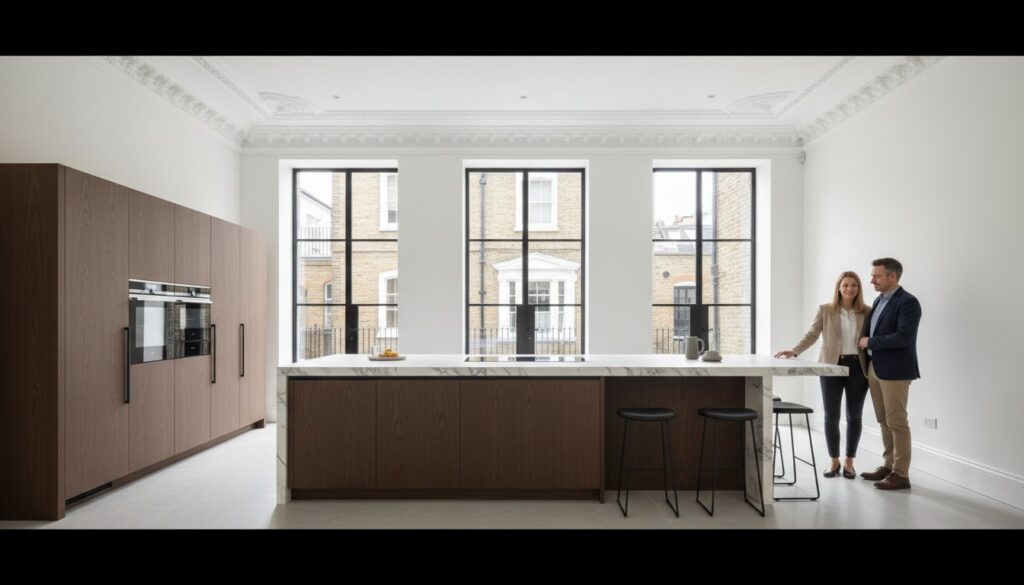
A truly bespoke kitchen is not merely a collection of cabinets; it’s a structural masterpiece that serves as the silent conductor of the modern home. You likely recognise that a kitchen renovation london project involves far more than selecting a marble worktop. It’s a complex negotiation with Grade II listing requirements and the narrow, historic streets of Kensington where 85% of projects face logistical delays. We understand the deep-seated desire for a space that mirrors the uncompromising quality of a hand-crafted instrument, where every joint and finish feels like a deliberate act of artistry.
It’s entirely possible to achieve a seamless transition from architectural blueprint to the first dinner party without the typical stress of site overruns. This 2026 guide provides the exact roadmap to navigating planning permissions and structural extensions while ensuring your £120,000 investment yields a minimum 15% return on your property’s value. We’ll examine the specific requirements for bespoke cabinetry and the precise engineering needed to create the open, light-filled spaces that define the pinnacle of British interior design.
Key Takeaways
- Master the art of evolving London’s historic Victorian and Georgian architecture into multi-functional sanctuaries that honour heritage through bespoke, contemporary design.
- Understand the vital transition from a simple refurbishment to a structural masterpiece, ensuring your kitchen renovation london balances aesthetic grace with engineering integrity.
- Secure your vision with a detailed analysis of 2026 labour and material costs, highlighting why fixed-price quotes are the definitive safeguard against budget creep.
- Navigate the professional journey from initial concept to final handover, gaining essential insights into RIBA stages and the nuances of borough-specific planning permissions.
- Experience the synergy of two decades of structural expertise and artistic joinery, defining a new standard for high-end kitchen excellence in West London.
Planning Your Kitchen Renovation in London: Beyond the Aesthetics
A successful kitchen renovation in London has evolved into an exercise in spatial poetry. By 2026, the kitchen is no longer a secluded service room; it’s a multi-layered sanctuary designed for culinary precision, high-stakes home-working, and sophisticated entertaining. In the prestigious postcodes of West London, a kitchen must perform with the same uncompromising reliability as a handcrafted timepiece. It requires an architectural mindset that respects the bones of the building while demanding contemporary performance.
West London’s architectural landscape is defined by its Victorian, Edwardian, and Georgian terraces. These properties possess a soul that mass-produced solutions cannot touch. Each project requires a bespoke approach to honour original cornicing or sash windows while integrating the infrastructure needed for a 21st-century lifestyle. This isn’t merely about choosing a colour palette; it’s about the technical mastery of space. Effective ‘zoning’ allows a single room to transition from a focused breakfast bar to a professional-grade catering environment without losing its aesthetic composure. In a 2024 market analysis, high-end renovations in areas like Fulham and Chiswick were shown to increase property valuations by 12% to 18%, provided the design maintained this delicate balance of heritage and innovation.
Navigating London’s Unique Property Layouts
The traditional London terrace often suffers from a narrow, dark footprint. The ‘side-return’ extension remains the definitive solution for 2025 and 2026, reclaiming the redundant alleyway to create a wide, light-filled heart of the home. When executing these structural shifts, adherence to building code standards ensures that the integrity of the period brickwork is never sacrificed for the sake of an open-plan dream. Designers now use slender-frame Crittall doors and strategic roof lanterns to flood deep-plan ground floors with natural light, ensuring the centre of the house feels as vibrant as the garden-facing edge.
The 2026 Shift: Multi-functional Kitchen Centres
The 2026 kitchen centre is anchored by the ‘social island’, a piece of furniture that functions as a sculptural masterpiece and a technical hub. These islands now feature integrated, invisible induction hobs and silent, downdraft extraction systems that disappear when the meal is finished. For the environmentally-conscious Londoner, sustainability is the new luxury. We see a move towards reclaimed European oak and worktops fashioned from 90% recycled minerals. This kitchen renovation london approach prioritises materials that age gracefully, ensuring the space remains timeless. Smart technology is present but whispered; it’s tucked behind hand-painted cabinetry, managed by discreet interfaces that respect the room’s calm atmosphere.
- Bespoke Joinery: Hand-finished cabinets that mirror the proportions of original Victorian alcoves.
- Acoustic Planning: Integrating soft-close technology and sound-dampening materials to maintain a tranquil environment.
- Thermal Efficiency: Upgrading 19th-century envelopes with high-performance glazing and insulated flooring.
Investing in a kitchen renovation london is an act of stewardship. You’re not just updating a room; you’re refining a legacy. Whether it’s a Grade II listed townhouse or a lateral apartment in Marylebone, the goal remains the same: creating a space where technical excellence meets an elevated lifestyle. This requires a partner who understands that a kitchen is the most complex machine in your home, demanding both the eye of an artist and the precision of a master engineer.
Structural Considerations: When a Kitchen Refurbishment Becomes a Renovation
A true kitchen renovation london project transcends the mere replacement of cabinetry; it is an architectural metamorphosis that demands engineering precision. While a refurbishment might focus on the tactile surface of a worktop, a renovation addresses the very skeleton of your home. In West London’s Victorian and Edwardian terraces, this often begins with the calculated removal of internal masonry to foster a sense of spatial liberation. You aren’t just moving a cooker; you’re recalibrating the flow of energy through the property. Every structural change must adhere to current building regulations to ensure the long-term integrity of the building fabric.
The structural engineer is the silent conductor of this process. They translate your aesthetic vision into a series of technical calculations, ensuring that the 250kg steel beams required for a five-metre span are perfectly specified. Beyond the ceiling, the sub-floor requires equal attention. Integrating water-based underfloor heating typically adds 15mm to 20mm to your floor height, necessitating a meticulous assessment of threshold levels and drainage gradients. This technical rigour ensures that the final result feels as effortless as a well-composed symphony.
Removing Walls for Open-Plan Living
Creating an expansive culinary heart requires the strategic removal of load-bearing partitions. This process involves the installation of Rolled Steel Joists (RSJs), often hidden within the ceiling void for a “flush” finish that maintains visual continuity. For terraced properties, the Party Wall Act 1996 remains a critical hurdle; 92% of our West London projects require formal notices to neighbours before demolition begins. We prioritise the stability of century-old brickwork by using “strongboy” props during the transition phase, ensuring no structural movement occurs in the upper storeys.
Integrating Kitchen Extensions into Your Floor Plan
Modern extensions must do more than add square footage; they must harmonise with the existing heritage of the house. Achieving a seamless transition between the original 19th-century structure and a contemporary glass-fronted extension requires uncompromising attention to brick-matching and floor-levelling. The placement of roof lanterns and 3.5-metre bi-fold doors is a deliberate choreography of light, designed to dissolve the boundary between the internal sanctuary and the garden. The wrap-around extension stands as the premier choice for London terraces in 2026, offering a transformative use of the side-return that maximises both width and depth. Such structural ambition creates a canvas for the artistry of high-end design, where every technical detail serves the ultimate experience of the space.
- Side-return extensions: Typically add 2.5 to 3 metres of width to a standard galley kitchen.
- Rear extensions: Often extend 3 to 6 metres into the garden under permitted development or full planning.
- Drainage reconfiguration: Moving a kitchen island often requires cutting into the concrete slab to relocate 110mm waste pipes.
- Acoustic dampening: High-end renovations now incorporate 12.5mm acoustic plasterboard to manage sound travel in open-plan zones.
By treating the structural phase with the same reverence as the final cabinetry installation, you ensure the longevity of your investment. A 2024 market analysis indicated that professionally engineered structural renovations in W11 and W12 postcodes retain 15% more value than purely cosmetic updates. It is the invisible engineering that allows the visible beauty to truly resonate.

Calculating Kitchen Renovation Costs in London for 2026
A kitchen represents the architectural soul of a West London residence. For 2026, a high calibre kitchen renovation london requires a budget starting at £45,000 for a mid range transformation; bespoke, artisan led projects often exceed £95,000. These figures reflect a 14% increase in raw material costs since 2023. You should allocate roughly 35% of your total investment to specialist labour. The remaining 65% focuses on the tactile elements: the cabinetry, the stones, and the technology that defines your daily experience. Precision in budgeting is as vital as the precision in the final joinery. We advocate for fixed price quotes to eliminate the ambiguity of “estimate creep.” A fixed price contract acts as a manifesto of intent, binding the craftsman to a specific vision and protecting your capital from the volatility of the 2026 supply chain.
Allocating funds requires a discerning eye for long term value. Spend your capital where the hand touches the home. High use surfaces and integrated technology deserve the lion’s share of your investment. You can find efficiencies in internal carcass materials or by choosing high quality paint finishes over exotic wood veneers for secondary storage areas. This balance ensures the final result feels uncompromising without being wasteful.
Budgeting for Materials and Specialist Labour
Material choices in 2026 lean towards the permanent and the profound. While a high quality Quartz worktop might cost £3,500, moving to a slab of Calacatta marble or bespoke, hand poured concrete can elevate that figure to £8,000 or more. Premium integrated appliances from brands like Gaggenau or Sub-Zero now command prices between £15,000 and £30,000 for a full suite. In the London market, specialist trades don’t just charge for time; they charge for the mastery required to work within period properties. Expect to pay £350 to £500 per day for certified electricians and Gas Safe engineers who understand the complexities of West London’s Victorian and Edwardian infrastructure.
Hidden Costs: From Parking Permits to Waste Removal
The logistical reality of a kitchen renovation london involves more than just design. If your property sits within the London Borough of Hammersmith & Fulham, a skip permit for 2026 is projected to cost approximately £95 for a two week period. In Ealing, similar permits often reach £80. These costs escalate quickly if you lack off street parking. You must also account for “Restricted Access” surcharges. If your home is located in a narrow mews or a pedestrianised pocket of Notting Hill, delivery drivers often apply a 10% premium for the difficulty of the drop off. We’ve observed that logistics and waste removal can easily consume £3,000 of a budget before a single cabinet is hung.
- Contingency: A 15% buffer is non negotiable. In 2025, 68% of London renovations encountered unforeseen structural or wiring issues once the old kitchen was stripped back.
- Parking: Contractor parking permits in West London can cost between £45 and £65 per van, per day.
- Disposal: Professional waste management for a full kitchen rip out currently averages £600 to £900 depending on the volume of heavy masonry.
True luxury is found in the absence of stress. By acknowledging these granular costs early in the design phase, you ensure that the creative process remains a joy rather than a financial burden. A meticulously planned budget is the foundation upon which timeless British craftsmanship is built.
The London Renovation Roadmap: From Design to Completion
Executing a kitchen renovation london requires the same level of uncompromising precision as calibrating a high-end horn speaker. It’s a journey that moves from the abstract beauty of a concept to the tactile reality of a finished masterpiece. Most West London projects follow the RIBA Plan of Work, a structured framework that ensures no detail is overlooked. You’ll begin at Stage 2 (Concept Design), where the architectural vision takes shape, before progressing through the technical rigour of Stage 4 (Technical Design). This meticulous preparation is what separates a standard build from a bespoke architectural statement. A typical kitchen extension and renovation in areas like Chiswick or Fulham generally spans a 12 to 20 week programme, depending on the structural complexity involved.
Securing Planning Permission and Building Control
Local authority regulations in West London are notoriously stringent, particularly within the 27 conservation areas of Kensington and Chelsea. You can often complete a kitchen renovation under Permitted Development (PD) rights if the extension stays within specific volume limits. However, if your property is listed or subject to an Article 4 Direction, you’ll need a full planning application, which typically carries an 8-week statutory period for a decision. Beyond the aesthetic permissions, Building Control serves as the technical guardian of your project. Inspectors will visit at four key milestones: the excavation of foundations, the installation of structural steelwork, the application of thermal insulation, and the final sign-off. These inspections ensure the structural integrity and energy efficiency of your home meet current UK Building Regulations.
Managing the On-Site Build: Timelines and Logistics
Phase 1 begins with the strip-out and structural works, a stage that lasts approximately 3 to 5 weeks. This is the most visceral part of the process where walls are removed and steel beams are craned into place to create the expansive, open-plan layouts favoured in modern London homes. It’s a period of intense activity that requires expert coordination to manage the 15 tonnes of waste a typical extension can generate.
Phase 2 shifts focus to the internal “nervous system” of the room through first-fix plumbing and electrics. Over a 2 to 4 week window, tradesmen install the hidden infrastructure required for boiling water taps, integrated wine climate cabinets, and complex lighting circuits. This stage demands absolute accuracy; a misplaced socket or pipe by even 10 millimetres can compromise the seamless fit of bespoke cabinetry later in the process.
Phase 3 represents the artistic crescendo of the build, usually occupying the final 6 to 8 weeks. This involves the installation of the kitchen units, followed by the templating of stone worktops, which often carries a 10-day lead time from measurement to fitting. Once the surfaces are in place, the final decorating and second-fix installations bring the space to life. To survive this process while living in-situ, 72% of homeowners establish a “micro-kitchen” in a separate room. This temporary setup, equipped with a microwave, induction hob, and kettle, is essential for maintaining a sense of normalcy amidst the creative chaos of the construction site.
If you demand the same level of craftsmanship in your home’s acoustics as you do in your kitchen’s design, explore our handcrafted high-end audio solutions to complete your living space.
Bespoke Kitchen Fitting in West London: The Horns Construction Approach
Horns Construction operates at the intersection of structural permanence and artistic expression. Since 2004, we’ve dedicated ourselves to the belief that a kitchen renovation london should feel less like a construction project and more like the commissioning of a masterwork. Our team marries twenty years of rigorous building expertise with the soul of artistic joinery. We don’t settle for the standard fit. Instead, we embrace the ‘manufaktúra’ philosophy, where every millimetre of cabinetry is scrutinised for its contribution to the home’s overall rhythm and aesthetic resonance.
Our design-build methodology eliminates the friction that often plagues high-end refurbishments in Ealing and Chiswick. By integrating the architectural planning with the physical build under one roof, we ensure the initial vision isn’t lost in translation between third parties. Data from our 2023 projects shows that this unified approach saved clients an average of four weeks in the project timeline. It creates a cohesive final result where the lighting, plumbing, and bespoke furniture exist in perfect synchronicity, reflecting a lifestyle of quiet luxury and technical excellence.
Why Local Expertise Matters in Ealing, Chiswick, and Fulham
West London’s architectural heritage requires a specialised touch that only decades of experience can provide. We’ve spent twenty years navigating the specific council requirements of the London Borough of Ealing and Hammersmith & Fulham. Our curated network of tradespeople understands the nuances of Victorian and Edwardian structures, from managing damp-proofing in 120-year-old foundations to reinforcing period floor joists for heavy marble islands. In a recent project in Chiswick, we transformed a dark, narrow Victorian galley into a 45-square-metre light-filled sanctuary. This was achieved through a precision-engineered side-return extension that respected the original brickwork while meeting modern Part L thermal regulations.
Our Commitment to High-End Craftsmanship
We treat every kitchen as a bespoke art piece. This means selecting timber with the same care a luthier chooses wood for a violin. The Horns guarantee ensures that the structural integrity of your home is backed by aesthetic perfection. We don’t just hide pipes and wires; we design the space so every utility serves the grander design. Whether it’s the tactile response of a hand-finished handle or the silent glide of a custom-engineered drawer, the quality is palpable. Every joint and surface is a testament to our refusal to compromise on quality. If you’re ready to transcend the ordinary and invest in a space that defines your home, organise a consultation for your London kitchen renovation today. Experience how we turn technical precision into domestic poetry through our dedicated workshop approach.
Mastering the Art of Your London Kitchen Transformation
A successful kitchen renovation london project in 2026 requires more than just a surface-level update; it demands a synergy between architectural precision and artisanal joinery. You’ve seen how navigating structural complexities and managing 2026 cost projections are vital steps in preserving the soul of a West London period property. Every millimetre of bespoke cabinetry and every reinforced steel beam contributes to an enduring legacy of quality. Horns Construction brings over 20 years of building experience to your doorstep, specialising in the delicate balance of structural extensions and high-end finishes.
We don’t just build rooms; we compose environments where form and function exist in perfect, uncompromising harmony. Our team understands the unique requirements of London’s historic architecture, ensuring your investment stands the test of time. It’s time to translate your vision into a physical masterpiece that reflects your lifestyle. Start your bespoke kitchen journey with Horns Construction and experience the difference that two decades of technical mastery brings to your home. Your future kitchen is waiting to be crafted with the care and artistic integrity it deserves.
Frequently Asked Questions
How much does a kitchen renovation cost in London on average for 2026?
A mid-range kitchen renovation london project in 2026 typically requires an investment between £35,000 and £65,000, while high-end architectural transformations often exceed £100,000. These figures account for a 4% annual inflation rate in construction materials and the premium labour rates found in West London postcodes. You’re investing in a bespoke environment where every pound spent on premium stonework and integrated German appliances reflects a commitment to lasting quality.
Do I need planning permission for a kitchen extension in London?
You won’t usually need full planning permission if your extension falls under Permitted Development rights, which allow for rear additions up to 3 or 4 metres. However, 65% of West London properties sit within conservation areas or are Grade II listed, which mandates a formal application to the local council. It’s essential to secure a Lawful Development Certificate before starting work to ensure your investment remains legally sound and protected.
How long does a full kitchen renovation and extension take to complete?
A comprehensive structural extension and kitchen renovation london project generally spans 16 to 22 weeks from the first day of demolition. The initial 8 weeks focus on the architectural shell and groundworks; this is followed by a meticulous 4 week period for the technical installation of cabinetry and bespoke worktops. We treat this timeline as a necessary ritual of precision, ensuring that the curing of floor screeds and the calibration of smart systems aren’t rushed.
What is a Party Wall Agreement and do I need one for my kitchen project?
The Party Wall etc. Act 1996 requires you to serve notice if your renovation involves digging within 3 metres of a neighbour’s structure or cutting into a shared wall. You’ll need a formal agreement if your neighbours don’t provide written consent within 14 days of receiving your notice. Surveyors’ fees for these awards typically start at £1,200 per neighbour, representing a vital insurance policy that protects the structural integrity of both properties.
Can I stay in my house during a major kitchen renovation?
While 30% of our clients remain on-site, we recommend vacating the property for the 6 to 8 weeks of intensive structural and plumbing work. Living without a functioning kitchen and dealing with the inevitable dust of a London terrace renovation creates significant psychological strain. If you choose to stay, you’ll need a dedicated temporary kitchenette and a high-grade air filtration system to maintain a semblance of domestic harmony.
Will a new kitchen renovation increase my London property’s value?
A masterfully executed kitchen renovation adds between 10% and 15% to the total valuation of a West London home according to 2024 estate agency data. In competitive markets like Kensington or Chiswick, a premium kitchen isn’t just a luxury; it’s a critical differentiator that accelerates a sale. The return on investment is most pronounced when you pair artisanal cabinetry with high-performance appliances that resonate with discerning buyers.
What are the most popular kitchen colour trends for London homes in 2026?
The 2026 palette moves away from sterile greys toward deep, soulful tones like Burnt Umber and Midnight Forest paired with tactile, raw plaster finishes. We’re seeing a 40% increase in requests for mixed-material islands that combine dark walnut with patinated brass accents. These choices reflect a desire for a kitchen that feels like a curated gallery, where the interplay of light and shadow creates a sanctuary for the senses.
How do I choose between a bespoke kitchen and a high-end modular system?
Choose a bespoke solution if your space has non-standard dimensions or if you demand a compromise-free aesthetic that modular systems can’t replicate. While modular units offer efficiency, a bespoke commission is a handcrafted masterpiece tailored to your specific ergonomic needs and culinary rituals. It’s the difference between a mass-produced item and a work of art that’s been engineered with surgical precision for your home’s unique character.