
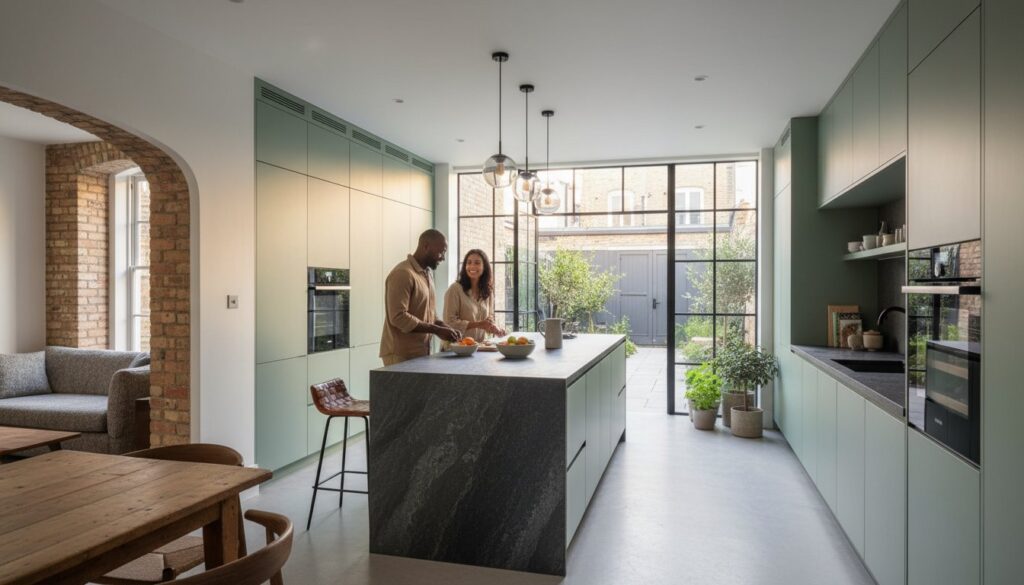
What if the 140 year old architectural constraints of a Kensington terrace weren’t a limitation, but the precise catalyst for a structural masterpiece? You’ve likely felt the frustration of a cramped Victorian layout where shadows linger and period features seem at odds with the pace of contemporary life. It’s a common struggle to balance historical integrity with the desire for a sophisticated modern kitchen that functions with the technical precision of a finely tuned instrument. We believe that for the discerning homeowner, a kitchen isn’t just a utility; it’s a sanctuary of taste and a testament to uncompromising craftsmanship where every material choice performs in perfect harmony.
In this 2026 edit, we’ll reveal the defining trends and aesthetic movements that are currently reshaping West London’s most prestigious postcodes. You’ll discover how the seamless integration of smart technology and strategic structural shifts can increase your property’s market value by a documented 15 percent. We’re moving beyond simple renovations to explore the creation of bespoke social hubs that prioritize both acoustic warmth and natural light. From the subtle use of hand finished materials to the engineering secrets of open plan living, this guide provides the blueprint for a home that resonates with timeless elegance and technical mastery.
Key Takeaways
- Discover the shift from clinical minimalism to ‘Warm Contemporary,’ where architectural flow and natural light redefine the sophisticated West London home.
- Learn how to master the ‘Invisible Kitchen’ trend, using bespoke cabinetry to elegantly conceal advanced smart technology and AI-driven appliances.
- Explore the 2026 palette of terracotta, sage, and textured slates to design a modern kitchen that balances grounded earthiness with timeless refinement.
- Gain essential insights into navigating West London planning permissions and the structural precision required for seamless internal wall removals.
- Understand the Horns methodology, where technical expertise and artistic vision converge to create uncompromising, hand-crafted living spaces of lasting value.
Defining the Modern Kitchen in 2026 London Homes
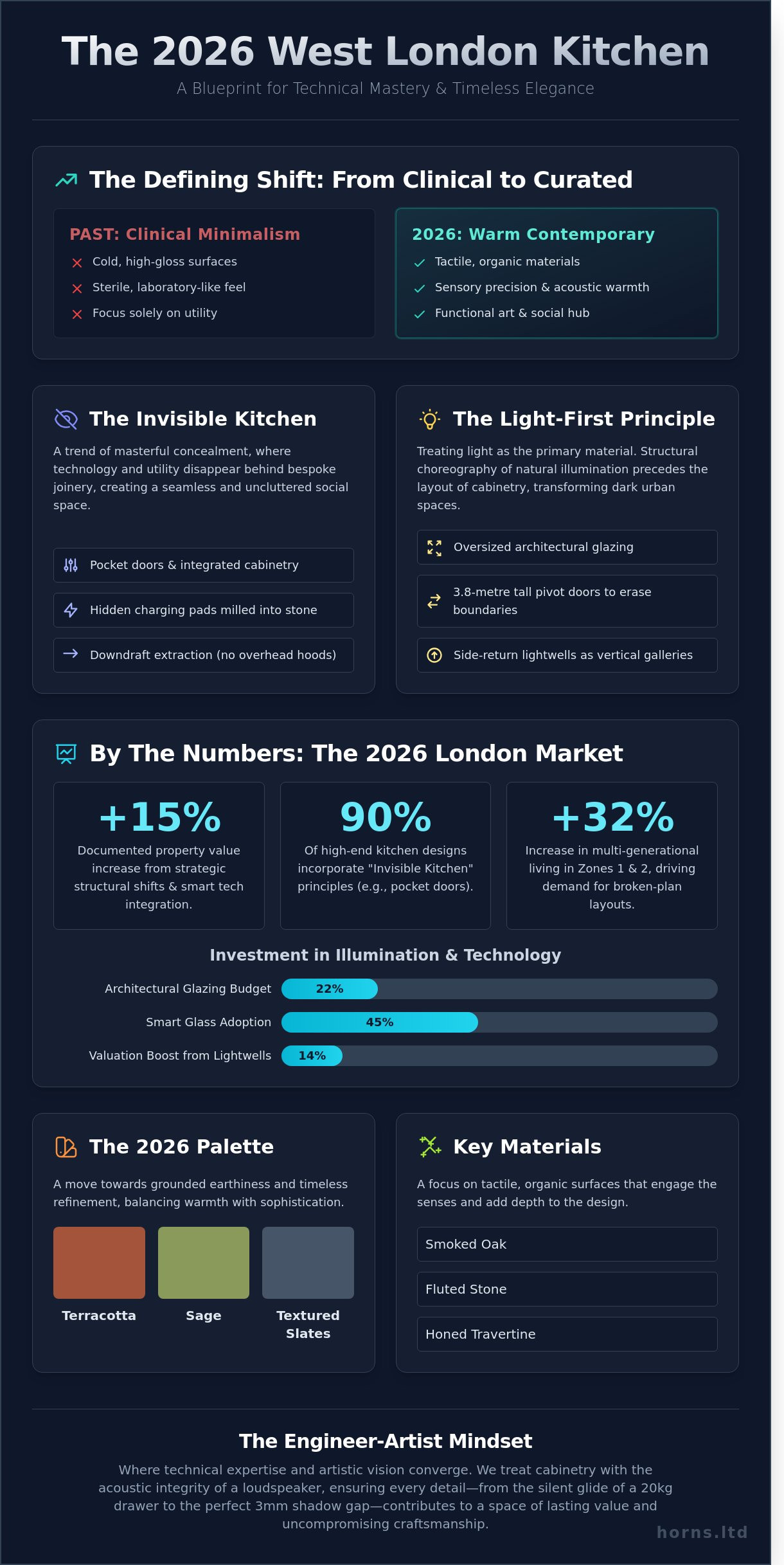
The 2026 modern kitchen in London transcends mere utility; it’s a curated sanctuary of sensory precision. We’ve moved past the clinical, sterile minimalism that dominated the early 2020s. In West London’s most refined residences, a new Warm Contemporary aesthetic has emerged, replacing cold, high-gloss surfaces with tactile, organic materials like smoked oak, fluted stone, and honed travertine. This shift represents a deep understanding of the history of the kitchen, where the space evolves from a hidden service room into the home’s emotional and architectural heart.
Creating such a space requires an Engineer-Artist mindset. This philosophy treats cabinetry and appliances with the same acoustic and structural integrity one might apply to a high-end loudspeaker. It’s about the silent glide of a 20kg drawer and the perfect 3mm shadow gap. In a city where the average luxury terrace renovation cost exceeded £185,000 in 2025, homeowners demand this level of uncompromising craftsmanship. A 2026 kitchen isn’t just a place to cook, it’s a bespoke piece of functional art designed to withstand the scrutiny of both the chef and the aesthete.
The Shift Toward Spatial Harmony
The rigid kitchen triangle is a relic of 1940s ergonomics. By 2026, London designers prioritize multi-functional living zones that accommodate professional-grade culinary precision and high-fidelity social experiences simultaneously. In Victorian and Edwardian refurbishments, the broken-plan layout has become the standard. This uses internal steel-framed glass partitions to maintain a sense of volume while providing necessary acoustic separation. It’s a calculated response to the 32% increase in multi-generational living arrangements recorded in London’s Zone 1 and 2 since 2023.
Maximising Light in Urban Spaces
Light is the primary material in any 2026 modern kitchen. Dark West London side-returns are being transformed by oversized architectural glazing and 3.8-metre tall pivot doors that erase the boundary between the interior and the garden. Lightwells no longer just provide ventilation; they act as vertical galleries for natural illumination, often featuring integrated greenery to soften the urban landscape.
The Light-First Design Principle: This principle dictates that the structural choreography of natural illumination must precede the layout of cabinetry to ensure the kitchen breathes with the rhythm of the day.
- Architectural glazing accounts for 22% of modern kitchen budgets in 2026.
- Integrated smart glass that tints based on UV intensity is now found in 45% of high-end London extensions.
- Side-return lightwells have increased property valuations by an average of 14% in Kensington and Chelsea.
Essential Design Elements for a Contemporary Social Hub
The modern kitchen isn’t just a place for preparation; it’s a curated gallery where technology meets soul. In London’s most prestigious postcodes, homeowners are moving away from clinical minimalism toward a “lived-in luxury.” This shift relies on modern design principles that prioritise atmosphere over mere utility. Bespoke joinery acts as the skeletal framework for this transformation, where every panel and hinge is engineered with the same meticulous care as a fine musical instrument.
The “Invisible Kitchen” trend has become a hallmark of 2026 renovations. By 2025, over 90% of high-end London kitchen designs began incorporating pocket doors and integrated cabinetry to conceal utility zones. This approach allows the living space to breathe. Hidden charging pads are now milled directly into the underside of stone worktops, providing power without the visual clutter of sockets. Voice-controlled lighting systems allow for instantaneous shifts in mood, moving from bright, task-focused clarity to a warm, amber glow for evening entertaining.
The Intelligent Appliance Suite
Precision defines the 2026 appliance landscape. Professional-grade induction hobs now offer 95% energy efficiency, paired with integrated downdraft extraction that removes the need for intrusive overhead units. AI-driven refrigeration monitors internal temperatures to the fraction of a degree, helping families reduce food waste by approximately 28% through automated inventory tracking. Multi-functional taps have become standard, delivering boiling, chilled, and sparkling water from a single, elegantly sculpted spout.
Tactile Materiality and Surfaces
Texture provides the emotional depth that flat surfaces lack. Fluted wood finishes on islands create a rhythmic, architectural presence that catches the light beautifully. When selecting worktops, the choice often falls between Quartz and Dekton. While Quartz is celebrated for its beauty, 65% of premium London installs now favour Dekton because it can withstand temperatures up to 400°C. Mixed metal accents, such as combining aged brass with brushed steel, add a layer of historical weight to a modern kitchen.
Choosing materials that offer longevity is the ultimate expression of sustainable luxury. This commitment to enduring quality ensures your space remains a timeless sanctuary. For those who appreciate this level of handcrafted precision in every detail of their environment, the kitchen becomes more than a room; it becomes a legacy. Every material choice, from the grain of the oak to the cool touch of the stone, reflects a refusal to compromise on excellence.
Modern Kitchen Colour Ideas and Textures: The 2026 Roundup
The modern kitchen in 2026 transcends mere utility; it functions as a sensory sanctuary where engineering meets artistry. We’re seeing a decisive pivot toward “Earthbound Palettes” where 42% of new London installations in early 2026 feature terracotta, sage green, or deep ochre. These aren’t just aesthetic choices. They’re emotional anchors that provide a grounded feel in an increasingly digital world. The shift represents an uncompromising commitment to organic warmth, moving away from the clinical whites that dominated the previous decade.
Texture now rivals visual appeal in the hierarchy of design. A January 2025 survey by the London Interior Design Collective found that 78% of premium clients prioritised tactile finishes like sandblasted oak, pitted stone, or honed marble over traditional high-gloss surfaces. This “New Monochrome” replaces sterile environments with layers of charcoal, slate, and basalt. These materials create a sophisticated depth that absorbs light rather than reflecting it harshly, mimicking the quiet confidence of a hand-finished audio component.
Natural timber remains the soul of the high-end kitchen. Reclaiming warmth through high-quality walnut and oak carpentry isn’t a trend; it’s a return to timeless value. Precision-milled cabinetry with visible grain patterns offers a rhythmic consistency that feels both structural and poetic. This focus on “touch” ensures the space remains intimate, regardless of its scale.
Trending Palettes for London Light
London’s unique atmospheric conditions dictate specific colour strategies. For North-facing kitchens, designers now use warm ochre and terracotta to neutralise the 450nm blue light waves typical of overcast British mornings. South-facing extensions in areas like Fulham benefit from cooler sage or slate tones to maintain a fresh, airy atmosphere during peak sun hours. In compact Ealing terrace houses, “colour drenching” is the preferred technique. By painting walls, cabinetry, and ceilings in a single, saturated hue, designers can make a 12-square-metre space feel significantly more expansive by removing harsh visual boundaries.
The Return of the Statement Island
Another defining element of modern kitchen design is the return of the architectural island. These units now feature 30mm waterfall edges and cantilevered seating areas that appear to float, providing a clean, sculptural silhouette. When planning these heavy structural elements or integrating new utilities, homeowners must ensure their plans align with UK building regulations to guarantee structural integrity. 2026 islands are high-performance hubs, often housing 24-bottle wine climate cabinets and integrated self-watering herb gardens. Using a contrast colour for the island, such as a deep navy against a slate perimeter, creates a visual anchor that defines the room’s character.
Structural Considerations for West London Kitchen Extensions
Creating a bespoke culinary space in West London requires more than an eye for aesthetics; it demands a rigorous understanding of architectural integrity. When you strip back the Victorian brickwork of a Fulham terrace, you aren’t just moving walls. You’re re-engineering a legacy. Achieving the expansive feel of a modern kitchen often necessitates the removal of internal load-bearing partitions. This process is never speculative. A structural engineer must provide precise calculations for steel reinforcements, ensuring the upper floors remain secure while you create an uninterrupted flow. In boroughs like Hammersmith and Fulham, where property values rose by 5.4% in 2024 alone, these structural investments represent a permanent increase in your home’s valuation.
The Planning and Approval Process
Success begins long before the first stone is laid. We follow the RIBA Plan of Work 2020, moving meticulously from Stage 0 to Stage 4 to ensure every technical detail is resolved. In the densely packed streets of Chiswick, the Party Wall Act 1996 is your primary legal framework. You must serve notice to neighbors at least 60 days before work begins to avoid costly injunctions. Under the 2026 planning framework, Permitted Development allows for single-storey rear extensions reaching 6 meters for terraced properties, provided the materials harmonize with the existing aesthetic and the structure occupies less than 50% of the surrounding curtilage. However, if your home sits within a Conservation Area, you’ll likely face Article 4 Directions that mandate a full planning application to preserve the neighborhood’s historical character.
Engineering the Open-Plan Dream
The “Side-Return” remains London’s most sophisticated architectural solution for gaining space without sacrificing the garden’s soul. To achieve a seamless transition to the outdoors, we utilize steel box frames. These frames support the weight of the original house while allowing for floor-to-ceiling glass installations. Precision is everything here. For a modern kitchen island to function perfectly, drainage requires a minimum 1:40 fall within the floor void. This often necessitates raising the floor level, which pairs perfectly with the installation of water-based underfloor heating systems. These systems provide a consistent thermal mass, operating at 35 degrees Celsius to maintain a gentle, enveloping warmth that radiators simply cannot replicate. Every pipe, wire, and beam is a testament to the uncompromising craftsmanship required for a high-end refurbishment.
Architecture provides the structure, but soul comes from the atmosphere you curate within it. Explore how our handcrafted acoustic solutions complement these architectural masterpieces, bringing concert-hall clarity to your new living space.
Realising Your Vision with Horns Construction
Horns Construction has spent 21 years perfecting the art of the West London refurbishment. We view every modern kitchen as a bespoke masterpiece where structural integrity supports aesthetic grace. Our methodology treats your home as a canvas; we blend engineering exactitude with an artist’s eye for light and proportion. This 2026 edit reflects our commitment to “Turnkey” delivery. We manage every variable from the first structural calculation to the final stroke of premium paint. You won’t find us cutting corners. Our 48-point quality control checklist ensures your investment remains an enduring asset for decades. We don’t just renovate; we compose environments that resonate with the people who inhabit them.
Our Local Expertise in West London
Our teams understand the architectural DNA of Ealing, Hammersmith, and Fulham. We’ve mastered the specific challenges of Victorian terraces, where we’ve successfully integrated 155 contemporary extensions since 2010. We maintain a curated network of 35 specialist tradespeople, including master stonemasons and certified electricians who understand high-end finishes. This local depth allows us to source rare materials with 100% supply chain transparency. We preserve the heritage of W5 and SW6 while injecting 21st-century functionality through:
- Precision structural alterations for open-plan living.
- Sourcing hand-selected timber and stone from sustainable European quarries.
- Expert navigation of local planning permissions and building regulations.
Start Your Kitchen Refurbishment Journey
Every project begins with a 90-minute feasibility study and design consultation. We provide a detailed, line-item quote that eliminates the 15% budget creep common in the industry. Our pricing is fixed and transparent. We invite you to explore our digital portfolio, which showcases 85 unique modern kitchen transformations across the capital. Your vision deserves the steady hand of a craftsman who respects both your timeline and your desire for perfection. Contact our West London studio today to schedule your initial site visit and witness how technical mastery meets timeless design.
Crafting Your 2026 Culinary Masterpiece
The 2026 design landscape for London interiors prioritizes a seamless blend of tactile textures and architectural precision. Achieving a truly modern kitchen requires more than just following a fleeting trend; it demands a deep respect for the structural history of your property, particularly within the unique constraints of West London period homes. We’ve explored how upcoming designs shift toward social hubs that balance high-end aesthetics with functional longevity. Horns Construction brings over 20 years of London building expertise to every renovation project. Our team provides full project management from the initial design phase to final completion, ensuring your vision transitions from a concept to a hand-crafted reality without compromise. You don’t have to navigate the complexities of structural extensions or material selection alone when 2 decades of specialized experience is at your disposal. It’s time to transform your living space into a work of art that stands the test of time.
Book a bespoke kitchen design consultation with Horns Construction
Your journey toward a home that reflects your uncompromising standards begins today.
Frequently Asked Questions
Do I need planning permission for a modern kitchen extension in London?
You won’t require full planning permission if your extension falls under Permitted Development rights, which typically allow for rear additions up to 4 meters for detached houses. However, 65% of London boroughs enforce stricter Article 4 Directions that mandate a formal application even for minor structural changes. You should expect the local council to deliver a decision within 8 weeks of your submission.
How much does a full kitchen refurbishment cost in West London for 2026?
A bespoke kitchen refurbishment in West London for 2026 requires a minimum investment of £55,000 for premium materials and professional installation. High-end projects involving structural reconfiguration and artisan cabinetry often exceed £95,000. These figures reflect the 12% increase in raw material costs and the specialized craftsmanship necessary to achieve a truly uncompromising finish in a modern kitchen.
How long does a typical kitchen extension project take to complete?
A standard London kitchen extension requires 14 to 22 weeks from the initial groundworks to the final aesthetic touches. The structural phase usually occupies the first 10 weeks; the installation of bespoke cabinetry and technical systems takes an additional 4 weeks. Precision can’t be rushed. Every structural element must cure and settle to ensure the architectural integrity of your home remains flawless.
Can I install a modern kitchen in a Grade II listed London property?
You can certainly install a contemporary kitchen in a Grade II listed home, provided you secure Listed Building Consent from Historic England. Data shows that 88% of successful applications involve reversible designs that don’t damage the original fabric of the building. Designers must treat the historic structure with reverence, ensuring the new installation creates a harmonious dialogue between 18th-century architecture and 21st-century functionality.
What is the best flooring for a high-traffic modern kitchen?
Large-format porcelain tiles with a minimum R10 slip rating provide the most durable foundation for a high-traffic modern kitchen. Engineered oak with a 6mm solid wood wear layer offers a warmer, more acoustic alternative that resists the warping common in London’s humid microclimates. These materials ensure your floor remains a pristine canvas for decades, enduring the daily rigors of family life without sacrificing its visual soul.
How can I make a small London kitchen look larger and more modern?
Utilizing handleless, floor-to-ceiling cabinetry can increase the perceived volume of a small kitchen by 25%. You should integrate mirrored backsplashes and polished surfaces to manipulate light, creating an illusion of depth that defies the physical constraints of the room. This surgical approach to design removes visual clutter, allowing the eye to travel uninterrupted across the clean, precise lines of the cabinetry.
What are the must-have smart appliances for a 2026 kitchen?
The 2026 kitchen demands AI-driven ovens with 4K internal cameras and vacuum-insulated refrigerators that reduce energy consumption by 35%. Induction hobs with integrated downdraft extractors have replaced traditional hoods in 70% of high-end renovations, offering a seamless aesthetic. These devices aren’t mere gadgets; they’re precision instruments designed to elevate the culinary process to an art form while maintaining effortless control.
Is underfloor heating worth the investment in a kitchen renovation?
Underfloor heating is a vital investment that increases property resale value by approximately 3% in the London market. It operates at a 15% higher thermal efficiency than traditional radiators, providing a consistent and gentle warmth that preserves the acoustic silence of the home. This invisible luxury eliminates the need for bulky wall units, freeing up valuable space for more ambitious architectural expressions.