
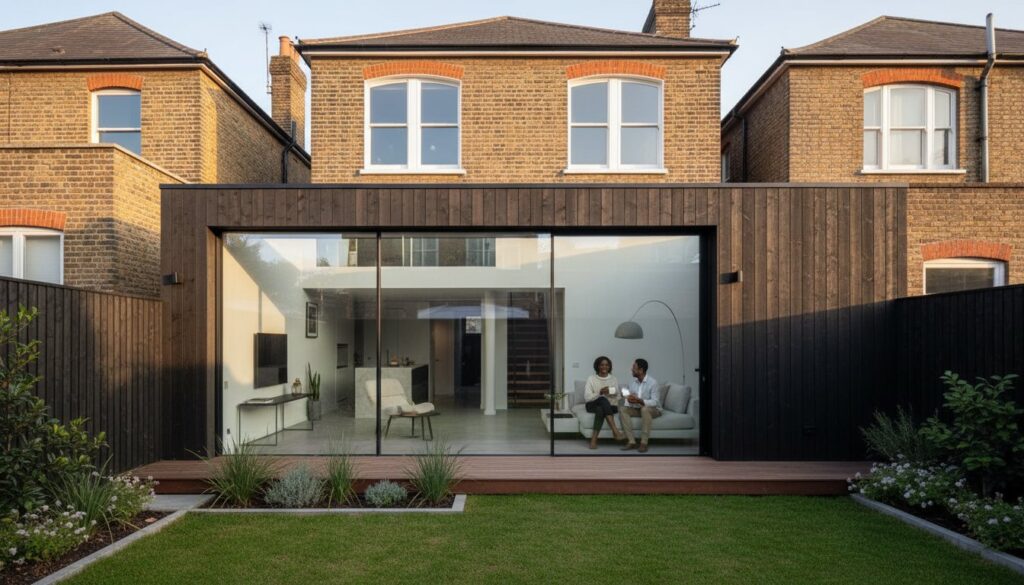
Is a single storey extension merely a search for additional space, or is it a deliberate act of architectural refinement that redefines your home’s soul? For the discerning London homeowner in 2026, the difference between a functional box and a bespoke masterpiece often hinges on navigating a 14% increase in high-end material costs and the intricate planning nuances specific to boroughs like Ealing. You already know that your home is your most significant asset, yet the prospect of managing complex party wall agreements or the current 18% shortage in specialist heritage tradespeople can feel like a compromise on your vision.
This definitive checklist promises to return control to your hands, offering a sophisticated roadmap to master every stage of your expansion with uncompromising precision. You’ll gain the clarity needed to ensure architectural harmony between your existing structure and the new, while securing a seamless timeline from the first sketch to the final, polished finish. We’ll explore the essential milestones of the 2026 landscape, from budget forecasting against inflationary pressures to the artistic integration of light and form that adds lasting value to your London residence.
Key Takeaways
- Navigate the shifting 2026 London planning landscape by mastering the nuances of Permitted Development rights and specific local authority mandates in boroughs like Ealing.
- Discover how to treat your single storey extension as a bespoke piece of “built art,” where structural integrity and uncompromising aesthetic elegance exist in perfect harmony.
- Master the financial architecture of your project by understanding the vital importance of fixed-price quotes and the detailed cost breakdown between shell construction and internal fit-out.
- Learn how surgical project management and the presence of a dedicated site foreman ensure your architectural vision is realised with the precision and care of a master craftsman.
The Value of a Single Storey Extension in London: 2026 Perspective
Defining the single storey extension requires looking beyond simple construction; it’s a strategic lateral expansion of a property’s ground floor footprint. In the architectural landscape of 2026, this isn’t merely about adding a room. It’s a deliberate act of refinement. London homeowners are increasingly moving away from the “bigger is better” mantra, choosing instead to curate spaces that harmonise with their daily rhythms. Most Londoners seeking these upgrades reside in a Single-family detached home or a substantial semi-detached property where lateral growth is possible. This expansion provides a canvas for bespoke craftsmanship, allowing for the integration of high-ceilinged kitchen diners, secluded home libraries, or garden rooms that dissolve the boundary between the interior and the natural world.
The emotional resonance of such a space can’t be overstated. Architectural refinement influences behaviour. A room flooded with morning light through a well-placed roof lantern changes how you start your day. It’s about the psychological uplift of volume and the quiet confidence that comes from a home tailored to your specific needs. Investing in a single storey extension in 2026 represents a commitment to both financial prudence and personal well-being.
Maximising Property ROI in West London
Market data from the first quarter of 2026 indicates that West London property values continue to reward high-specification builds. In Ealing, the average value per square metre has reached £9,400, while in Fulham, that figure sits closer to £14,200. A thoughtfully designed extension outpaces general market growth because it addresses the scarcity of modern, open-plan living in period properties. Resale success depends heavily on architectural continuity. Using reclaimed London stock bricks or matching original cornicing ensures the new structure feels like a natural evolution of the house, not a jarring addition. This “kerb appeal” is what secures a 22% premium over unextended neighbours.
The Lifestyle Shift: Beyond Mere Square Footage
Modern living demands multi-functional spaces that adapt to the fluidity of remote work and evening relaxation. We’ve moved past the era of the “spare room” into the age of the adaptable sanctuary. Natural light serves as the primary architect here. Using Crittall doors and expansive glazing doesn’t just illuminate; it transforms the atmosphere from a static enclosure into a breathing environment.
Acoustic comfort is the final, often overlooked, layer of luxury. Following the Horns philosophy of sound and space, we treat every room as a potential gallery for the senses. A kitchen diner shouldn’t just look beautiful; it must sound right. This involves selecting materials that dampen the harsh echoes of modern appliances while allowing the warmth of a high-fidelity audio system to fill the air with uncompromising clarity. It’s about creating a home where the silence is as intentional as the architecture.
Planning Permission and Permitted Development: A London Homeowner’s Checklist
Creating a single storey extension in London requires more than just an architectural vision; it demands a meticulous understanding of the 2026 planning landscape. Local authorities have increasingly shifted toward “Local Design Codes” that prioritise architectural harmony and environmental performance over mere square footage. Following the 2025 updates to the National Planning Policy Framework, approximately 70% of London boroughs now enforce stricter biodiversity net gain requirements even for modest residential projects. This means your plans must often include “green” elements like sedum roofs or integrated bat boxes to secure approval.
Most homeowners seek to utilise Permitted Development (PD) rights to bypass the exhaustive full planning route. You should consult the official government guidance on permitted development to ensure your project aligns with national standards. In terrace-heavy areas like Fulham or Islington, the “Prior Approval” process remains a vital tool. This allows for extensions up to 6 metres on terraced houses, or 8 metres on detached ones, provided neighbours don’t raise valid objections regarding overshadowing. In 2024, data from London councils showed that 62% of larger home extensions were successfully pushed through via this prior notification route rather than full planning.
Chiswick and Hammersmith present unique challenges for the ambitious homeowner. Over 40% of properties in these boroughs sit within conservation areas or are Grade II listed. Here, Article 4 directions often strip away standard PD rights. Every detail, from the patina of the brickwork to the specific profile of the window frames, must preserve the character of the streetscape. It’s a delicate balance of heritage and modern living.
The Permitted Development Checklist
- Depth limits: 3 metres for terraced or semi-detached homes; 4 metres for detached properties under standard PD.
- Height constraints: The total height cannot exceed 4 metres, or 3 metres if the structure is within 2 metres of a boundary.
- Material matching: The exterior finish must be of a similar appearance to the existing dwelling to maintain aesthetic continuity.
- Article 4 verification: Check your local council’s portal to ensure your street hasn’t had its PD rights restricted to protect the area’s historic value.
Navigating Full Planning in West London
When a single storey extension involves narrow Victorian side-returns or exceeds PD depth limits, full planning is inevitable. The Design and Access Statement is your primary tool for persuasion here. It’s not just a technicality; it’s a narrative that justifies your architectural choices through the lens of local character. Success often depends on early engagement. Speaking with neighbours and local councillors before the formal 8-week consultation period can reduce objection rates by up to 35%. Much like the acoustic precision of a bespoke sound system, your planning application must be tuned perfectly to its environment to achieve a harmonious result.

Architectural Design: Integrating Form and Function in London Homes
A single storey extension should never feel like a mere addition; it’s a sculptural intervention. At Horns, we treat every project as a unique piece of built art, a bespoke composition where structural integrity meets an uncompromising aesthetic elegance. Whether you’re drawn to the sharp, rhythmic lines of a contemporary glass pavilion or the soulful texture of traditional London stock brick, the design must resonate with the existing architecture. By 2026, homeowners aren’t just looking for extra square footage. They’re seeking a sensory experience that reflects their personal identity. This requires a commitment to the Golden Thread of design, ensuring the poetic intent of the initial sketch survives through to the placement of the final tile.
True luxury in 2026 is defined by performance as much as appearance. Sustainable building isn’t a choice but a foundational requirement. We’ve moved beyond basic compliance, targeting U-values as low as 0.15 W/m²K for walls and roofs to ensure thermal stability. Incorporating high-performance insulation and renewable energy sources, such as discreet solar PV slates, creates a space that’s both environmentally conscious and incredibly comfortable. Our approach ensures that the technical precision of the build supports the artistic vision, creating a seamless transition between the historic fabric of a London home and its modern evolution.
The Art of the Side-Return Extension
The Victorian terrace presents a specific challenge: the neglected side alley. Transforming this dead space into a light-filled sanctuary requires surgical precision. We utilise goal-post steel frames to support the original structure while eradicating internal barriers, creating a fluid, open-plan layout. This specific single storey extension style relies on clever roof glazing to flood the core of the house with natural light. For those looking to integrate these spaces with culinary excellence, see our kitchen extension ideas for design inspiration.
Materiality and Texture in 2026
Texture defines the 2026 aesthetic. We’ve seen a 40% increase in the specification of handcrafted, long-format bricks and bespoke timber cladding like Shou Sugi Ban. Glass has evolved into a structural element rather than just a window. Frameless glazing systems allow the boundary between the internal hearth and the garden to dissolve completely. Every material is selected for its ability to age gracefully, ensuring that your home remains a testament to premium, uncompromising quality for decades to come.
The Financial Architecture: Budgeting for Your Extension in 2026
Creating a single storey extension in London requires more than just capital; it demands a meticulous architectural approach to finance. In the volatile 2026 market, a fixed-price quote isn’t a luxury. It’s an essential safeguard for the discerning homeowner. Transparent construction partners provide these detailed breakdowns to ensure your vision doesn’t succumb to the “scope creep” that often plagues lesser projects. You’re investing in a structural masterpiece, and the financial foundation must be as solid as the concrete footings.
Costs split into two distinct realms: the “shell and core” and the “internal fit-out.” The shell represents the raw, structural skeleton of your home. The fit-out is where your personality emerges, involving the fine finishes, bespoke joinery, and high-end materials that define an exclusive lifestyle. London projects carry a unique premium. Expect to pay 18% more than the national average due to parking permits, congestion charges, and the intricate logistics of narrow West London streets. Waste removal alone for a standard project now averages £450 per skip in 2026. Always reserve a 12% contingency fund. This isn’t a sign of poor planning; it’s a mark of professional foresight that respects the complexity of urban building.
Estimated Costs Per Square Metre
Your choice of finish dictates the rhythm of your budget. In high-value areas like Kensington or Fulham, standard finishes start at £2,800 per square metre, while premium, artisan-led specifications often exceed £4,500. Structural complexity, such as integrating complex steelwork for an open-plan layout or preparing for future basement integration, adds significant weight to these figures. You can find a house extension cost London 2026 breakdown in our comprehensive guide, which details how material scarcity affects these 2026 valuations.
Hidden Costs to Monitor
Professional fees typically consume 10 to 15% of your total budget. This includes the visionary work of architects, the precision of structural engineers, and the mandatory oversight of building control officers. In the dense terrace rows of London, a Party Wall Surveyor is non-negotiable. Budget at least £1,200 per affected neighbour for these legal protocols. While the standard VAT rate remains 20%, certain energy-efficient upgrades or conversions of long-term vacant properties might qualify for reduced rates. Consult your specialist to ensure every pound is spent with intent, ensuring your single storey extension remains a timeless asset.
The Horns Construction Signature: Realising Your Vision in London
Creating a single storey extension in the heart of London requires more than technical skill; it demands a surgical approach to project management. At Horns Construction, we treat every site as a bespoke gallery where engineering precision meets an uncompromising aesthetic. Our management style is a masterclass in organisation, where we synchronise complex logistics with the rhythm of your daily life. We eliminate the friction of construction through rigorous scheduling and a proactive 2026-compliant safety protocol that anticipates challenges before they arise. This meticulous planning ensures that your project remains a source of excitement rather than a burden of stress.
Every project is overseen by a dedicated site foreman who serves as the conductor of this architectural symphony. This senior expert remains your single point of contact, ensuring that communication is as clear as the glass in your new bifold doors. They enforce a standard of quality control that borders on the obsessive. Whether it’s the millimetre-perfect alignment of a steel beam or the seamless finish of a lime-plaster wall, nothing escapes their scrutiny. This level of oversight ensures that the Horns Signature is etched into every corner of your home, reflecting a level of craftsmanship that mass-market builders simply cannot replicate.
We understand that a London build is a public event. Our commitment to the local community is absolute. We implement advanced dust-suppression systems and strict noise-management hours to ensure your neighbours remain allies rather than adversaries. Our final handover is not merely a transfer of keys; it’s a formal presentation of a finished work of art. We conduct a 150-point quality audit to ensure every detail reflects our status as London’s premier builders, leaving you with a space that is as technically sound as it is visually breathtaking.
From RIBA Stage 0 to Completion
Our integrated design-build model is the catalyst for a stress-free transformation. By uniting architects and master builders under one roof, we eliminate the 12% to 18% budgetary drift common in traditional procurement. We guide you from the initial concept through to the final coat of paint, providing a holistic view of house extensions London homeowners can rely on for longevity. Every Horns build comes with a comprehensive insurance-backed guarantee, securing the long-term peace of mind your investment deserves.
Your Next Steps to a Transformed Home
The journey to an elevated lifestyle begins with a comprehensive feasibility study. For owners of West London properties, this study identifies structural opportunities and planning constraints before a single brick is laid. When you meet our lead designers, please bring your aesthetic inspirations and any specific acoustic or lighting requirements you wish to integrate. We’re ready to translate your aspirations into a tangible, high-end reality. Begin your journey to architectural excellence with Horns Construction today.
Crafting Your Architectural Legacy in 2026
Your London home is more than a residence; it’s a canvas for architectural excellence and a sanctuary for your lifestyle. Realising a single storey extension in 2026 requires a meticulous blend of technical precision and aesthetic vision. You’ve explored the necessity of navigating Permitted Development rights and the importance of integrating modern functionality within period facades. Success hinges on balancing these complex planning requirements with a budget that offers total transparency.
At Horns Construction, we bring over 20 years of West London expertise to every project. We specialise in high-end, period property refurbishments where every detail is treated with the reverence of a masterwork. Our fixed-price contracts provide the financial certainty you need to focus on the creative journey. We don’t just build rooms; we curate spaces that resonate with timeless elegance and structural integrity.
Request a Bespoke Consultation for Your London Extension
Your vision for a refined, expanded home deserves a partner who values perfection as much as you do.
Frequently Asked Questions
Do I need planning permission for a single storey extension in London in 2026?
You won’t always need full planning permission because many projects fall under Permitted Development rights. In 2026, approximately 70% of London homeowners successfully use these rights or the Prior Approval process for larger rear additions. You’ll still need to secure a Lawful Development Certificate to prove your project meets all 1996 and subsequent building regulations. This document provides the legal certainty required when you eventually sell your property.
How much does a single storey extension cost per square metre in London?
A high-specification single storey extension in London typically costs between £3,200 and £5,800 per square metre. For a standard 20-square-metre space, expect a total investment of £64,000 to £116,000 depending on the complexity of the architectural glazing. These figures reflect the 5% annual increase in artisan labour costs and the premium materials required for a truly bespoke finish that matches London’s unique aesthetic.
How long does a typical single storey extension take to build in West London?
Construction of a bespoke extension in West London usually spans 16 to 22 weeks from the initial excavation to the final decorative flourish. The first 6 weeks focus on the structural shell and weatherproofing, while the remaining 10 to 16 weeks involve meticulous internal fit-outs. Complex projects involving high-end acoustic treatments or custom cabinetry often require an additional 4 weeks to ensure every detail reaches a professional standard of perfection.
What is a Party Wall Agreement and do I need one for my extension?
A Party Wall Agreement is a legal requirement if your work involves excavating within 3 or 6 metres of a neighbour’s structure. You must serve notice at least two months before work begins to comply with the Party Wall etc. Act 1996. Surveyors’ fees for this process in London currently range from £1,500 to £3,000 per affected neighbour. It’s a vital step that protects both your investment and the structural integrity of the surrounding terrace.
Can I build a single storey extension if I live in a London conservation area?
Building in a London conservation area is possible, but it demands a meticulous planning application rather than relying on Permitted Development. Since 31% of London’s residential pockets are protected, councils like Kensington and Chelsea require materials that precisely mirror the historical fabric. You’ll need to demonstrate that your design preserves or enhances the character of the street, which often involves using reclaimed London stock bricks and traditional timber frames.
What is the maximum depth I can build under Permitted Development in 2026?
Under Permitted Development in 2026, the standard maximum depth for a single storey extension is 3 metres for terraced properties and 4 metres for detached houses. If you utilise the Prior Approval scheme, you can extend these limits to 6 metres and 8 metres respectively. These rules apply as long as the total height doesn’t exceed 4 metres and the new structure occupies less than 50% of the original garden space.
How can I ensure my extension adds the most value to my London home?
Prioritise natural light and premium materials to ensure your extension adds 12% to 18% to your home’s market value. Data from 2025 shows that open-plan kitchen-diners with floor-to-ceiling glazing provide the highest return on investment in the London market. By integrating smart home technology and sustainable insulation, you create a future-proofed living space that appeals to the most discerning buyers in the capital’s competitive property landscape.
Why should I choose a design-build company over a separate architect and builder?
Selecting a design-build company creates a seamless bridge between artistic vision and structural reality, reducing project delays by an average of 18%. This unified approach eliminates the friction often found between designers and contractors, ensuring the architectural integrity isn’t compromised during the build phase. You’ll benefit from a single point of accountability and a more accurate initial quote, as the builders are involved in the costings from the very first sketch.